Choosing renewable energy generators is vital for achieving a sustainable energy future. These technologies, including solar panels, wind turbines, hydroelectric systems, geothermal plants, and biomass facilities, yield minimal greenhouse gas emissions while delivering varying efficiencies; for instance, hydroelectric systems can exceed 85% efficiency, compared to solar photovoltaic cells which range from 15% to 30%. Cost efficiency has improved considerably, with solar installation prices dropping over 70% in the last decade. By investing in these alternatives, we can stabilize energy costs, reduce reliance on fossil fuels, and promote environmental stewardship, while benefiting from ongoing technological advancements that enhance performance and sustainability. Further insights await on this topic.
Key Takeaways
- Renewable energy generators produce minimal greenhouse gas emissions, significantly reducing carbon footprints compared to fossil fuels.
- They offer long-term cost savings with stable energy prices, free fuel, and low operational costs post-installation.
- Renewable technologies have seen substantial cost reductions, making them increasingly economically viable for consumers and businesses.
- The transition to renewables can create hundreds of thousands of jobs in sectors like solar and wind energy.
- Innovations and hybrid systems in renewable energy are expected to enhance efficiency and further decrease emissions in the future.
Overview of Renewable Energy Generators
You may be interested
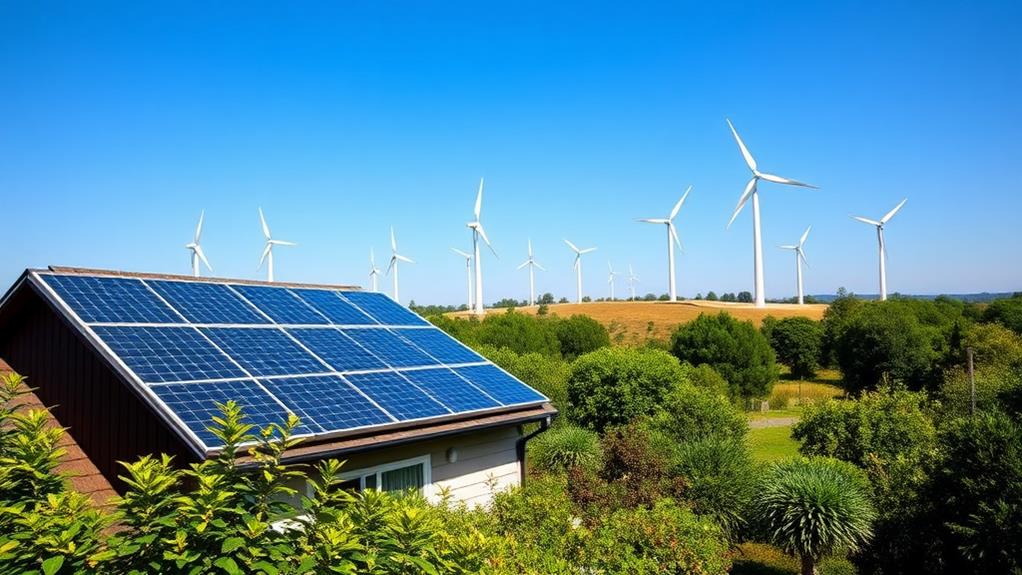


Renewable energy generators are an essential part of our shift to a more sustainable future. These technologies, including solar energy, wind energy, and hydroelectric power, harness natural resources to produce electricity with minimal greenhouse gas emissions. For instance, solar photovoltaic cells convert sunlight into electricity with efficiencies ranging from 15% to 22%, while advanced tandem cells can reach up to 30%. Wind turbines can convert up to 45% of kinetic energy from wind, and offshore farms often yield higher efficiency. Hydroelectric power plants excel with efficiency rates of 85%-90%, although they require careful ecosystem management. Additionally, biomass systems can achieve efficiencies from 20% to 80%, showcasing the diverse potential of renewable energy generators in energy generation and their reduced environmental impacts.
Recommended Products

Efficient and Stable Conductivity: Our 10AWG&14AWG Solar Panel Extension Cable is built with a premium tinned pure copper core. It delivers power efficiently with less resistance, and its anti-corrosion design keeps performance strong over time. This means minimal power loss from your solar panel to your power station, for faster charging and a reliable, stable current every time.

Portable Generator with 60W Solar Panel Included: with a big battery pack, ZeroKor 300W solar powered generator are powerful enough to charge smartphones,tablets,laptops,headphones or other outdoor small camping supplies(Tips:Using electrical appliances over 300W may damage the portable solar generator, especially some devices that are prone to heat or built-in air compressor such as coffee maker,Hair dryer, water pump etc )

【High Conversion Rate】This 20W solar panel with monocrystalline A+ solar cell has an excellent cell efficiency of 21%-30%. Designed to charge and maintain 12V rechargeable batteries like LiFePO₄, Lithium Ion, AGM, SLA, GEL, EFB, MF, etc. Keep batteries in charged for trailer, tractor, truck, boat, motorcycle, RV, car, lawn mower, water pump, gate opener, electric fence, etc
Benefits of Renewable Energy

As we explore the capabilities of renewable energy generators, it's clear that the benefits they offer are significant. Utilizing renewable energy sources, such as solar power and wind, reduces our carbon footprint dramatically, producing minimal to no global warming emissions. This is crucial, considering fossil fuels contribute about 29% of emissions in the U.S. electricity sector. Additionally, clean energy technologies not only mitigate air pollution but also lead to substantial economic growth; for instance, the solar industry generated over 260,000 jobs in 2016. Furthermore, shifting to these technologies can provide long-term savings for consumers through stable energy prices, while advancements in efficiency—like solar photovoltaic cells converting 15%-22% of sunlight—ensure we harness energy effectively.
Recommended Products

SOLAR POWERED GENERATOR WITH PANELS INCLUDED: Apowking portable solar panels 40W performances better even under the condition of insufficient light thanks to its 20.5% high conversion efficiency by monocrystalline solar cell. with 10*DC Connectors, this solar panel kit is compatible with most portable solar powered generator on the market.

SOLAR GENERATOR WITH SOLAR PANEL: Power your outdoor adventures with the MARBERO Solar Generator M82MAX and 30W Solar Panel. Ideal for camping, road trips, or off-grid living, this duo delivers reliable electricity wherever you go. With a high-capacity power kit, you'll enjoy uninterrupted device charging, ensuring your outdoor fun never ends.
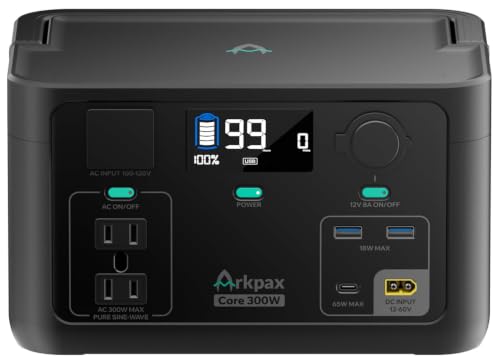
3 WAYS FAST RECHARGE: Recharge Core 300W power station from 0%~80% in just 1 hours with the included 180W AC adapter. Recharge on the road with a car charger(not included) or harness the sun with a compatible solar panel (not included). This portable power station 300W keeps you powered anywhere and designed for camping, road trips, RV life, backyard parties, and emergency backup at home
Types of Renewable Energy Sources

As we explore the various types of renewable energy sources, we'll examine the efficiency and technologies behind solar energy systems, the operational capabilities of wind power, and the methods of hydrogen production. Solar energy technologies, particularly photovoltaic cells, demonstrate a range of efficiencies, while wind power can convert up to 45% of kinetic energy in ideal conditions. Additionally, understanding the nuances of hydrogen production methods will further enrich our knowledge of sustainable energy solutions.
Recommended Products
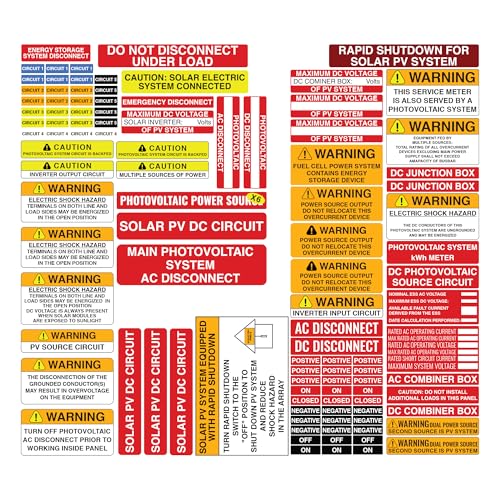
Quality Printing: This pv label kit features clear, high-contrast printing to ensure critical solar safety information is easy to read and instantly recognizable. Each solar labels sticker is designed to provide professional warning identification for photovoltaic systems

UL4703 approved, 600 volt photovoltaic wire cable with pure copper conductors + PV Connectors (one male + one female connector per cable). 0.25mm diameter copper strands for extra flexibility (65 strands 12 AWG, 105 strands 10 AWG, 168 strands 8 AWG). Amperage ratings: 30A for 12AWG, 40A for 10AWG, 55A for 8AWG. The pure copper conductors allow for ultra-low resistance to insure maximum electrical efficiency for your solar system!

The iGreely 10/12 gauge wire can be used for solar panels, DC circuits, Boat, Marine, Automotive, RV and inverter wiring.
Solar Energy Technologies
Solar energy technologies have transformed the way we harness sunlight to produce electricity, making it more accessible and efficient than ever before. Photovoltaic (PV) cells, with efficiencies ranging from 15% to 22%, convert solar energy directly into electricity, while advanced tandem cells can achieve efficiencies up to 30%. Over the past decade, installation costs have dropped over 70%, although high initial expenses still pose a barrier for some users. Rooftop solar installations offer tailored solutions for individual energy production needs, while utility-scale solar farms provide substantial output, albeit with more complex logistical considerations. Continuous advancements in materials and designs enhance efficiency and reduce costs, positioning solar energy as a leading renewable source in our shift towards sustainable energy systems.
Wind Power Efficiency
Harnessing the power of wind, we see wind turbines convert up to 45% of the kinetic energy from the breeze into electricity, with efficiency heavily influenced by factors like wind speed and turbine design. This renewable energy source has become increasingly cost-effective, especially in windy regions.
| Factor | Impact on Efficiency |
|---|---|
| Wind Speed | Higher speeds increase output |
| Turbine Design | Innovative designs enhance capture |
| Installation Costs | Onshore vs. offshore variations |
| Environmental Impacts | Site selection can mitigate risks |
While onshore wind farms typically incur lower installation costs, offshore farms often yield greater efficiency due to stronger winds. Although wind power presents some environmental concerns, careful planning and advanced turbine design can effectively address these issues.
Hydrogen Production Methods
Hydrogen production methods are vital for advancing our renewable energy landscape. Currently, the majority of hydrogen energy is produced through steam methane reforming of fossil fuels, which accounts for about 95% of U.S. production. However, the shift towards renewable sources is essential for clean hydrogen production. Electrolysis, particularly when powered by wind and solar energy, offers a zero-emission method for water splitting, aligning with the U.S. Department of Energy's goal to reduce costs to $1 per kilogram by 2030. Biomass processes also present a renewable pathway, generating hydrogen from organic materials and contributing to a circular economy. As we explore these methods, we can greatly reduce carbon emissions while expanding hydrogen production across various sectors, such as transportation and energy storage.
Comparative Efficiency Analysis
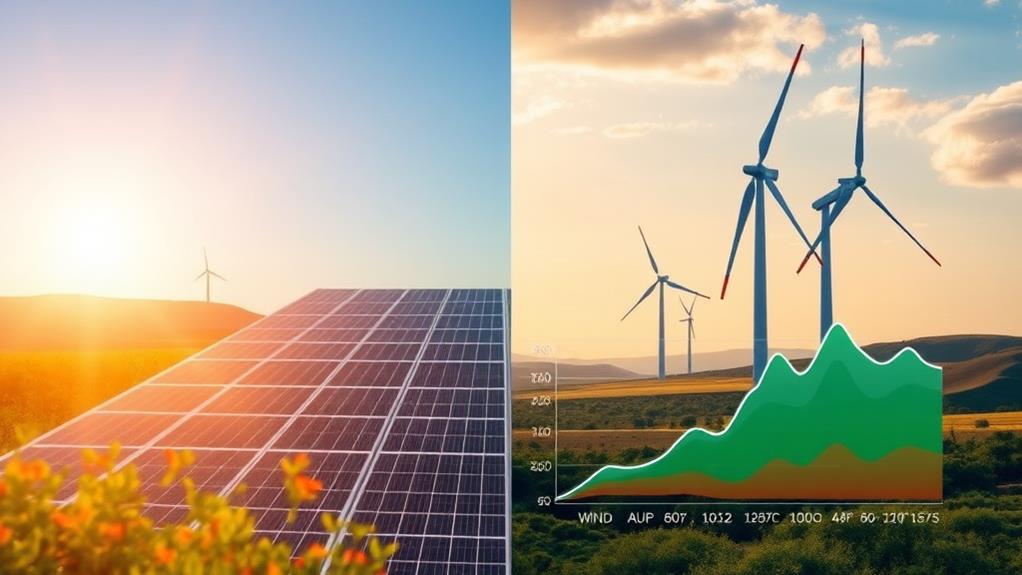
As we assess the comparative efficiency of various renewable energy sources, it becomes essential to understand how energy conversion efficiency, cost-effectiveness, and environmental impacts interact. For instance, hydroelectric systems can achieve an impressive efficiency rate of up to 90%, while solar photovoltaic cells typically range from 15% to 22%, highlighting significant variances in performance. By analyzing these metrics, we can better inform our choices regarding the most suitable renewable energy solutions for diverse applications and contexts.
Recommended Products

SOLAR POWERED GENERATOR WITH PANELS INCLUDED: Apowking 40W portable solar panels features 24% high-efficiency monocrystalline cells – delivering outstanding output even in low-light conditions (dawn, dusk, or overcast). Comes with 10 DC connectors – compatible with most of portable power stations on the market. Plug & play, no adapter needed.

🌍Solar Power Bank Generator with Panel Included: ZeroKor solar generator kit includes a 100W portable camping lithium-ion battery pack and a 40W foldable solar panel. As an outdoor AC power bank, it is an ideal necessity for outdoor activities, hurricanes and home emergency power outage, so you will never worry about sudden power failure to delay your activities (Tips:Using electrical appliances over 100W may damage the portable battery generator, especially some devices that are prone to heat or built-in air compressor such as coffee maker,Hair dryer, water pump etc )

SOLAR POWERED GENERATOR WITH PANELS INCLUDED: Apowking portable solar panels 40W performances better even under the condition of insufficient light thanks to its 20.5% high conversion efficiency by monocrystalline solar cell. with 10*DC Connectors, this solar panel kit is compatible with most portable solar powered generator on the market.
Energy Conversion Efficiency
When we compare the energy conversion efficiencies of various renewable sources, a clear picture emerges of their potential and limitations. Solar photovoltaic (PV) cells typically convert sunlight into electricity with efficiencies ranging from 15% to 22%, although advanced tandem cells can reach up to 30%. Wind turbines, depending on design and wind speed, can achieve efficiencies of up to 45%. In contrast, hydroelectric power stands out with impressive efficiencies of 85% to 90%, making it one of the foremost renewable sources. Geothermal energy systems exhibit efficiencies between 35% and 50%, influenced by resource quality. Finally, biomass energy systems show a broader range, with efficiencies varying from 20% to 80%, based on technology and feedstock. Understanding these efficiencies is essential for our renewable energy journey.
Cost-Effectiveness Comparison
How do renewable energy sources stack up against each other with respect to cost-effectiveness? Analyzing the costs associated with solar, wind, and other renewables reveals significant advantages over fossil fuels. The table below illustrates key cost metrics:
| Energy Source | Cost Efficiency |
|---|---|
| Solar | 70% price reduction (2010-2017) |
| Wind | 66% price reduction (2009-2016) |
| Hydroelectric | 85%-90% efficiency |
| Clean Hydrogen | Targeting $1/kg |
| Operational Costs | Low post-initial investment |
As we navigate the energy conversion, these renewables not only offer competitive costs but also contribute to job creation and sustainable practices, making them essential for a greener future. By investing in renewable energy, we can better manage our energy expenditures while fostering an environmentally friendly economy.
Environmental Impact Assessment
Evaluating the environmental impact of renewable energy sources reveals striking differences in their efficiency and emissions profiles compared to fossil fuels. Renewable sources like solar power produce zero global warming emissions during operation, while fossil fuels contribute approximately 29% of such emissions. Hydroelectric energy stands out with an impressive efficiency rate of 85%-90%, showcasing its effectiveness as a low-impact alternative. Wind turbines convert up to 45% of kinetic energy into electricity, further enhancing energy efficiency. Conversely, geothermal energy operates at 35%-50% efficiency, still considerably minimizing environmental impact compared to fossil fuel extraction. Collectively, these renewable options present viable solutions to combat climate change, aligning with our shared commitment to sustainable energy practices and reducing our carbon footprint.
Cost Considerations in Renewable Energy

The cost considerations in renewable energy have become increasingly favorable for consumers and businesses alike. As we've seen, the significant reductions in installation costs make these technologies more accessible. For instance, solar energy installation costs declined over 70% from 2010 to 2017, while wind energy generation costs fell by 66% between 2009 and 2016.
Here are some key points to evaluate:
- Upfront investments lead to low operational costs.
- Fuel remains free for most clean technologies, enhancing long-term savings.
- Stable energy costs provide predictability compared to fossil fuel volatility.
- The U.S. Department of Energy's goal to reduce hydrogen production costs exemplifies ongoing efforts.
These factors collectively underscore the economic viability of renewable energy sources.
Recommended Products

System Components:Delivers up to 10kW power output with 120V/240V single-phase split-phase support, making it suitable for smoothly running common household appliances. The system includes 18 × 590W solar panels with a total PV capacity of 10620W, capable of generating up to 39.36 kWh per day under optimal conditions, along with two 48V 314Ah portable LiFePO₄ battery offering 32.2 kWh of energy storage. Complete with necessary cables, this all-in-one solar solution is designed for convenient setup and reliable home power support.

【N-Type 16BB High-Efficiency Solar Cells】The Callsun 200 watt solar panel is built with advanced N-type solar cells and 16BB busbar technology, delivering up to 25% conversion efficiency. Compared to traditional P-type cells, N-type solar panels generate higher power output and better reliability, while the 16BB design reduces hot spots and hidden cracks — ensuring superior performance and a longer lifespan.

Environmental Impact Assessment

As we explore the benefits of renewable energy, it's important to contemplate the environmental impact of these technologies. Renewable energy sources, such as solar and wind, produce minimal to no greenhouse gas emissions compared to fossil fuels, greatly reducing air pollution and its associated health risks. According to the National Renewable Energy Laboratory, shifting to renewable energy could cut CO2 emissions from the electricity sector by approximately 81% by 2050. While hydroelectric dams achieve impressive efficiencies of 85%-90%, they can alter river ecosystems, necessitating sustainable design practices. Additionally, solar energy generation is emission-free, although its production process may involve some pollution, underscoring the need for thorough lifecycle assessments to accurately evaluate the overall environmental impact of these energy generation systems.
Future Trends in Renewable Energy

Looking ahead, we can expect renewable energy to play an increasingly essential role in our global energy landscape. With the International Energy Agency predicting that renewables could account for nearly 90% of the increase in global power generation by 2026, we can anticipate notable advancements in this sector. Key trends include:
- Enhanced efficiency through hybrid renewable energy systems
- Significant reductions in emissions from the electricity sector, estimated at 81% by 2050
- Cost-effective clean hydrogen production, aiming for $1 per kilogram
- Continuous improvements in energy storage technologies for reliable energy supply
As fossil fuel use declines, innovations in solar panels and energy storage will be pivotal in driving emissions reduction and supporting our shift to a sustainable energy future.
Policy and Economic Implications

With renewables poised to dominate future energy generation, understanding the policy and economic implications becomes essential. The renewable technologies sector not only promises substantial job creation—over 360,000 jobs in solar and wind alone by 2016—but also presents a pathway to mitigate climate change by reducing carbon dioxide emissions. Implementing a 25% renewable electricity standard by 2026 could decrease CO2 emissions by approximately 277 million metric tons annually. Furthermore, shifting to these clean technologies can stabilize future energy prices, eliminating fuel cost volatility linked to fossil fuels. However, to fully realize these benefits, robust policy support and favorable regulatory frameworks are vital, as they help overcome barriers to adoption, ensuring a sustainable and economically resilient future for our communities.
Frequently Asked Questions
Why Should We Choose to Use Renewable Forms of Energy?
Choosing renewable energy isn't just smart; it's essential. Together, we'll reap sustainability benefits, enjoy cost savings, enhance energy independence, minimize environmental impact, embrace technological advancements, and create jobs that strengthen our communities for a brighter future.
Why Is Renewable Energy More Preferable?
Renewable energy's benefits are like a superhero cape for our planet. Its energy efficiency, reduced environmental impact, cost savings, job creation, and technological advancements empower us toward energy independence, creating a brighter future for everyone.
What Are Two Reasons Why Pursuing Renewable Energy Resources Is Important for the Future?
Pursuing renewable energy's essential for our future. It offers sustainability benefits and reduces environmental impact while driving economic growth. Together, we'll achieve energy independence, embrace technological innovation, and enjoy health advantages for ourselves and future generations.
What Are 2 Reasons Renewable Energy Sources Are Gaining Popularity?
As the sun rises over our shared future, we're drawn to renewable energy for its cost efficiency and environmental impact. Together, we'll embrace technological advancements, job creation, and sustainability benefits, fostering energy independence for all.