When designing an off-grid solar power system, we must focus on five key considerations. First, we should meticulously estimate energy loads by creating detailed load tables, evaluating daily usage and seasonal variations. Next, proper battery sizing is essential; we need to calculate daily kWh needs and select batteries with at least 30-60 kWh capacity, allowing for autonomy. Additionally, sizing the solar array correctly involves dividing total energy consumption by Peak Sun Hours. Choosing the right inverter, with a suitable voltage and charge rating, is critical for efficiency. Finally, implementing an advanced energy management system will optimize energy usage. There’s much more to explore.
Key Takeaways
- Accurately estimate energy loads by listing appliances, wattage, and daily usage hours to determine total daily energy consumption in kWh.
- Size the battery bank by calculating daily load needs and incorporating a safety margin for reliable energy storage during outages.
- Design the solar array by calculating required kW based on daily energy needs and adjusting for seasonal variations in sunlight.
- Select an inverter that matches your battery capacity and can handle surge loads, ensuring it meets your system’s voltage requirements.
- Implement an energy management system to monitor usage patterns, optimize charging cycles, and enhance battery life through adaptive management.
Estimate Your Energy Loads
You may be interested


To effectively estimate our energy loads, we should start by creating a detailed load table that lists each appliance, its wattage, and how many hours we expect to use it daily. This table will help us calculate our total daily energy consumption in kilowatt-hours (kWh). We must also consider seasonal variations, as heating and cooling demands can considerably increase during winter and summer months, necessitating higher load estimates. Including surge loads for appliances with high startup currents, such as refrigerators and air conditioners, is essential. By utilizing off-grid load calculators and aiming for a conservative estimate, we can factor in a 20% safety margin to accommodate inefficiencies and unexpected energy demands, ensuring our solar system is adequately sized for our needs.
Proper Battery Sizing

Proper battery sizing is essential for guaranteeing our off-grid solar power system operates efficiently and reliably. To determine the required battery bank voltage, we first calculate our daily load in kWh and multiply it by the desired days of autonomy—typically 2 days for lithium batteries and 3-4 days for lead-acid batteries. This calculation gives us the total energy storage needed in kWh. We must also consider peak demand loads and guarantee that the battery output rating meets both peak and total energy consumption needs, incorporating a 20% safety margin for cables. For effective energy storage, we typically choose batteries with capacities ranging from 30-60 kWh, allowing us to buffer against periods of low sunlight or adverse weather.
Recommended Products
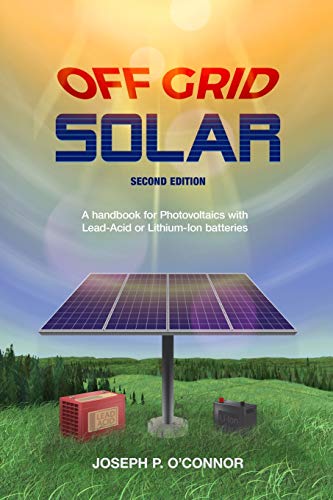
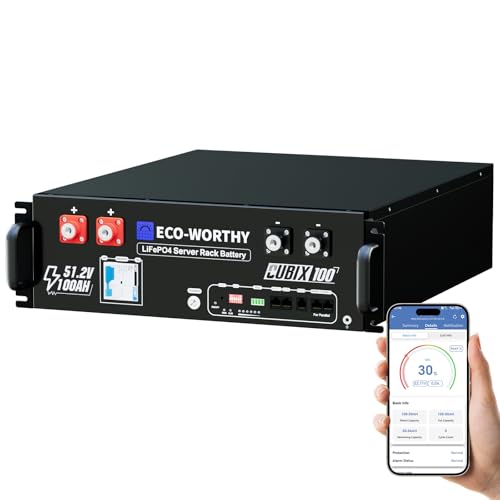
UL9540 | UL1973 | CEC LISTED - Completed comprehensive testing by Intertek and has officially earned three key North American safety certifications.And has met the standards set by the California Energy Commission.The outstanding performance in design, electrical safety, and thermal runaway management,providing users with greater quality assurance.

[Complete&Friendly]: Beginner-friendly Solar Kit, including all accessories required for connection. 800Wh daily output depends on the 4 hours sunlight availability. The reasonable matches ensures the sufficient use of solar power and doesn't cause waste. Suitable for RV, camper, trailer, boats, cabins, etc. wherever you need power.
Size Your Solar Array

After ensuring our battery bank is appropriately sized, the next step involves sizing our solar array. To determine the system size in kW, we’ll calculate our average daily energy consumption in kWh and divide it by the Peak Sun Hours (PSH) available in our location. For instance, if our energy needs are 20 kWh and we receive an average of 4 PSH per day, we’ll require a 5 kW solar array. We should also account for seasonal variations in sunlight, as winter PSH values can be lower. It’s wise to oversize our solar array by about 20% to cover inefficiencies and shading. Tools like the PV Watts calculator can help us accurately assess our solar array’s production potential, ensuring we meet our energy needs effectively.
Recommended Products

Wide Application: BougeRV solar y connector is compatible with various solar cables:14-10AWG (1.5mm² - 6mm²)

UPGRADE 2.0 SOLAR CABLE: Increase a free pair of separate solar connectors. One pair (1 piece black + 1 piece red) 20 Feet 10AWG Solar Extension Cable. BougeRV promises an 18-month technical support for the solar extension cable.

[Ideal Output Power]Ideal daily output of 1.6KWH (under 4 hours sunlight), our solar panel kit is perfect for powering your RV, shed, cabin, home, or other energy backup needs. It can run your TV, air conditioner, refrigerator, and other AC 110V devices(Under 2000Watt Reated Power).Double Your Energy with Smart Pairing:Boost your energy production by 40% with the Dual Axis Solar Tracker, or by 20% with the Adjustable Multi-Pieces Solar Panel Mounting Brackets.
Select the Right Inverter

Choosing the right inverter is essential for maximizing the efficiency of our off-grid solar system, as it needs to meet the continuous and surge power requirements of our appliances. We should carefully consider various factors to guarantee compatibility and reliability, such as:
- Matching the inverter’s charge rating with our battery bank capacity
- Confirming it can handle surge power, especially for high-surge devices
- Selecting the appropriate voltage (12V, 24V, or 48V) for peak performance
- Evaluating features like Automatic Transfer Switch (ATS) and Uninterruptible Power Supply (UPS) capabilities
- Choosing between off-grid or hybrid inverters based on our system needs
Recommended Products

12000W Split-Phase Output for Whole-Home Backup:Designed for residential and light commercial energy storage systems, this 12000W hybrid inverter delivers stable 120V/240V split-phase pure sine wave output, making it ideal for powering air conditioners, water pumps, refrigerators, tools, RV systems, workshops and essential household appliances during outages or off-grid operation.


【ALL-IN-ONE SOLAR CHARGE INVERTER】Converts 48V DC to 120Vac AC and is equipped with a powerful dual-channel MPPT solar charge controller. Features an LCD display and touch buttons, with optional WiFi/GPRS remote monitoring. Single AC output. Max. PV Array Power 4500W + 4500W; Max. PV Array Open Circuit Voltage 300VDC; PV Array MPPT Voltage Range 90VDC–260VDC; Max. Solar Input Current per Channel 22A; Max. Solar Charge Current 150A (configurable); Max. AC Charge Current 120A; Max. Combined Charge Current (PV + AC) 150A.
Implement Energy Management Systems

To effectively manage our off-grid solar power system, implementing an energy management system (EMS) is essential. An EMS allows us to enhance energy usage, extending battery life while improving system efficiency. It identifies peak energy consumption times, which enables us to stagger high-demand appliances, preventing system overload. Advanced EMS solutions, like those from Victron Energy and Selectronic, offer remote access, allowing us to monitor performance from anywhere. Furthermore, a smart EMS can prioritize solar charging, battery discharging, and generator use according to real-time energy needs, guaranteeing ideal resource utilization. Incorporating temperature sensors and battery monitoring guarantees that charging cycles adapt based on battery health and environmental conditions, maximizing storage capacity and overall system performance.
Recommended Products


[Ideally Output of 9.36KWH] The power of 9.36KWh per day under 4 hours full sunshine by the 2340W solar panel system, very suitable for home, shed, cabin, farm or other energy backup, and it will provide enough power for portable ac, air condition, TV, refrigerator, coffee maker, microwave and other AC 240V (split-phase)devices.

Frequently Asked Questions
How to Design an Off-Grid System?
When we design our off-grid system, we’ll conduct a load assessment, evaluate site specifics, select solar panel types, size our system properly, choose the right inverter, guarantee energy efficiency, and plan for battery storage and maintenance.
How Do You Spec an Off-Grid Solar System?
When we begin on spec’ing our off-grid solar system, we must embrace a symphony of components: battery storage, load analysis, inverter selection, and site assessment, ensuring energy efficiency and reliability, even with a backup generator.
What Is the Most Efficient Off-Grid Power Source?
When we think about the most efficient off-grid power source, we consider solar efficiency, energy storage, and renewable resources like wind energy and hydro power. Together, they pave our path to energy independence and system sustainability.
How Much Solar Do I Need to Be Completely Off-Grid?
To determine how much solar we need to be off-grid, we should start with energy consumption assessments, then explore solar energy calculations, battery storage options, and panel orientation strategies to guarantee ideal performance and sustainability.