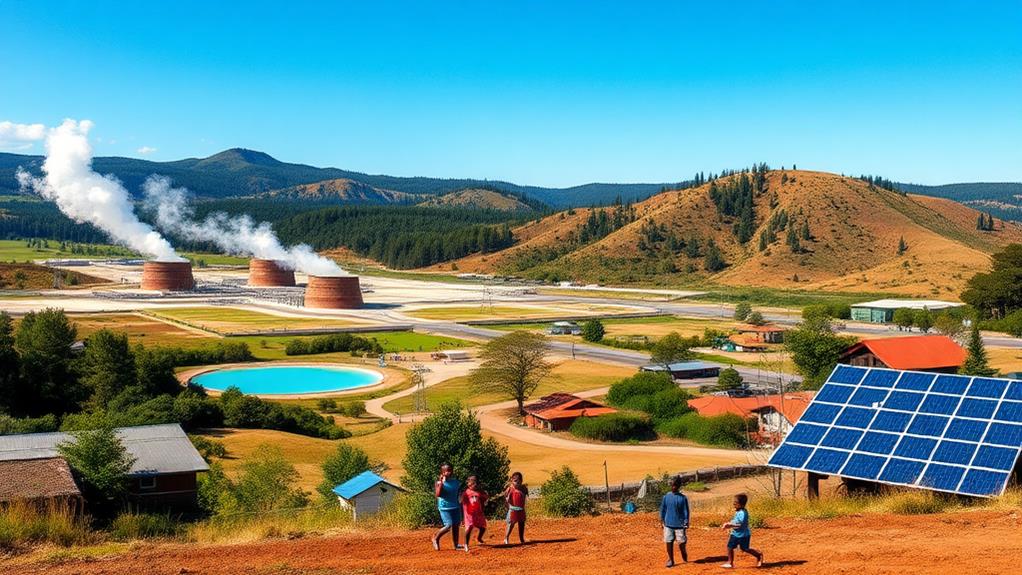
The top 10 nations leading in geothermal energy resources, based on installed capacity, include the United States (3,900 MW), Indonesia (2,356 MW), and the Philippines (1,952 MW). Turkiye follows with 1,691 MW, while New Zealand contributes 1,042 MW. Kenya, with an installed capacity of approximately 892 MW, ranks sixth among these nations, closely followed by Mexico (976 MW) and Italy (916 MW). Iceland comes in ninth with 754 MW, and Japan completes the list with approximately 576 MW. Each country not only advances geothermal capacity but also aligns with sustainability and renewable energy objectives, prompting further exploration of these initiatives.
Key Takeaways
- The United States leads globally with an installed geothermal capacity of about 3,900 MW — roughly a quarter of the world's total online capacity — concentrated mainly in California and Nevada.
- Indonesia ranks second with roughly 2,356 MW of installed capacity, sitting on an estimated 28,000 MW of geothermal resource potential, one of the largest reserves on the planet.
- The Philippines holds third place with 1,952 MW, contributing a significant share of its national electricity generation from volcanic geothermal fields.
- Turkiye and New Zealand follow with installed capacities of 1,691 MW and 1,042 MW, respectively, each backed by long-standing government support for geothermal development.
- Kenya, Mexico, Italy, Iceland, and Japan round out the top ten, showcasing significant and growing contributions to their national energy mixes through geothermal power.
- The U.S. residential Section 25D clean energy tax credit — which had covered geothermal heat pumps and other home renewable installs at 30% — expired for systems placed in service after December 31, 2026, under the One Big Beautiful Bill Act, changing the incentive landscape for homeowners going forward.
United States
You may be interested
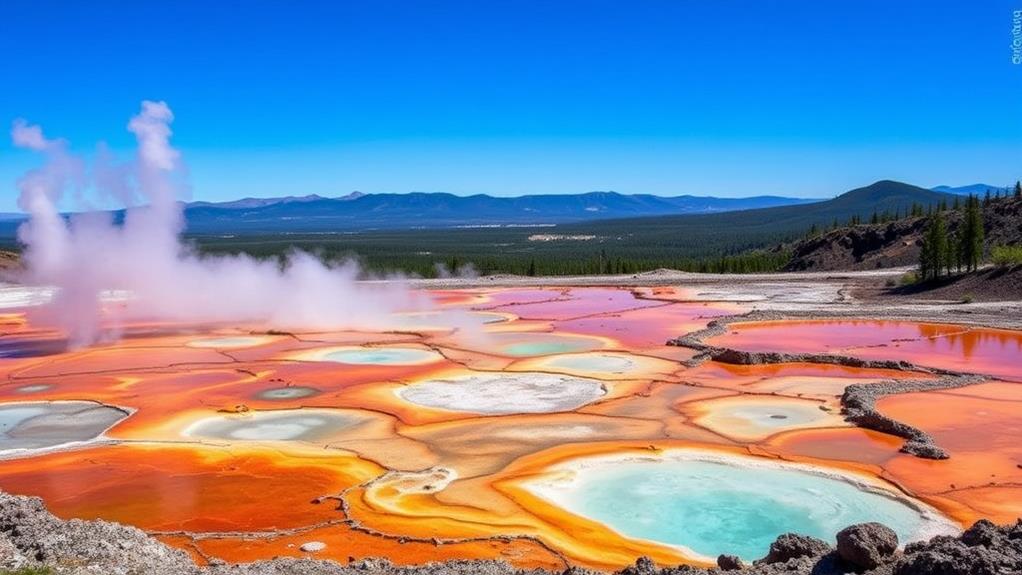
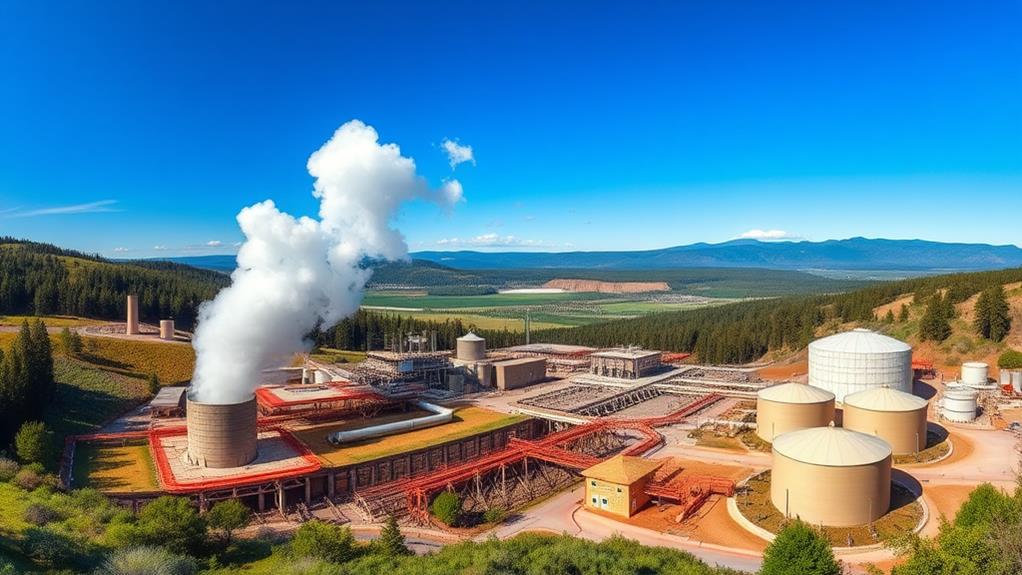
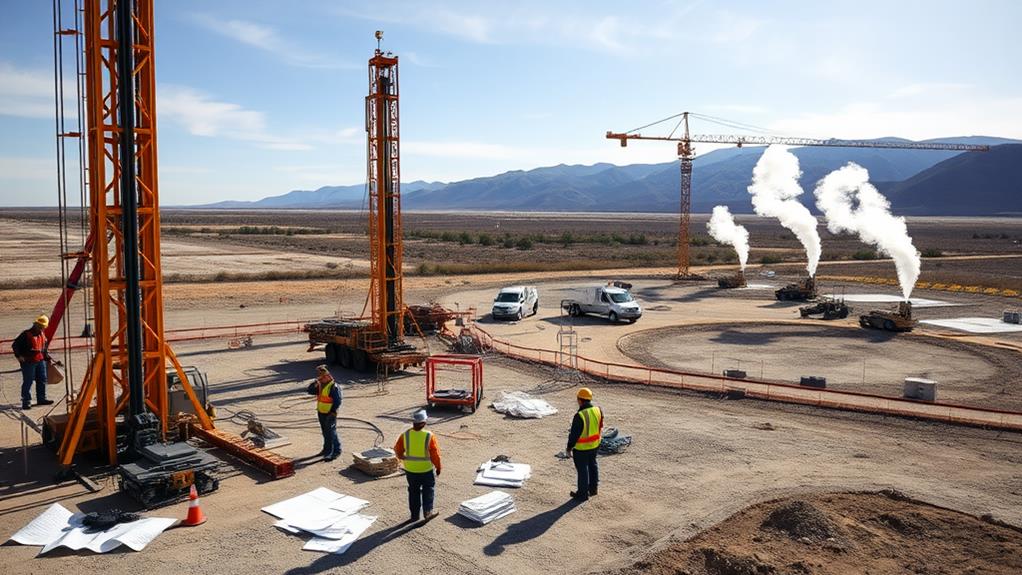
As we explore the landscape of geothermal energy, it's clear that the United States stands at the forefront, holding an installed geothermal capacity of about 3,900 MW — around 25% of the world's online geothermal capacity, making it the global leader. Major power plants in California and Nevada are the largest contributors: California's facilities, led by The Geysers dry steam field, account for the majority of U.S. geothermal output, while Nevada's roughly 19 geothermal plants add more than 480 MW combined. Smaller contributions come from Utah, Hawaii, Oregon, and Idaho. Ongoing research supported by the U.S. Department of Energy continues to focus on enhanced geothermal systems (EGS) to expand the resource beyond traditional hydrothermal sites. One important shift for homeowners: the 30% federal Residential Clean Energy Credit (Section 25D), which previously applied to geothermal heat pumps installed at a home, expired for systems placed in service after December 31, 2026, under the One Big Beautiful Bill Act — so anyone weighing a residential geothermal heat pump should check current IRS guidance and DSIRE for any remaining state-level incentives, similar to how buyers research state solar incentives before installing panels.
Recommended Products

1.【Specific】: Voltage: 110V/60Hz; Max Flow: 14.5/11.3/8.4GPM;Max Head: 19.6/16.4/9.8FT;Inlet/Outlet: 1’’

Indonesia
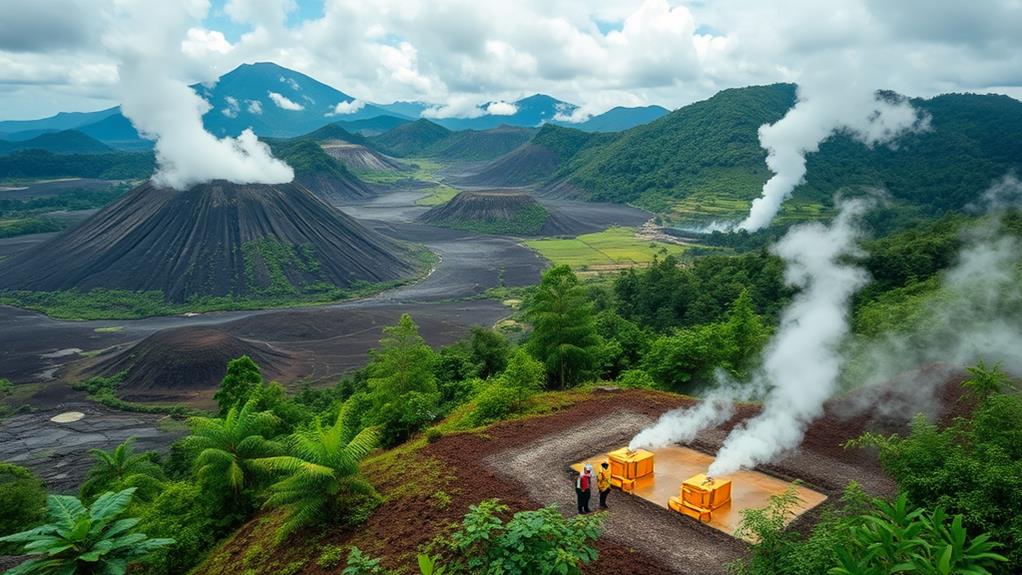
As we explore Indonesia's geothermal landscape, it is crucial to recognize that the country holds the second-highest geothermal capacity globally, with roughly 2,356 MW installed. Indonesia sits atop the Pacific Ring of Fire and holds an estimated 28,000 MW of geothermal resource potential — among the largest reserves of any country on Earth — underscoring its significant role in the renewable energy sector. This strategic advantage supports both energy security and the country's efforts to diversify away from coal-fired power, positioning geothermal as a growing pillar of the national electricity generation portfolio.
Geothermal Potential Expansion
Over the coming years, Indonesia is poised to considerably expand its geothermal energy potential. With an estimated geothermal potential near 28,000 MW, Indonesia stands as one of the world's largest geothermal resource holders, trailing only the United States in installed capacity. Current operational geothermal capacity sits at roughly 2,356 MW, with additional projects moving through development along the country's volcanic arc. As Indonesia continues harnessing its geothermal resources, we can expect:
- Increased energy independence
- Enhanced renewable energy integration
- Sustainable development for local communities
- Reduced reliance on imported and fossil fuels
- Significant contributions to global geothermal know-how
Together, these advancements support a cleaner, greener future for the archipelago.
Government Incentives Overview
Incentives play an essential role in fostering geothermal energy development in Indonesia, where the government continues promoting renewable energy initiatives. Indonesia has offered various fiscal incentives, such as tax holidays and investment allowances, to stimulate renewable energy projects, alongside a feed-in tariff framework designed to give geothermal producers more predictable pricing. National energy planning continues to prioritize geothermal as a critical component for meeting Indonesia's long-term energy needs sustainably, with regulators working to streamline the permitting process and improve access to financing to accelerate project development across the country.
Philippines
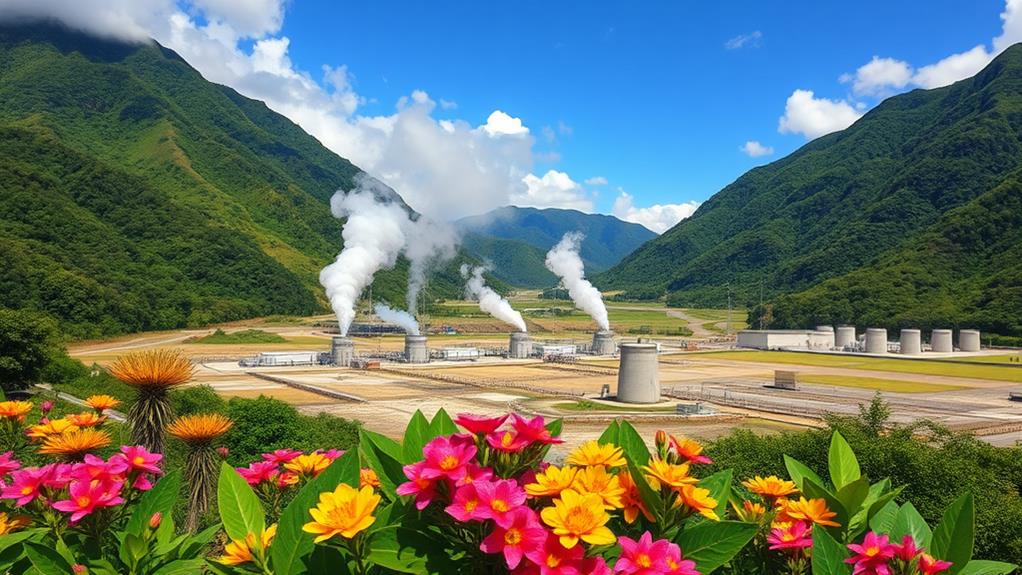
Why is the Philippines considered a powerhouse in geothermal energy? With an installed geothermal capacity of 1,952 MW, the country ranks as the third-largest producer globally. This capacity makes a substantial contribution to the nation's total electricity generation, underscoring its pivotal role in ensuring energy security across the archipelago. The Philippine government actively promotes geothermal exploration and development to meet rising energy demand, positioning the country as a leader in the Southeast Asian market.
- Significant geothermal power plants such as Makban and Tiwi
- Robust renewable energy portfolio
- Strong government support for sustainable initiatives
- Ongoing advancements in geothermal technology
- Commitment to environmental sustainability
Together, these elements solidify the Philippines' status as a key player in geothermal energy production.
Turkiye
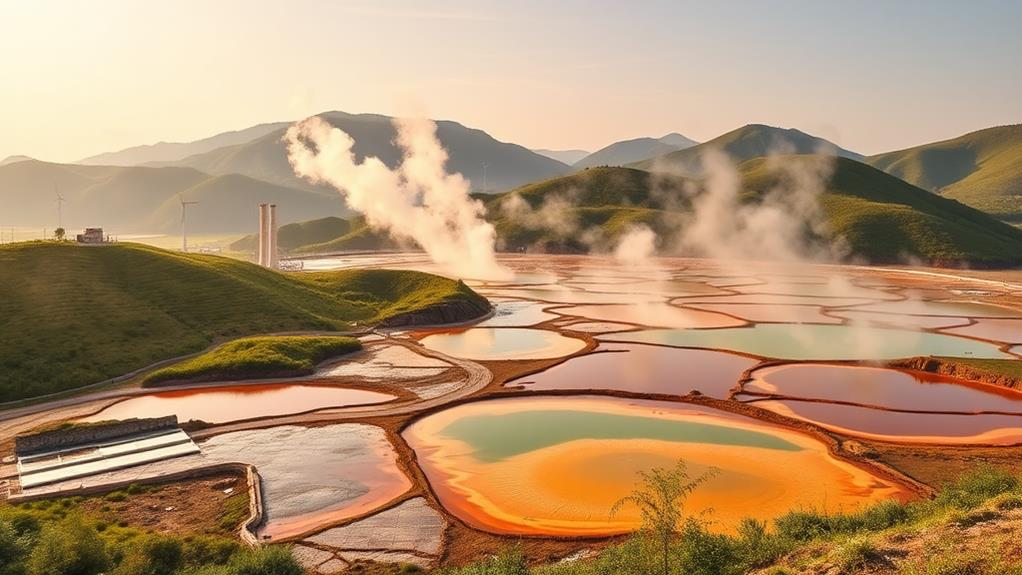
Turkiye stands out as a significant player in the geothermal energy sector, with an installed capacity of 1,691 MW, ranking it fourth globally. The country's geothermal capacity has been built up over the past decade through strong government initiatives aimed at promoting geothermal development, particularly in the western Anatolia region, home to hundreds of identified geothermal fields. In recent years the Turkish geothermal market has faced a slower pace of new project additions compared with its rapid 2010s expansion, but the government's commitment to energy independence remains steady, with geothermal power generation and direct-use heating continuing to feature in the country's broader renewable energy strategy.
New Zealand
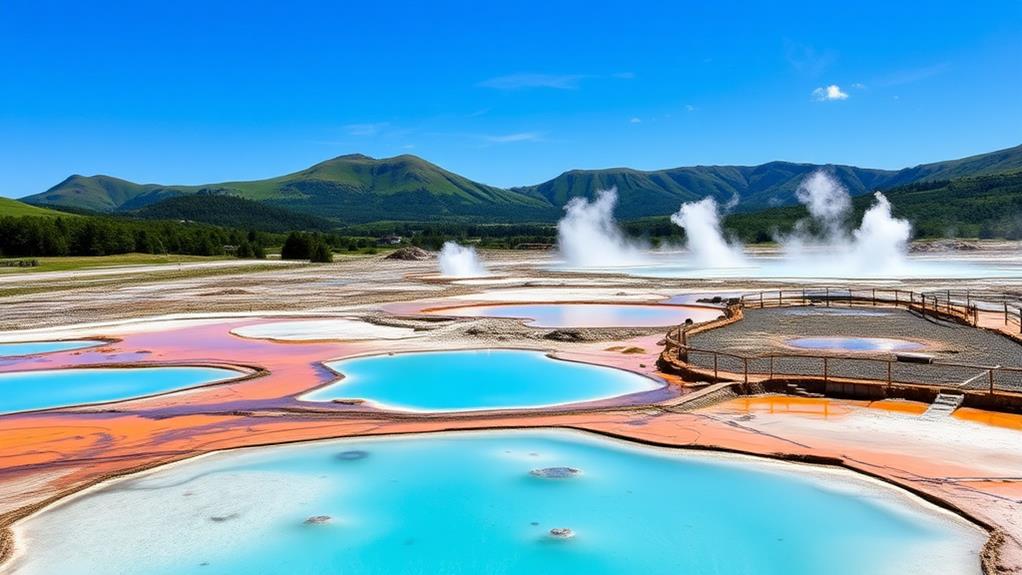
New Zealand ranks as the fifth-largest producer of geothermal energy globally, with an installed capacity of 1,042 MW. This is a substantial contribution to the country's energy mix, and New Zealand hosts notable geothermal power stations, such as Wairakei and Mokai, that have operated for decades, demonstrating a long-term commitment to sustainable energy practices. The government continues to support geothermal development, with policies that encourage further exploration and research into optimizing existing fields.
Here are some key aspects of New Zealand's geothermal story:
- Robust installed geothermal capacity
- Long-standing, reliable power stations
- Commitment to sustainable practices
- Active government support
- Ongoing research for optimization
Together, these factors point to a strong future for geothermal energy in New Zealand.
Kenya
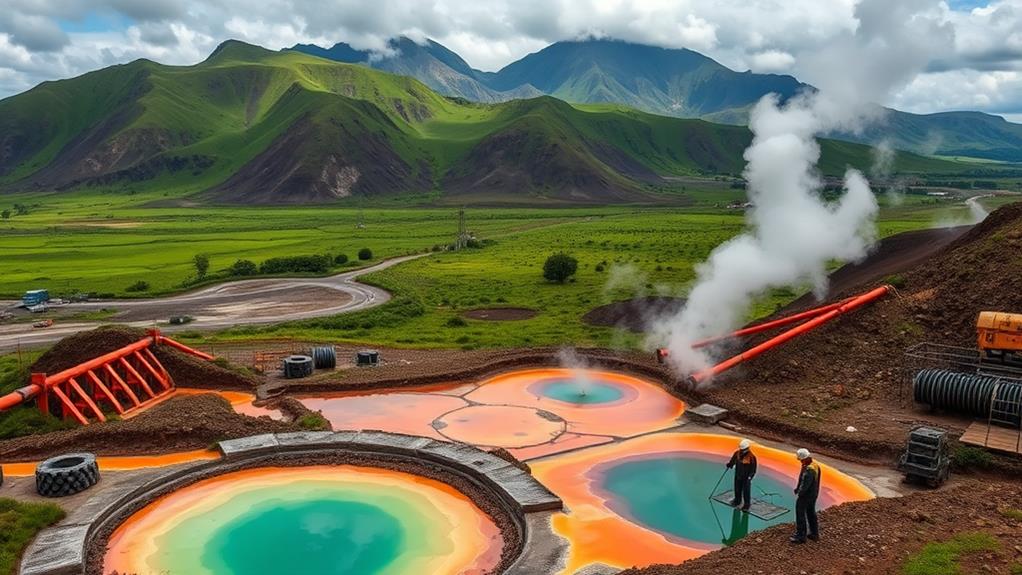
As we explore Kenya's geothermal landscape, the nation stands out with an installed capacity of roughly 892 MW, positioning it as Africa's leading geothermal producer and the first African nation to develop geothermal power at scale. The government's commitment to expanding this renewable energy source is evident in its ambitious target of 5,530 MW by 2030 — which would make geothermal the country's single largest source of clean power, overtaking hydropower. Substantial untapped potential remains along the Rift Valley, giving Kenya significant room for continued growth in this sector.
Geothermal Capacity and Growth
Kenya stands at the forefront of geothermal energy development in Africa, with installed capacity of roughly 892 MW as of 2023. This achievement, driven largely by state-owned utility KenGen, showcases the country's commitment to clean energy and sustainable development. Looking ahead, Kenya's target of 5,530 MW — about 51% of total planned capacity — by 2030 demonstrates a serious national bet on geothermal as the backbone of the power sector.
Together, we can appreciate:
- The growing role of geothermal energy within Kenya's overall electricity mix, alongside hydropower.
- Continued expansion of the Olkaria geothermal fields, among the largest in Africa.
- New capacity additions from KenGen-led projects in recent years.
- Enhanced transmission and grid infrastructure plans.
- Kenya's collective journey toward a greener, more energy-independent future.
Government Incentives and Support
Fostering growth in the geothermal sector has become a top priority for Kenya's government, which has set an ambitious target of 5,530 MW of geothermal capacity by 2030 as part of Kenya Vision 2030. To achieve this, the country has pursued incentives such as tax relief and streamlined licensing to attract investment in geothermal exploration and development. State-owned KenGen continues to lead major projects, and international partnerships — including financing from institutions like the European Investment Bank — further support Kenya's geothermal initiatives, facilitating technology transfer and capacity-building across the sector.
Mexico
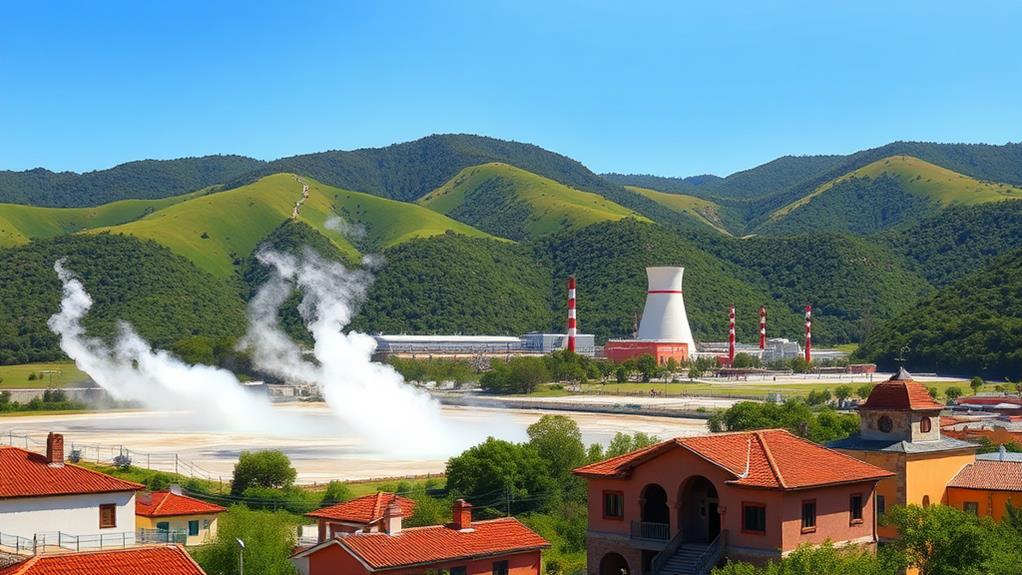
Geothermal energy is an essential player in Mexico's renewable energy landscape, with an operational capacity of 976 MW that contributes meaningfully to the national power grid. The Cerro Prieto geothermal power station stands as one of the largest geothermal plants in the world, showcasing Mexico's commitment to sustainable electricity generation. With substantial additional geothermal resource potential in regions such as Baja California, Mexico has real opportunities for future development. The Mexican government continues to support geothermal projects to diversify the national energy mix.
- Enhancing energy security
- Reducing carbon emissions
- Creating green jobs
- Fostering technological innovation
- Building community resilience
Together, these factors position Mexico to keep harnessing geothermal resources for a sustainable future.
Italy
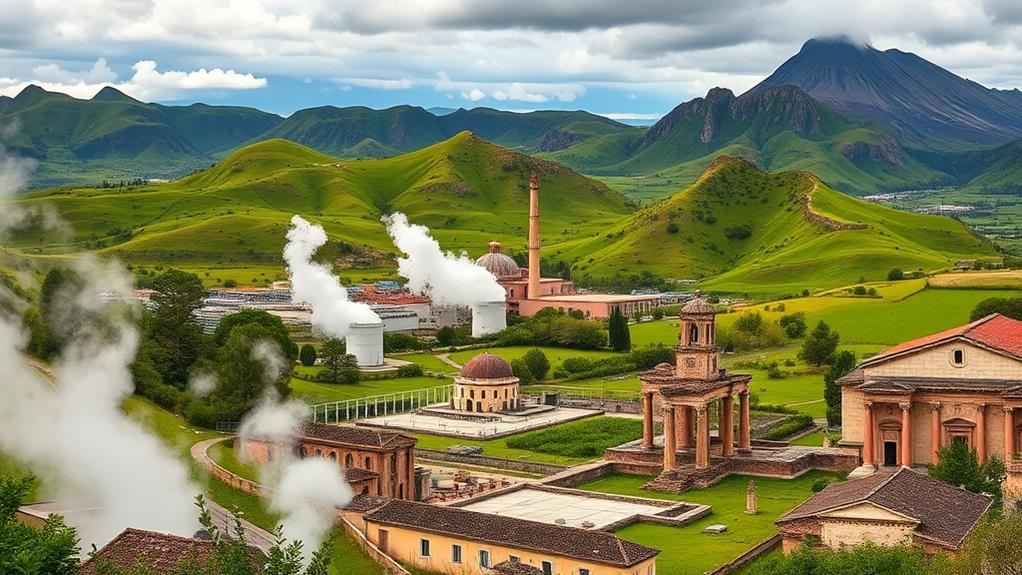
Building on the momentum seen in Mexico's geothermal advancements, Italy stands out as a pioneer in the field, with an installed geothermal capacity of 916 MW. Italy has a rich history of geothermal energy utilization: the world's first geothermal power plant was established at Larderello in 1913 and the site remains active today, more than a century later. Geothermal energy continues to make a meaningful contribution to Italy's energy mix, and government policy continues to support renewable energy investments, with efforts focused on improving the efficiency of existing plants and exploring additional geothermal resources across the country.
Iceland
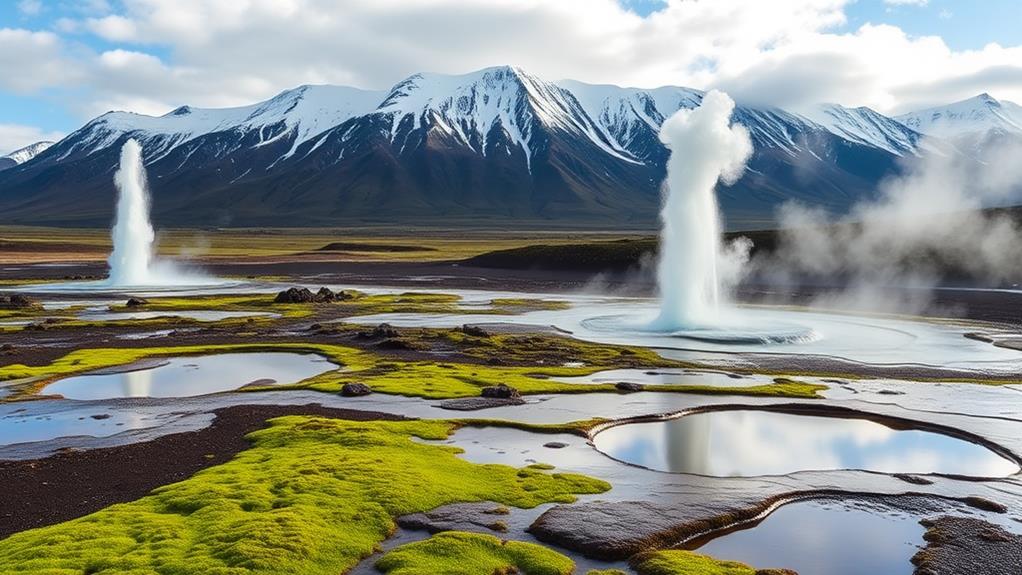
Iceland stands as a prominent example of geothermal resource utilization, with an installed capacity of 754 MW, contributing a significant share of the nation's total electricity generation. Iceland leverages its volcanic landscape to run an efficient district heating system that provides hot water to the vast majority of its homes, highlighting both the effectiveness and critical role of geothermal energy in daily life. As we assess the environmental impacts and future development prospects of this renewable energy source, it becomes clear that Iceland's commitment to sustainability sets a benchmark for other nations to emulate — much like how homeowners elsewhere evaluate geothermal heating systems for houses as a long-term efficiency investment.
Geothermal Resource Utilization
Harnessing the power of geothermal energy, Iceland stands out as a global leader in resource utilization. With an installed geothermal power capacity of 754 MW, geothermal power generation supplies a substantial share of the country's electricity. Iceland operates numerous geothermal power plants and effectively leverages its volcanic activity to generate both electricity and district heating. A large majority of Icelandic homes rely on geothermal heating systems, showcasing the country's deep commitment to sustainable energy practices.
- Abundant geothermal resources
- A pioneering history of geothermal power generation dating back over a century
- Significant reduction in fossil fuel reliance
- Enhanced energy security for local communities
- Commitment to a sustainable future
Together, these advancements reflect a strong national sense of responsibility toward the environment.
Environmental Impact Assessment
Geothermal energy represents a cornerstone of Iceland's sustainable development strategy, and conducting thorough environmental impact assessments remains essential as the sector grows. With geothermal power plants supplying a large share of national electricity, it's crucial to evaluate how these facilities affect local ecosystems, air quality, and water resources while keeping greenhouse gas emissions low. By prioritizing sustainability, Iceland maintains strong energy independence and a diversified energy mix. Ongoing government commitment to responsible geothermal energy development reinforces the country's dual goal of harnessing rich geothermal resources while protecting the environment for future generations.
Future Development Prospects
The future of geothermal energy in Iceland looks promising, with meaningful potential for continued growth and innovation. With an installed geothermal capacity of 754 MW and a long track record of reliable operation, Iceland remains a global leader in geothermal power generation. Strong government policies continue to support renewable energy initiatives, ensuring that geothermal energy remains a cornerstone of the national energy strategy.
As we look ahead, we can anticipate:
- Continued reliable electricity production from geothermal resources
- Enhanced sustainable geothermal practices through ongoing R&D
- Selective expansion of installed geothermal capacity
- Greater collaboration within the global renewable energy sector
- Stronger community engagement in energy initiatives
Together, these efforts continue to position Iceland as a model for what geothermal energy can achieve at national scale.
Japan
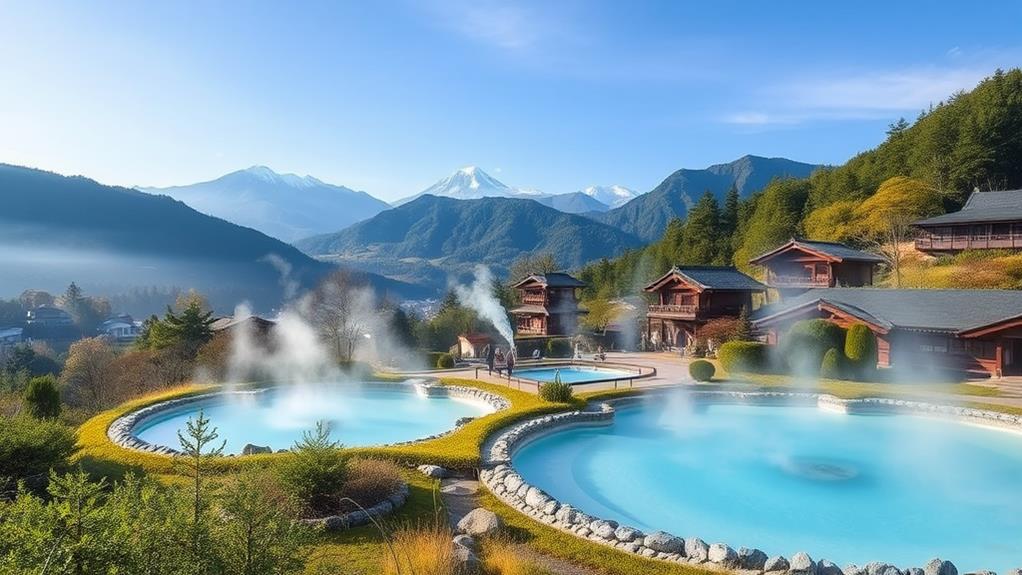
Japan's commitment to expanding its geothermal energy resources is evident in its historical and ongoing efforts in this sector. With a total installed capacity of approximately 576 MW, Japan ranks among the top ten countries in geothermal power generation globally, despite sitting on one of the world's largest geothermal resource bases thanks to its volcanic geology. Geothermal energy has played a role in Japan's energy mix for decades, dating back to some of the earliest geothermal power plants built in the early 20th century. The Japanese government continues pursuing enhanced geothermal development as part of its broader renewable energy strategy, aiming to grow geothermal's contribution to the national power mix as part of the country's long-term decarbonization plans.
Top 10 Geothermal Countries at a Glance
| Rank | Country | Installed Geothermal Capacity | Notable Detail |
|---|---|---|---|
| 1 | United States | ~3,900 MW | About 25% of global online geothermal capacity |
| 2 | Indonesia | ~2,356 MW | Estimated 28,000 MW of geothermal resource potential |
| 3 | Philippines | 1,952 MW | Third-largest producer globally |
| 4 | Turkiye | 1,691 MW | Hundreds of identified geothermal fields in western Anatolia |
| 5 | New Zealand | 1,042 MW | Wairakei and Mokai plants operating for decades |
| 6 | Kenya | ~892 MW | Africa's leading geothermal producer; targeting 5,530 MW by 2030 |
| 7 | Mexico | 976 MW | Home to the Cerro Prieto plant, one of the world's largest |
| 8 | Italy | 916 MW | Site of the world's first geothermal power plant (Larderello, 1913) |
| 9 | Iceland | 754 MW | Geothermal district heating serves the large majority of homes |
| 10 | Japan | ~576 MW | Vast untapped resource potential despite modest current capacity |
Note: figures reflect recent published national and industry data and can shift slightly year to year as new plants come online and older estimates are revised; always check current IRENA or national statistics for the latest numbers. For readers evaluating geothermal versus other renewable options for a home or small project, it can help to compare setup costs with a resource like our geothermal energy system pricing guide or review the broader geothermal energy pros and cons before committing to a project.
Frequently Asked Questions
Which Countries Have the Most Geothermal Energy?
The United States leads the world in installed geothermal capacity, followed by Indonesia, the Philippines, Turkiye, and New Zealand. Together these five countries account for the majority of global geothermal generating capacity, largely because they sit along active volcanic and tectonic zones like the Pacific Ring of Fire.
What Are the Top Geothermal-Producing U.S. States?
California is by far the largest U.S. geothermal producer, driven largely by The Geysers dry steam field, followed by Nevada, Utah, Oregon, Hawaii, and Idaho. These states sit on geologically active terrain in the western U.S. that makes geothermal extraction commercially viable.
Is the Federal Tax Credit for Geothermal Heat Pumps Still Available?
The 30% federal Residential Clean Energy Credit (Section 25D), which covered geothermal heat pumps installed at a home, expired for systems placed in service after December 31, 2026, under the One Big Beautiful Bill Act. Homeowners should check IRS.gov and DSIRE for any remaining state or utility-level incentives, since eligibility rules can vary significantly by state.
Why Is Indonesia’s Geothermal Potential So Large?
Indonesia sits on the Pacific Ring of Fire, giving it access to an estimated 28,000 MW of geothermal resource potential — one of the largest reserves in the world — even though only a fraction of that potential is currently developed into installed capacity.
What Country Is Known for Its Geothermal Activity?
Iceland is one of the countries most closely associated with geothermal activity: its volcanic landscape supplies district heating to most homes nationwide and supports a significant share of its electricity generation, making it a global reference point for geothermal utilization.