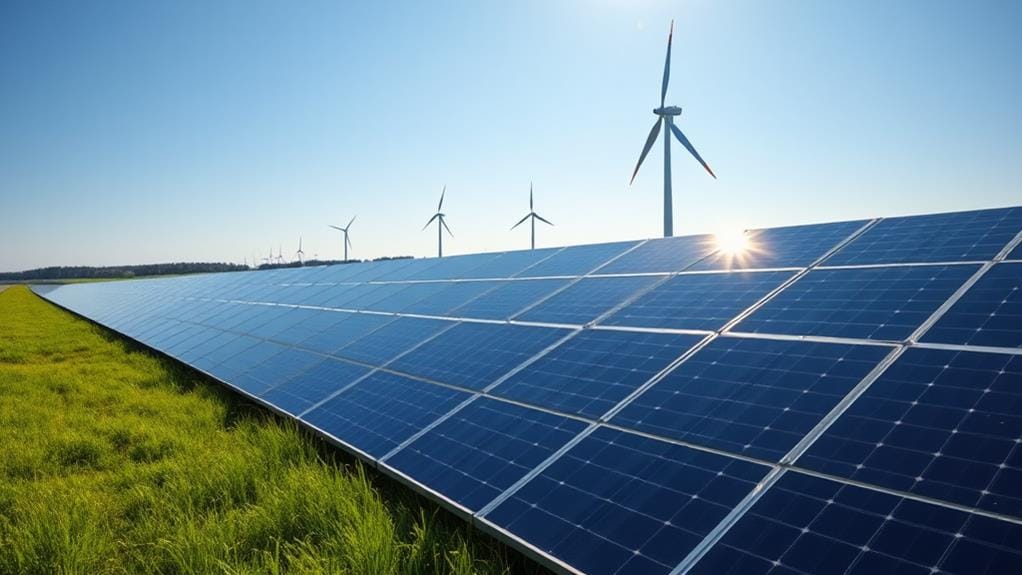
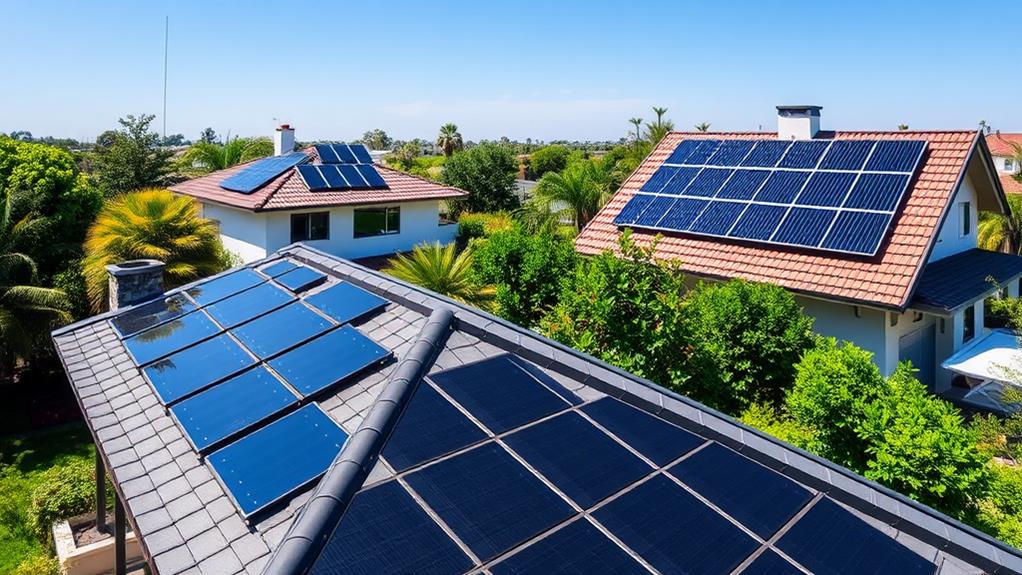
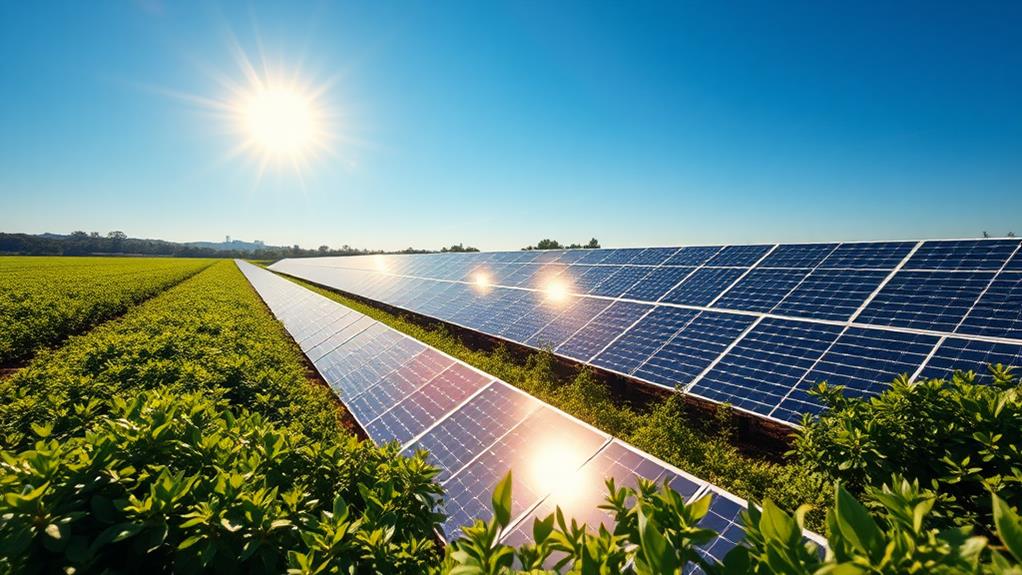
We can't overlook three key state solar incentives that enhance our financial returns on solar investments: Net Metering, Solar Renewable Energy Credits (SRECs), and Property Tax Exemptions. Net Metering allows us to earn credits for excess electricity generated, thereby reducing future utility bills and promoting grid stability. SRECs provide one credit for every 1,000 kWh produced, with market values around $57 in states like California and New Jersey, which we can sell to utilities. Finally, Property Tax Exemptions, available in 36 states, guarantee that our solar installations won't increase property tax assessments, facilitating long-term savings. Further insights await.
Key Takeaways
- Net Metering: Many states offer net metering, allowing homeowners to earn credits for excess solar energy, reducing future utility bills effectively.
- Solar Renewable Energy Credits (SRECs): Homeowners can generate and sell SRECs, providing an additional income stream based on their solar energy production.
- Property Tax Exemptions: In 36 states, solar installations are exempt from property tax increases, promoting investment in renewable energy.
- Investment Tax Credit (ITC): The federal ITC allows homeowners to deduct a significant percentage of their solar installation costs from federal taxes.
- State-Specific Grants and Rebates: Some states offer grants and rebates, significantly lowering the upfront costs of solar installation for homeowners.
Net Metering Benefits
You may be interested

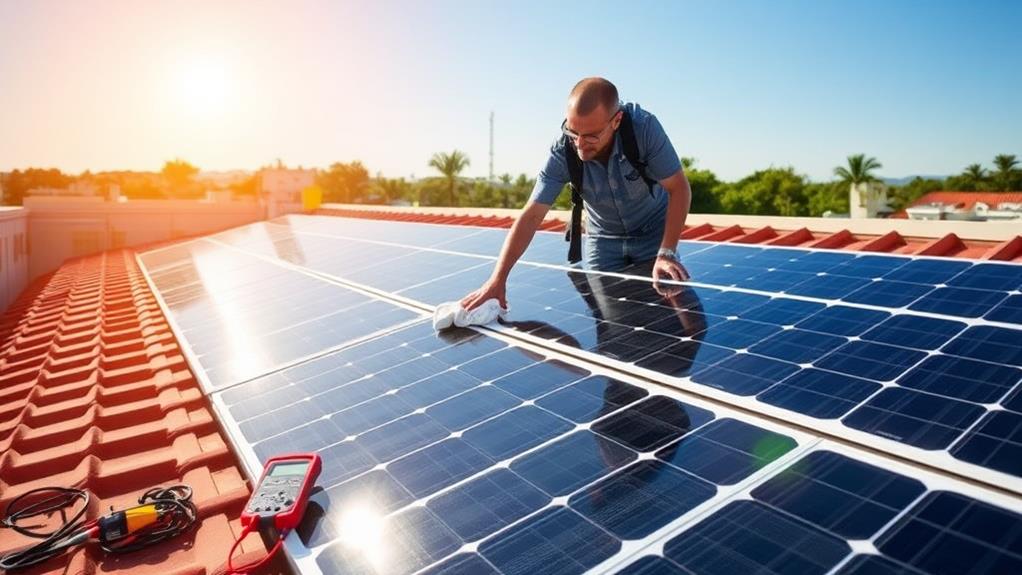
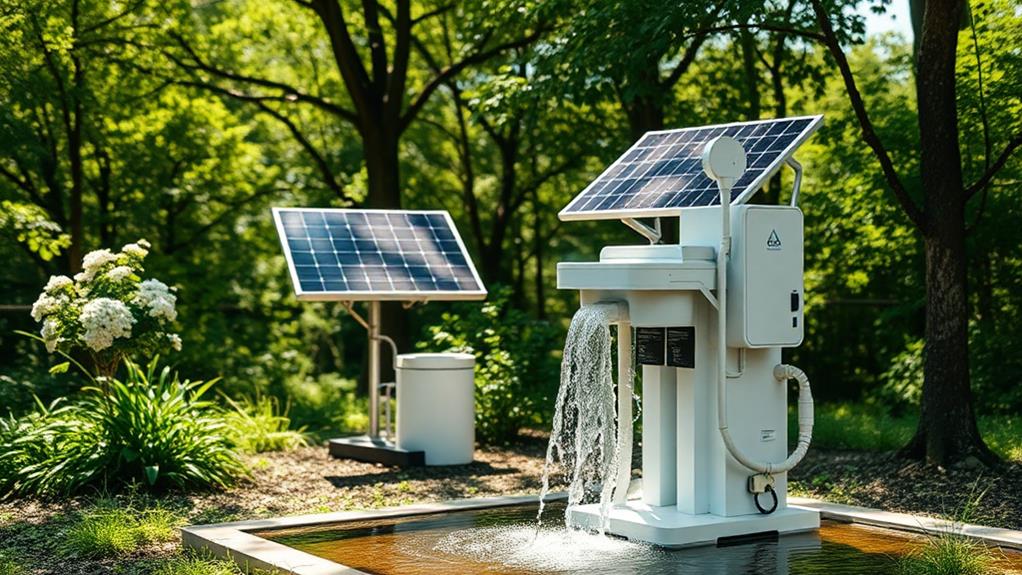
How can net metering transform our solar energy experience? By allowing homeowners to earn credits for excess electricity generated by their solar installations, net metering effectively lowers future utility bills. In 2026, policies vary by state, with some offering compensation at retail rates, which enhances the return on investment for solar energy systems. Approximately 38 states and D.C. have implemented these programs, making this incentive widely accessible. Homeowners enrolled in net metering can accumulate credits month-to-month, allowing savings during peak sunlight and usage during less sunny periods. Additionally, this practice supports grid stability, as the excess solar energy produced helps meet local energy demands, contributing to a more resilient and sustainable energy infrastructure for everyone.
Recommended Products
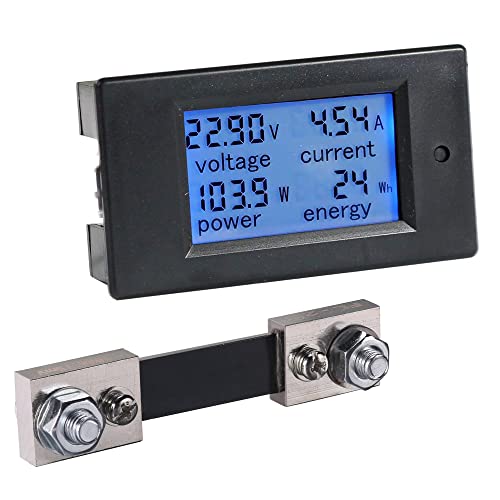
Test range: Voltage: DC 8~100V; Current: 0~100A; Power: 0~10kW; Energy: 0~9999kWh
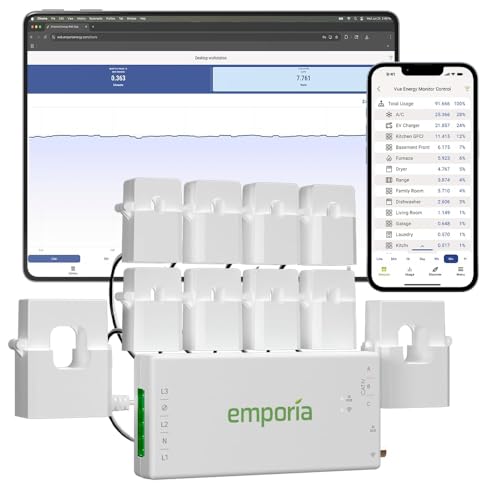
SAFETY YOU CAN TRUST WITH UL CERTIFICATION: With Emporia Energy, your home energy monitoring is safe, reliable, and certified. The Emporia Vue is UL Listed, meaning it has met rigorous safety standards for electrical products in the U.S. and Canada. This certification ensures that every component has been thoroughly tested to prevent hazards, such as overheating, short-circuiting, or fire, offering you peace of mind as you manage your home’s energy consumption.

SAFETY YOU CAN TRUST WITH UL CERTIFICATION: With Emporia Energy, your home energy monitoring is safe, reliable, and certified. The Emporia Vue is UL Listed, meaning it has met rigorous safety standards for electrical products in the U.S. and Canada. This certification ensures that every component has been thoroughly tested to prevent hazards, such as overheating, short-circuiting, or fire, offering you peace of mind as you manage your home’s energy consumption.
Solar Renewable Energy Credits
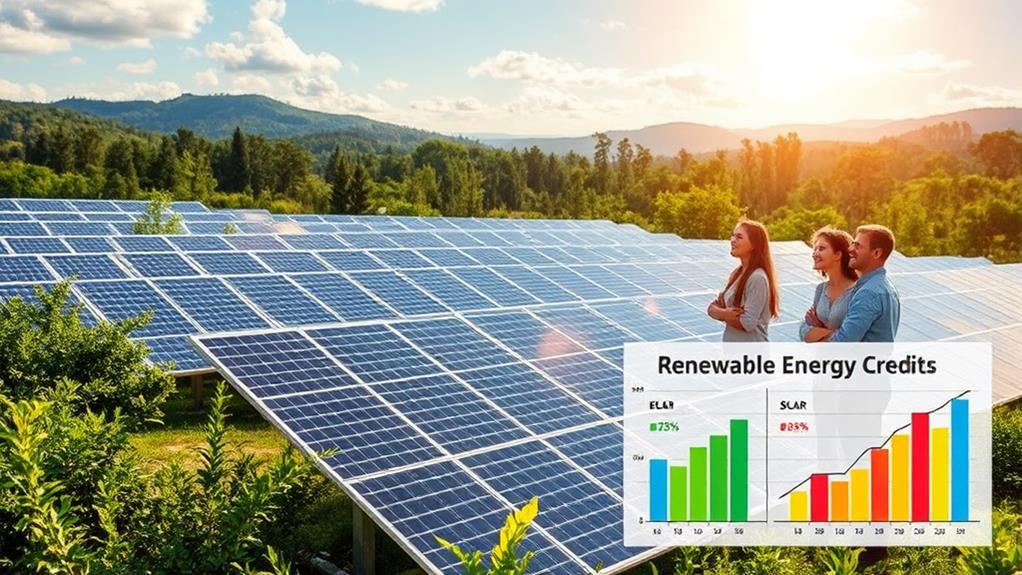
Solar Renewable Energy Credits (SRECs) offer a valuable opportunity for homeowners with solar energy systems to earn additional income. For every 1,000 kWh of electricity production, we generate one SREC, which we can sell to utilities needing to meet renewable energy standards. The market value of these credits varies by state, influenced by supply and demand, often reaching around $57 each in certain areas.
| State | SREC Market Value | Additional Revenue Stream |
|---|---|---|
| California | $57 | High |
| New Jersey | $55 | Moderate |
| Massachusetts | $60 | High |
| Maryland | $52 | Moderate |
Homeowners should stay informed about their state policies to maximize the financial benefit from their solar systems.
Recommended Products
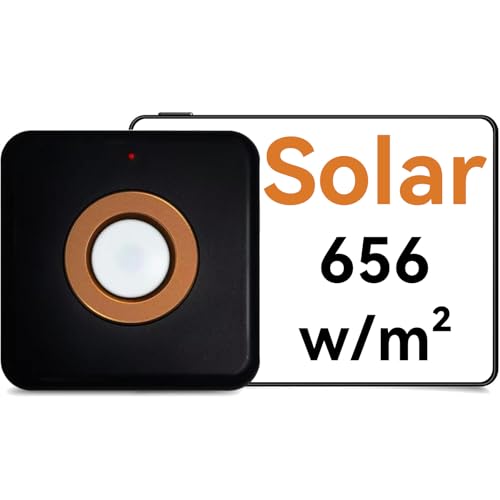
Accurate Testing with the solar sensor. Up to 3499 W/m².The sensor inside is from a famous Japan semiconductor company.

EM16P MODEL & LOCAL CONTROL & DATA PRIVACY: Access your home energy monitor data locally via Built-in Web UI, Open API, and MQTT without relying on cloud services. Unlike cloud-dependent monitors, Refoss ensures your data stays within your home network. Direct local access protects your privacy while giving you 100% full control of your home energy system.

⚡ Professional-Grade PV Testing Measures maximum power (Pmax) up to 2000W, open-circuit voltage (Voc: 12-150V), and short-circuit current (Isc: 35A) with ±0.8% accuracy, ideal for validating solar panel performance in R&D, manufacturing, and field maintenance. shading issues, helping installers maximize energy harvest and ROI for residential/commercial systems.
Property Tax Exemptions
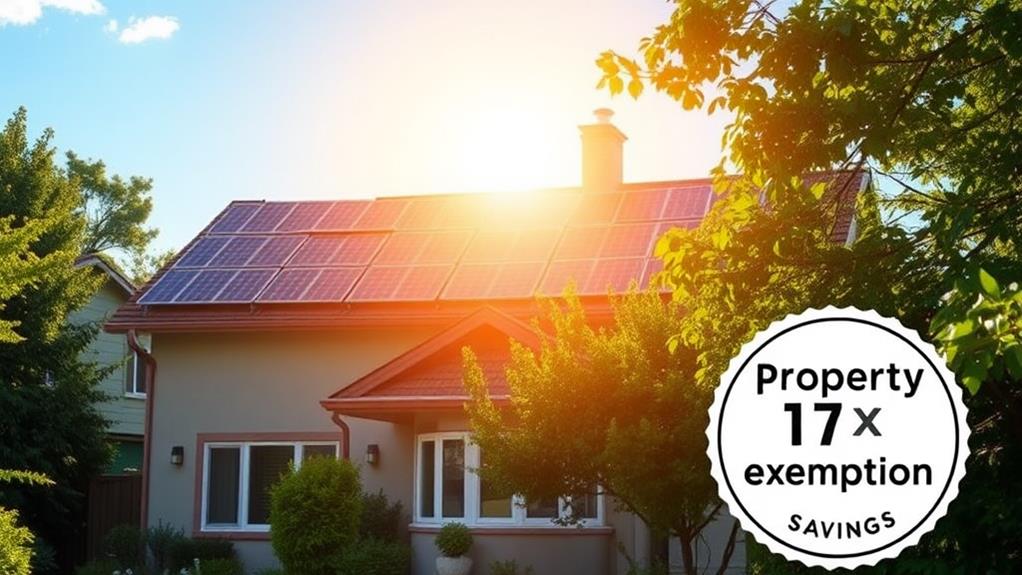
As we explore the financial benefits of solar energy, property tax exemptions stand out as another significant incentive for homeowners. These exemptions, available in 36 states, guarantee that solar installations don't increase property tax assessments, which can lead to substantial long-term savings.
Consider the advantages:
- Full Exemptions: Many states, like California and New York, provide complete exemptions, meaning homeowners can install solar without worrying about tax increases.
- State-Specific Initiatives: South Carolina and Maryland specifically promote solar systems through targeted exemptions, enhancing economic feasibility.
- Encouragement for Renewable Energy: These incentives foster a shift toward renewable energy, making it easier for homeowners to invest.
Recommended Products

55-PIECE NEC 2020 SOLAR LABEL KIT – Complete 55-piece solar system label kit designed for photovoltaic installations. Includes a practical assortment of PV labels, solar warning labels and electrical identification labels for residential and commercial solar systems.
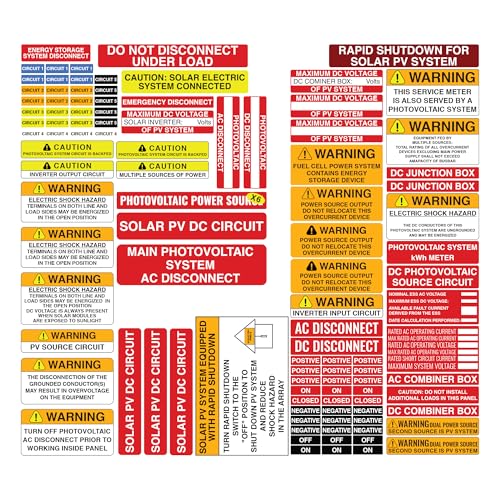
Quality Printing: This pv label kit features clear, high-contrast printing to ensure critical solar safety information is easy to read and instantly recognizable. Each solar labels sticker is designed to provide professional warning identification for photovoltaic systems

DURABLE MATERIAL | Made from high-quality ABS plastic, designed to endure industrial environments and last for years.
Frequently Asked Questions
What State Has the Best Solar Incentives?
When we consider which state has the best solar incentives, we can't overlook tax credits, grants, and rebates that lower installation costs. States like California and New York empower us toward energy independence and a positive environmental impact.
What Is the Best Solar Incentive?
When considering the best solar incentive, we can't overlook federal tax credits, solar rebates, and installation grants. Together, they empower us to embrace renewable energy, enhancing energy efficiency through community solar and supportive utility programs.
What State Pays the Most for Solar?
When we think about which state pays the most for solar, we see various solar payment options, tax credits, and grant programs. Exploring these can maximize our solar energy savings and enhance our investment returns.
What State Has the Best Net Metering?
Charting the solar landscape feels like charting a course toward freedom. States like California shine with net metering benefits, boosting solar energy savings and aligning with our energy independence goals. Let's explore those opportunities together!