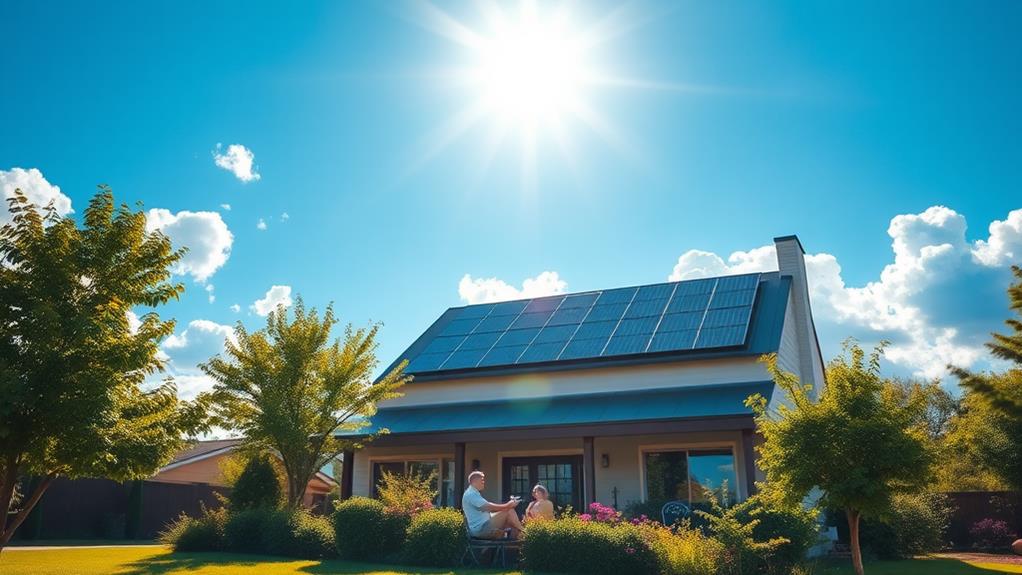
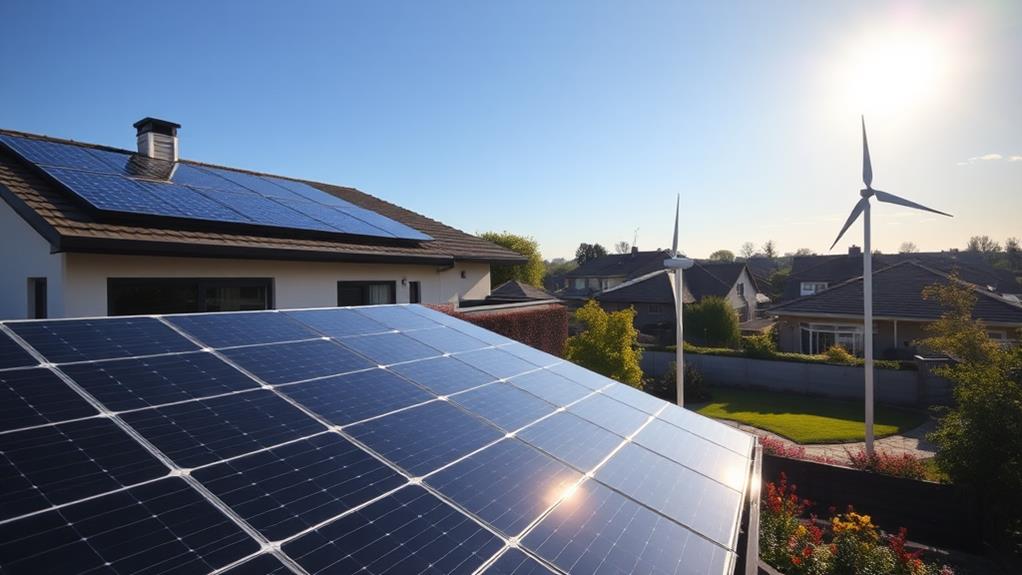
To cool your home naturally with solar-powered AC systems, you have two main options: a whole-home system powered by rooftop photovoltaic (PV) panels feeding a standard or hybrid heat-pump AC, or a dedicated solar thermal/DC-powered AC unit sized for one or two rooms. Because the federal residential solar tax credit (Section 25D) expired for systems installed after December 31, 2026, most homeowners evaluating a purchase in 2026 will no longer receive a federal credit on an owned system — though solar leases and power purchase agreements (PPAs) can still pass through a commercial credit via the installer. Sizing still starts the same way: estimate your AC unit’s wattage, your monthly kWh use, and your local peak sun hours, then work backward to a panel count. Professional load assessment remains the most reliable way to avoid over- or under-sizing your system.
Key Takeaways
- Solar-powered AC systems harness rooftop or on-site solar generation to offset or fully power cooling loads, cutting summer electricity draw from the grid.
- The federal 25D residential tax credit for purchased/financed solar systems ended for installations completed after December 31, 2026; leased systems and PPAs may still route a commercial-side credit through the installer.
- Hybrid systems draw from both solar and grid power, keeping your AC running reliably during cloudy stretches or at night.
- Smart thermostats and monitoring apps let you automate cooling around solar production, reducing waste without sacrificing comfort.
- State and utility-level incentives vary widely and are now the primary way to lower upfront cost — check your state energy office before buying.
Overview of Solar Air Conditioning Systems
You may be interested


Solar air conditioning generally falls into two categories. Whole-home systems use rooftop PV panels to power a standard or hybrid heat-pump AC, either directly or through a home battery, and can offset a large share of your cooling-season electric bill. Solar thermal or DC-direct AC units target a single room or zone and skip the inverter step by running compressors on DC current straight from the panels, which can be more efficient for smaller, standalone installations. A professional site assessment — checking roof orientation, shading, and your actual cooling load — is still the best way to pick between the two and to right-size the system for your climate.
How Solar Air Conditioners Work
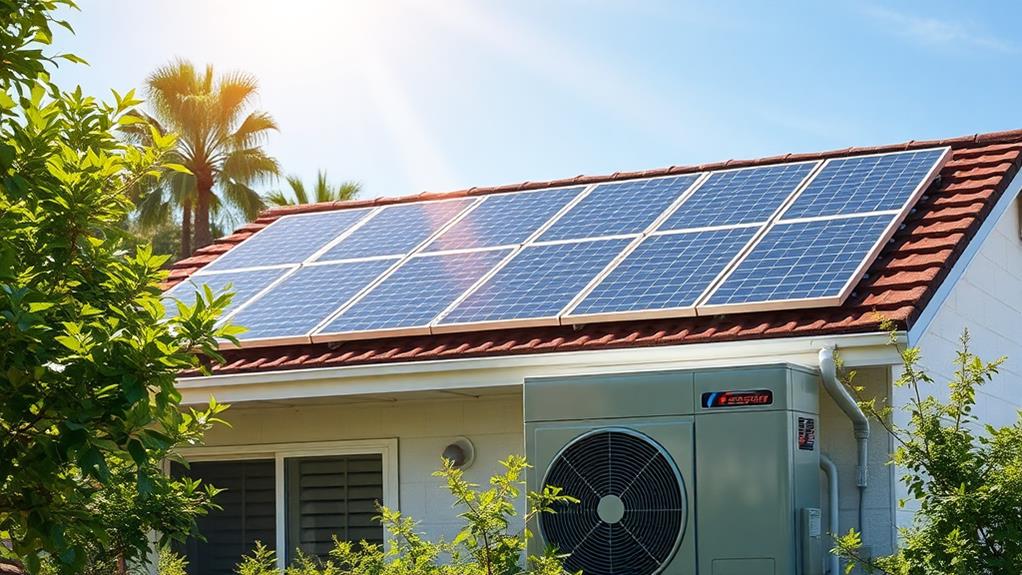
Solar air conditioners capture sunlight through PV panels and convert it to electricity that either runs the cooling system directly or charges a battery for later use. Most residential setups are hybrid systems — they draw on solar power during daylight and switch to grid electricity when the sun isn’t available, so you’re never left without cooling. Pairing the array with a heat pump instead of a standard AC compressor improves efficiency further, since heat pumps typically move 2-4 units of heat energy for every unit of electricity consumed. Because the panels generate power independently of the grid, a battery-backed system can also keep at least partial cooling running during outages.
Determining Solar Panel Needs
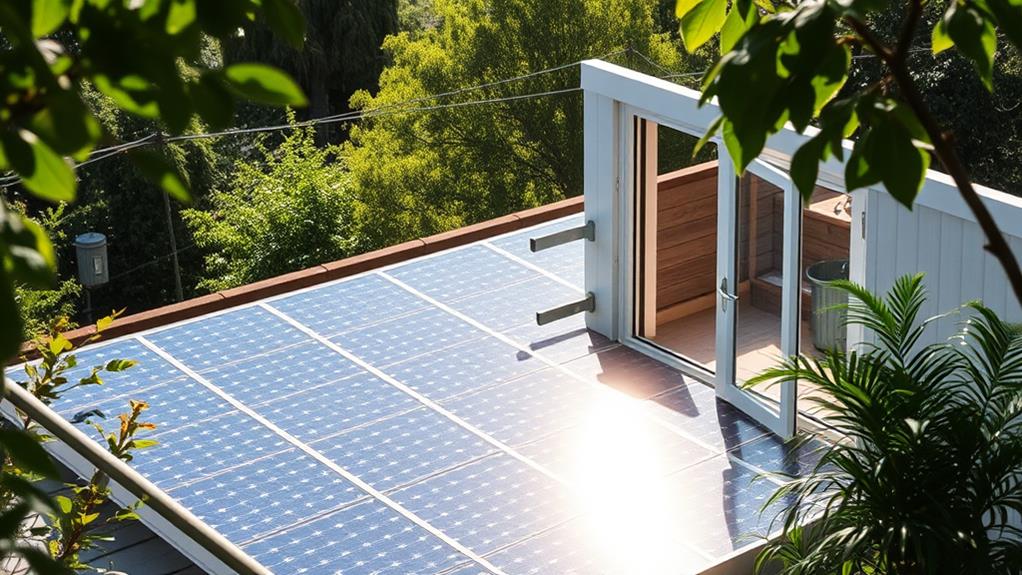
Sizing a solar AC system starts with your actual energy consumption, not a rule of thumb. A typical central AC unit draws roughly 3,000-3,500 watts at startup and 1,500-3,500 watts running, depending on tonnage and climate; a single mini-split zone typically pulls 500-1,500 watts. Match that draw against panel output — most residential panels on the market today are rated 400-450 watts — and factor in your location’s peak sun hours (commonly 4-6 hours/day across most of the US) to estimate how many panels you need to fully offset a cooling season.
Assessing Energy Consumption
Start by pulling your last 12 months of utility bills to see your actual monthly kWh use, then isolate the cooling-season spike — that’s the load your solar array needs to offset. A 2,000-square-foot home with central air commonly uses an additional 800-1,200 kWh/month during peak summer, on top of baseline household use. Key inputs to gather:
- Average monthly kWh use, cooling season vs. rest of year
- Nameplate wattage/tonnage of your AC unit or heat pump
- Roof orientation, tilt, and shading
- Local peak sun hours (varies by state/region)
- A professional load calculation (Manual J) for new or replacement systems
Calculating Panel Efficiency
Modern residential solar panels typically range from 375-440 watts each, with efficiency ratings around 20-22.5% for premium panels. To offset a 3,000-watt AC unit’s peak draw, you’d generally need seven to eight 400-watt panels running at full sun, though real-world output is lower due to temperature losses, inverter conversion, and less-than-ideal sun angles — most installers plan for 75-85% of nameplate capacity in practice.
Sunlight Availability Considerations
Peak sun hours vary significantly by region — the U.S. Southwest often sees 5-6.5 hours/day, while parts of the Northeast and Pacific Northwest average closer to 3.5-4.5 hours/day. This directly changes how many panels you need for the same cooling load:
- High-sun regions (Southwest, parts of the Southeast) may need fewer panels for the same AC load.
- Lower-sun regions require a larger array or added battery storage to compensate.
- Seasonal changes mean winter production drops even in sunny climates — size for your peak cooling month, not the annual average.
- Panel orientation and tilt angle can swing output by 10-25% versus a poorly placed array.
Pairing the system with a home battery helps smooth out cloudy days and lets you shift some grid draw to off-peak hours if your utility offers time-of-use rates.
Advantages of Solar Air Conditioning
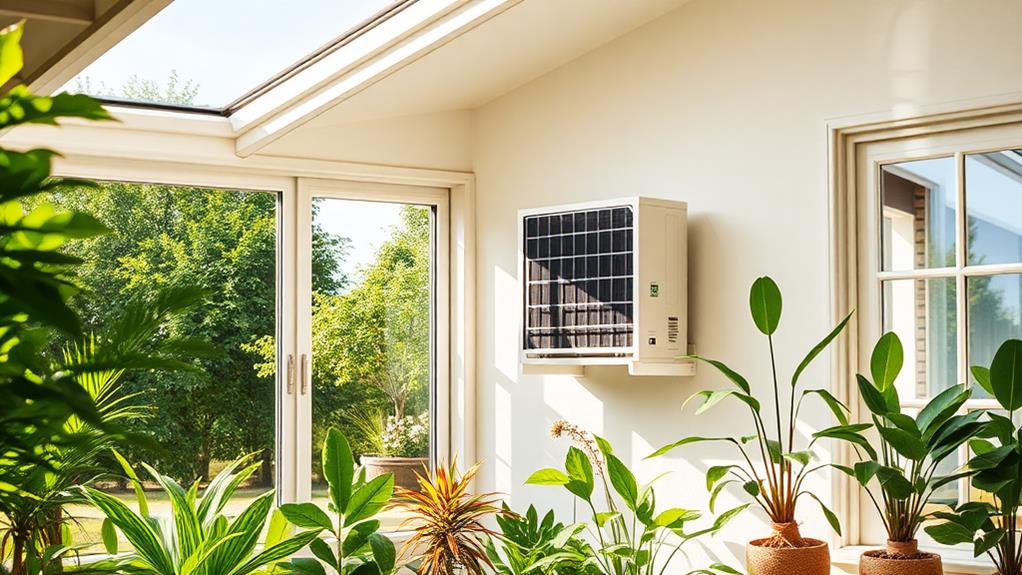
Solar-powered cooling reduces reliance on grid electricity during the highest-demand, highest-price part of the year — summer afternoons, when air conditioning drives a large share of peak grid load in most US regions. Beyond the bill impact, a properly installed system can lower your home’s carbon footprint, and paired with a battery, it can keep at least essential cooling running during a grid outage.
| Benefit | Impact on Homeowner | Environmental Impact |
|---|---|---|
| Reduced summer electric bills | Offsets peak cooling-season usage | Lower grid-sourced emissions |
| Home value | Solar installations are generally associated with higher resale value in most markets | Supports broader renewable adoption |
| Backup cooling (with battery) | Partial operation during outages | Reduces peak grid strain |
| Lower peak demand | Less exposure to demand-charge or time-of-use rates | Eases strain on regional grid infrastructure |
Transitioning to Solar Energy

The financial picture for going solar changed materially in 2026. The federal residential credit (Section 25D) — which had offered 30% back on the cost of a purchased or financed system — expired for any system not fully installed by December 31, 2026. If you’re buying a system outright or financing it with a loan, there is currently no federal tax credit for that route. Leasing panels or signing a PPA is a separate structure: the company that owns the panels may still qualify for a commercial-side credit (Section 48E) and can pass some of that value on through your lease or PPA rate, though the homeowner doesn’t claim a credit directly. Check the IRS’s residential clean energy credit page for the current, authoritative status before making purchase decisions.
Benefits of Solar Transition
Even without the federal residential credit, solar-powered cooling still offers a path to lower operating costs over the system’s 25+ year lifespan, more predictable electric bills, and reduced exposure to utility rate increases. It also supports grid resilience broadly — every home generating some of its own cooling power reduces regional peak demand.
- Lower long-term operating costs versus grid-only cooling
- More predictable electric bills
- Reduced exposure to summer peak/time-of-use rate spikes
- Emission-free operation once installed
- Potential state, local, or utility incentives (varies widely — verify locally)
Financial Incentives Available
With the federal residential credit gone for new purchases starting 2026, state and utility programs are now the primary lever for lowering upfront cost. Many states still offer property tax exemptions, sales tax exemptions, or rebate programs for solar installations, and some utilities offer time-of-use rate plans or demand-response incentives that reward solar+battery households. Because these vary by state and change often, check your state’s current incentive listing on DSIRE (the Database of State Incentives for Renewables & Efficiency) before budgeting a project.
Installation and Maintenance Tips
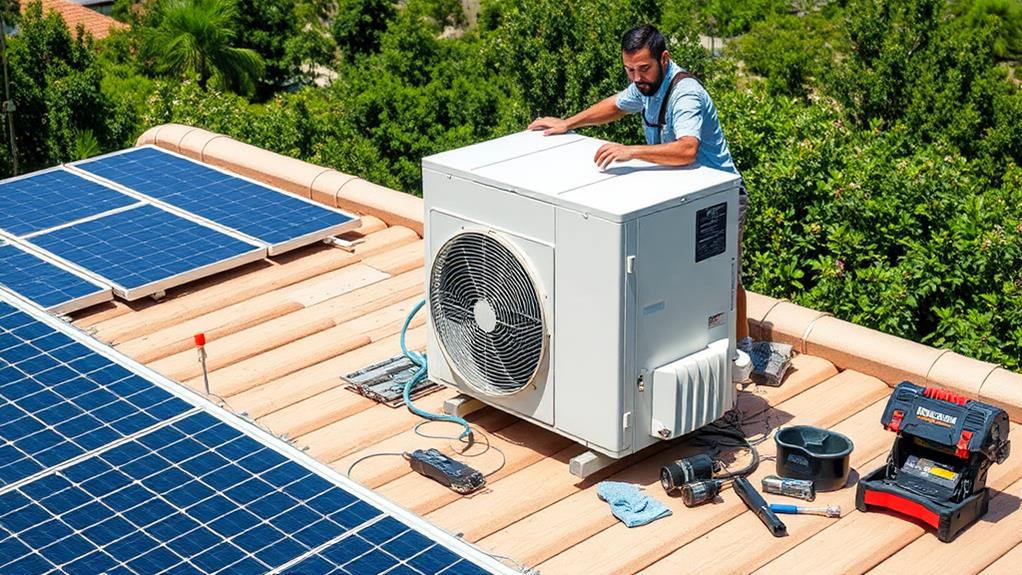
Start with a professional load and shading assessment rather than a generic panel count — your roof’s actual orientation, local peak sun hours, and AC unit’s real draw all change the math. A licensed installer will also handle permitting and utility interconnection, which is required in nearly all US jurisdictions before you can legally operate a grid-tied system. Ongoing maintenance is light but matters:
- Rinse panels periodically to clear dust, pollen, and debris that reduce output.
- Check battery health and charge cycles if your system includes storage.
- Have the AC unit itself serviced on its normal schedule — solar doesn’t change refrigerant or filter maintenance needs.
- Monitor production and consumption through your inverter’s app to catch underperformance early.
- Use smart scheduling to run cooling during peak solar production hours when possible.
Smart Technology Integration
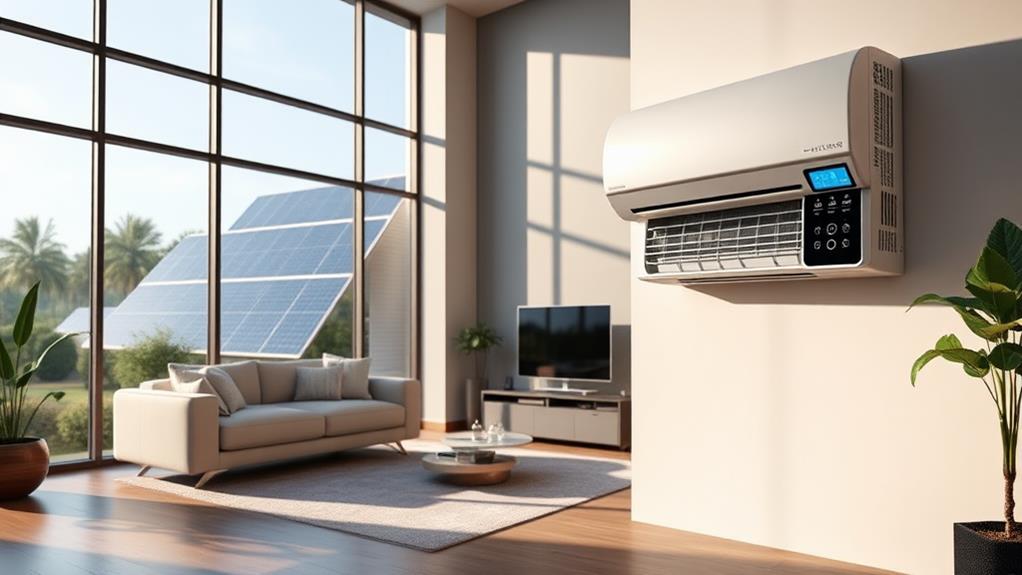
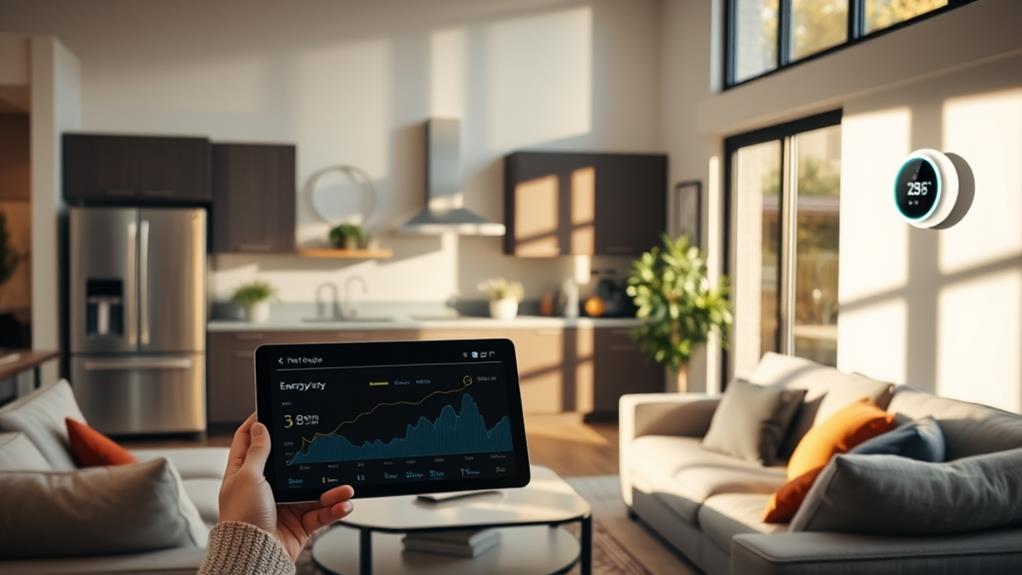
Smart thermostats and solar energy monitoring devices let you align cooling with solar production instead of running on a fixed schedule. Geofencing can pre-cool your home before you arrive so the AC isn’t working against a hot house during peak grid-price hours. Most current smart controllers support mini-splits as well as central systems and offer remote access through a mobile app, so you can adjust settings, track savings, and spot equipment issues without being home.
Cost Considerations
Total project cost depends heavily on system size, whether you add battery storage, and your local labor market — a full breakdown of typical per-watt and total costs is available in our residential solar installation cost guide. Because the federal residential credit no longer applies to new purchases, your realistic payback period is longer than it would have been under the old 30% credit — run the numbers with your installer using current, no-credit pricing, and separately evaluate whether a lease or PPA (which can still carry commercial-side incentives) makes more sense for your situation.
- Get at least two or three installer quotes — per-watt pricing varies significantly by region and installer.
- Compare cash purchase, loan, lease, and PPA structures side by side, since only some of these can still access any tax credit.
- Factor in battery storage costs separately if outage backup matters to you.
- Check state, local, and utility incentives — they now carry more of the savings than before.
- Confirm any installer claims about “tax credits” against the current IRS guidance, since this is a common source of outdated sales pitches in 2026.
Frequently Asked Questions
Can a Solar System Power an Air Conditioner?
Yes. A correctly sized solar array — typically paired with a hybrid inverter and, ideally, battery storage — can power a home AC unit or heat pump either directly during sunlight hours or via stored battery power at other times.
Can You Get a Solar-Powered Air Conditioner?
Yes, dedicated solar AC units and whole-home PV-powered systems are both commercially available. Weigh installation and maintenance costs against your climate and cooling needs, and get a professional load assessment before choosing a system size.
How Do You Cool a House With Solar Power?
Combine solar panel generation (direct or battery-stored) with a heat pump or standard AC, and pair it with passive cooling measures — shading, insulation, and air sealing — to reduce the total cooling load your solar system needs to cover.
Are Solar-Powered AC Units Worth It in 2026?
It depends on your state incentives, electricity rates, and financing structure. With the federal residential tax credit no longer available for purchased systems, run a payback calculation using current no-credit pricing and compare it against leasing/PPA options and any state-level programs before deciding.