
To effectively streamline geothermal plant construction timelines, we recommend focusing on three key strategies. First, we should optimize permitting processes by enhancing interagency coordination and addressing duplicative environmental reviews, such as NEPA and CEQA — a single geothermal project site on federal land can trigger a full National Environmental Policy Act review as many as six separate times across the land use planning, leasing, exploration, drilling, and operations phases. Second, enhancing utility mapping is essential; involving utility specialists early and incorporating detailed utility profiles can greatly reduce requests for information and expedite the construction phase. Finally, conducting early geotechnical assessments allows us to identify potential site-specific challenges—like groundwater issues—prior to construction, thereby informing accurate cost projections and enabling effective mitigation strategies. Each of these approaches contributes considerably to minimizing delays and enhancing project efficiency, with further insights available as we explore these topics.
Key Takeaways
- Enhance interagency coordination to expedite permitting processes and reduce approval delays, since a single site can trigger up to six separate NEPA reviews.
- Conduct early geotechnical assessments to identify site-specific challenges and plan effectively.
- Involve utility specialists from the outset for accurate mapping and reduced RFIs.
- Address dual environmental reviews to streamline compliance and minimize duplicative efforts.
- Develop clear communication channels between stakeholders to facilitate timely decision-making, and confirm current state and federal incentive deadlines before locking in a project budget.
Optimize Permitting Processes
You may be interested
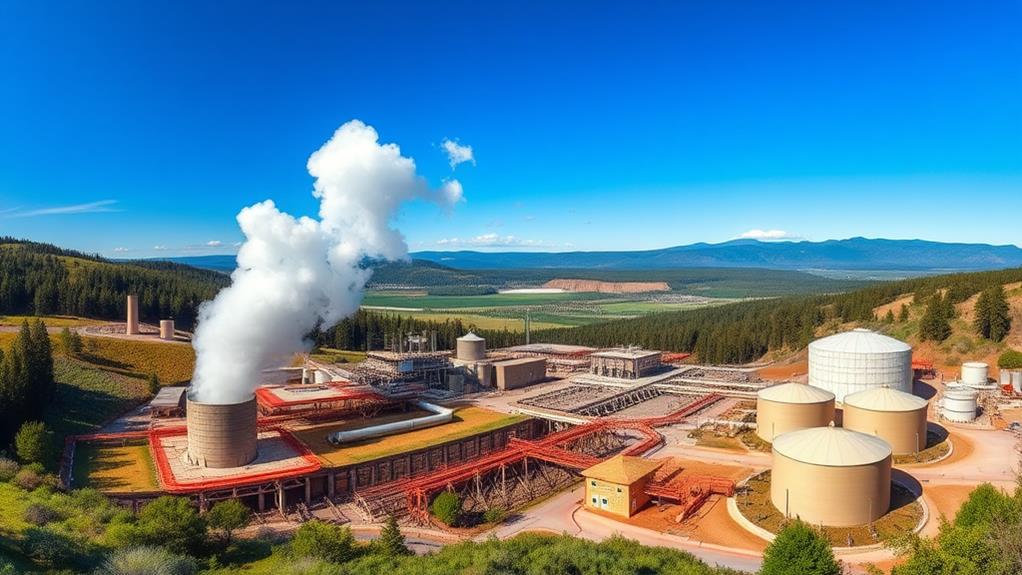
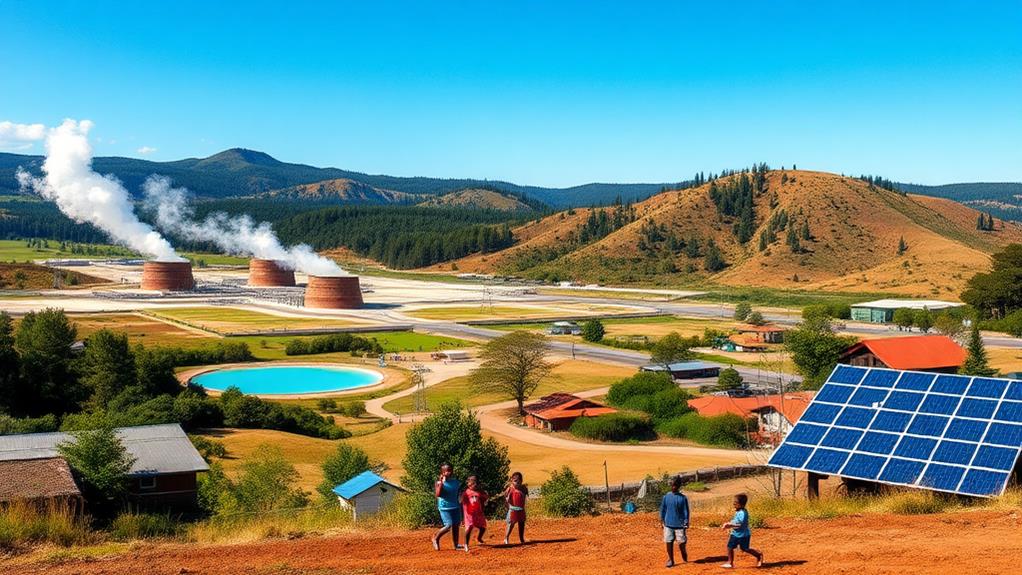

How can we effectively streamline the permitting processes for geothermal projects? By enhancing interagency coordination and collaboration, we can greatly reduce the extensive timelines associated with permitting. According to the U.S. Department of Energy, a single geothermal project location on federal land can trigger a full NEPA analysis as many as six separate times — once each for land use planning, leasing, exploration, drilling, and operations — and extensive dual environmental reviews, like NEPA and CEQA, often result in duplicative permitting requirements that complicate approval. Implementing interagency memorandums of understanding can facilitate communication and minimize redundancies in permitting. DOE’s GeoVision Barriers Task Force analysis found that expanding categorical exclusions and centralizing permitting offices could push conventional geothermal capacity to more than 12 GW by 2050 — a 113% improvement over the business-as-usual baseline — simply by removing non-technical, process-driven barriers. Additionally, leveraging legislative measures from the Energy Policy Act of 2005 can specifically address geothermal permitting on federally managed public lands, expediting approvals. By working together to optimize these processes, we can guarantee that geothermal development aligns with community concerns while promoting sustainable energy solutions. This collective effort is essential for advancing geothermal projects efficiently and effectively, and it also affects project economics: developers evaluating a geothermal energy system pricing guide should factor permitting delay risk directly into their cost projections.
Enhance Utility Mapping
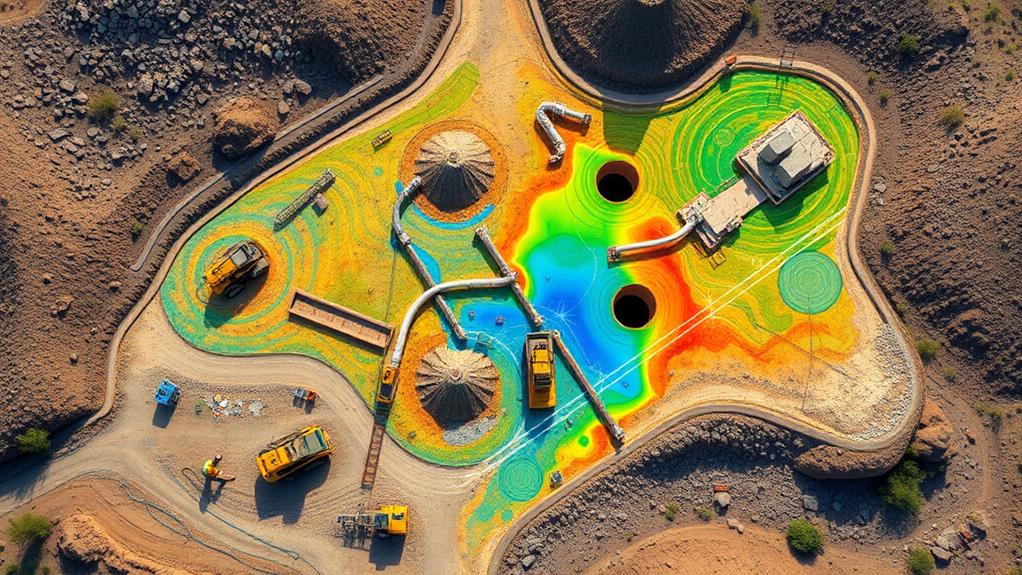
As we work to streamline geothermal plant construction timelines, enhancing utility mapping becomes vital. By involving utility specialists early in the geothermal project development phase, we can guarantee accurate mapping of existing utility infrastructure, which is essential for minimizing conflicts during construction. Accessing updated utility plans from service providers not only enhances reliability but also helps us avoid disruptions and project delays once construction begins. Detailed utility profiling allows us to identify depths and intersections of underground services, further reducing change orders and on-site modifications. Additionally, incorporating multiple representations of buried utilities in construction documents improves clarity, ultimately reducing the need for requests for information (RFIs) from contractors, thereby aligning our efforts with best practices highlighted by the National Renewable Energy Laboratory and the DOE Geothermal Technologies Office.
Conduct Early Geotechnical Assessments
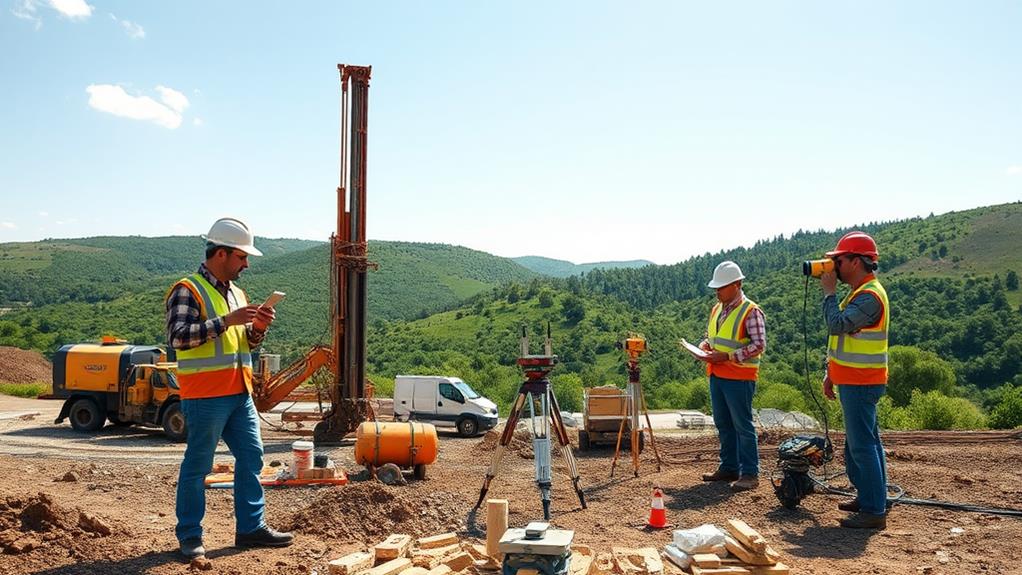
Conducting early geotechnical assessments is essential for the success of geothermal plant projects. By identifying potential barriers to geothermal development, such as groundwater, buried objects, and soil conditions, we can enhance our project planning efforts. These early assessments clarify site-specific challenges and inform our cost projections, ensuring we account for all grading considerations at the site. Additionally, recognizing issues early allows us to develop effective mitigation strategies, which ultimately lead to a smoother construction process. This proactive approach not only enhances contractor confidence but also reduces the likelihood of costly change orders. By embracing these opportunities for geothermal energy, we can streamline our construction timelines and maximize the potential of our geothermal resources. For homeowners and small developers weighing geothermal against other options, a look at geothermal energy pros and cons alongside residential geothermal heating system costs can help frame realistic expectations before committing to a project.
Recommended Products

Multilingual Interface & Warranty.User interface supports 9 languages: English, French, Spanish, Arabic, Russian, Polish, Turkish, Italian, Portuguese. The host is backed by...
Permitting Barriers vs. Streamlined Pathways
| Factor | Business-as-Usual Process | Streamlined / Coordinated Process |
|---|---|---|
| NEPA reviews per site (federal land) | Up to 6 separate reviews across project phases | Consolidated review via interagency MOUs and categorical exclusions |
| Agency coordination | Sequential, siloed agency sign-offs | Interagency memoranda of understanding and centralized permitting offices |
| Utility conflicts | Identified during construction, causing change orders | Identified pre-construction via early utility specialist involvement |
| Projected 2050 conventional geothermal capacity | Baseline scenario | Over 12 GW — a 113% improvement over baseline (DOE GeoVision analysis) |
Source: U.S. Department of Energy, Office of Energy Efficiency & Renewable Energy.
Frequently Asked Questions
What Is the Timeline for Geothermal Permitting?
Geothermal permitting on federal lands can be unusually complex: a single project site may trigger a full NEPA review as many as six separate times across land use planning, leasing, exploration, drilling, and operations. By traversing regulatory requirements and fostering stakeholder communication, we can better manage project timelines and guarantee community engagement throughout.
How Long Does It Take to Build a Geothermal Energy Plant?
Total development time from initial siting through commissioning varies significantly by project, and permitting complexity is one of the biggest variables. We must navigate regulatory challenges, site selection, project financing, and community involvement, while prioritizing energy efficiency and evaluating environmental impact throughout the process.
What Are the 5 Steps of a Geothermal Power Plant?
In the dance of geothermal development, we first select sites, then assess resources through drilling techniques. Next, we design power generation methods, ensuring regulatory compliance and community engagement, before finally optimizing maintenance strategies for sustainable progress.
Why Is It Difficult to Build Geothermal Power Plants in Most Areas?
Building geothermal power plants is tough due to site selection, drilling challenges, and regulatory hurdles. We must navigate environmental impacts, secure funding sources, embrace technology advancements, and prioritize community engagement to succeed in today’s competitive market.
Is There Still a Federal Tax Credit for Geothermal Heat Pumps?
For residential systems, the Residential Clean Energy Credit (Section 25D) covered 30% of the cost of qualifying ENERGY STAR-certified geothermal heat pumps, but per the IRS, that credit is not available for residential property placed in service after December 31, 2026, following the One Big Beautiful Bill Act. Commercial and utility-scale geothermal projects are evaluated separately under Section 48E and other business energy credit rules, which follow a different phase-down schedule, so project developers should confirm current eligibility and any applicable state-level incentives before finalizing financing.


