
Weighing the costs versus benefits of renewable power requires a multifaceted approach that includes evaluating initial installation costs, typically ranging from $20,000 to $29,000, and examining long-term savings, which can exceed $25,000 over 20 years. It's crucial to explore financial incentives, such as federal tax credits and utility rebates, which greatly lower upfront expenses. Additionally, consider the levelized cost of energy (LCOE) and operational savings associated with solar and wind options. Recognizing stakeholder interests and contextual factors can also guide your decision-making process, providing an all-encompassing understanding of both quantitative and qualitative benefits. Further insights await your exploration.
Key Takeaways
- Assess both quantifiable factors, like installation costs and tax incentives, and qualitative factors, such as environmental impacts, when evaluating renewable power.
- Compare the levelized cost of energy (LCOE) for different sources to understand long-term savings and operational costs.
- Engage key stakeholders early to consider diverse perspectives and enhance project acceptance in renewable energy initiatives.
- Factor in the financial payment methods (leasing, loans, cash) and their impact on both upfront costs and long-term savings.
- Evaluate the local context, including utility rates and regional energy needs, to determine the most cost-effective renewable energy options.
Importance of Cost Comparisons
You may be interested

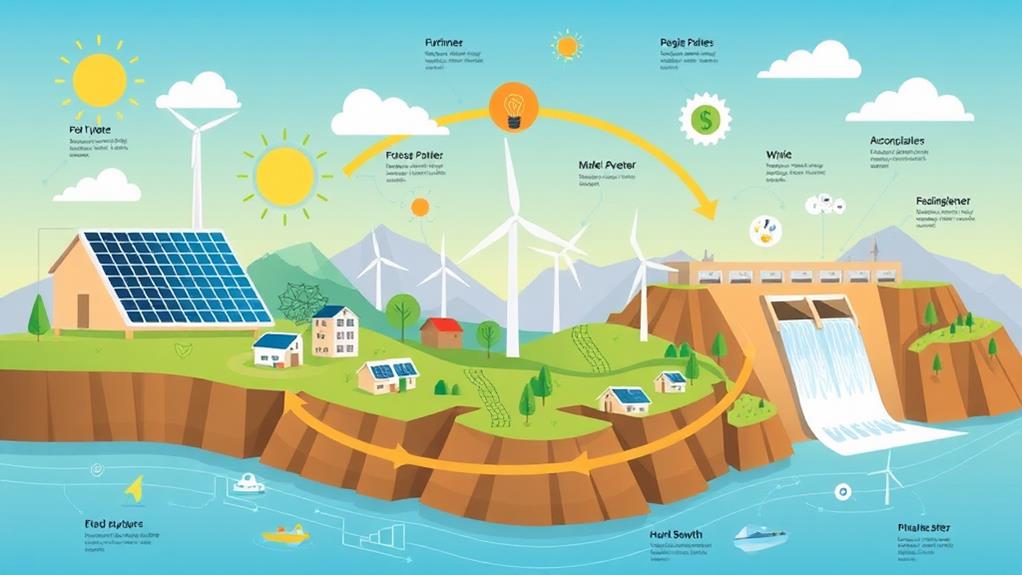

When it comes to evaluating renewable energy options, understanding cost comparisons is essential for making informed decisions. Accurate assessments of costs and benefits enable you to identify the most efficient and cost-effective electricity supply solutions. For instance, a 2013 NREL study revealed that 40% of U.S. supermarkets benefit from commercial-scale solar PV systems, emphasizing the importance of context in these evaluations. Furthermore, comparing commercial solar PV costs to utility retail electricity rates illustrates how metrics like Power Purchase Agreements (PPAs) for off-site wind energy can alter your decision-making process. Ignoring both quantifiable factors, such as incentives, and qualitative factors, like environmental impacts, can lead to misleading conclusions, making thorough assessments crucial for traversing the renewable energy landscape effectively.
Recommended Products
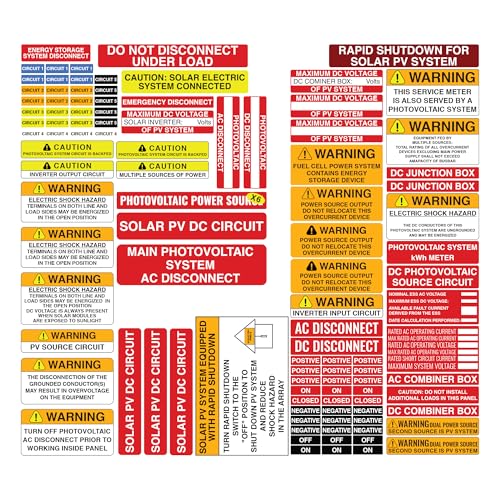
Quality Printing: This pv label kit features clear, high-contrast printing to ensure critical solar safety information is easy to read and instantly recognizable. Each solar labels sticker is designed to provide professional warning identification for photovoltaic systems

Complete 60-Piece Safety Kit: This comprehensive set includes 60 essential labels for photovoltaic systems, covering AC/DC Disconnects, Rapid Shutdown, Solar PV DC Circuits, and Backfed Breakers. Designed to meet NEC 2017, 2020, and 2023 code requirements for residential and commercial installs.

[PASS INSPECTION WITH CONFIDENCE] Don't let a failed inspection delay your project. This comprehensive 62-piece solar label kit is meticulously designed to meet the latest NEC 2020/2023 requirements. It includes all essential placards for Main Service Panels, Combiner Boxes, Disconnects, and Inverters, ensuring full compliance for residential and commercial solar systems.
Identifying Stakeholders in Comparisons

When identifying stakeholders in renewable energy comparisons, it's essential to recognize the varied interests and impacts of each group, including policymakers, utility companies, investors, and consumers. Understanding how these stakeholders influence and are influenced by energy costs and sourcing decisions can greatly shape the outcome of energy projects. Additionally, contextual analysis is important, as the economic viability of solar and wind energy options varies greatly across different regions and market structures, necessitating a tailored approach to stakeholder engagement.
Key Stakeholder Identification
Identifying key stakeholders in the comparison of renewable energy costs is essential for understanding the broader implications of these evaluations. Key stakeholder identification involves recognizing entities like local electric utilities, which may not perceive commercial solar PV systems as the cheapest option, emphasizing the need for contextual analysis. Moreover, the NREL study reveals that 40% of U.S. supermarkets benefit economically from commercial-scale solar PV, illustrating sector-specific opportunities. Policy experts and investors also rely on precise cost comparisons to guide decisions that influence energy market dynamics. Additionally, major brands, such as Mars and Walmart, utilize Power Purchase Agreements (PPAs) to enhance market access, showcasing how large companies actively shape renewable energy adoption across various regions and sectors.
Stakeholder Impact Analysis
Stakeholder impact analysis is vital for understanding how renewable energy projects affect various groups. By identifying key stakeholders—local communities, investors, policymakers, and utility companies—you can gain insights into their interests and concerns. Engaging these stakeholders early in the decision-making process enhances project acceptance, ensuring diverse perspectives are incorporated into cost-benefit analyses. For instance, the National Renewable Energy Laboratory (NREL) study indicates that 40% of U.S. supermarkets have benefited from commercial-scale solar PV, showcasing economic opportunities for certain sectors. However, different stakeholders may prioritize varying aspects, such as financial returns, environmental impacts, or social equity. As a result, a balanced approach in stakeholder impact analysis is essential, as understanding the local regulatory environment and community preferences can help tailor projects to meet expectations and maximize benefits.
Contextual Comparison Relevance
Contextual comparison relevance is essential in evaluating renewable energy options, as it guarantees that the unique needs and perspectives of various stakeholders are taken into account. When considering renewable energy systems, decision-makers, policy experts, investors, and regulators must rely on accurate data to make informed choices. A 2013 NREL study revealed that 40% of U.S. supermarkets could benefit from commercial-scale solar PV, underscoring the importance of context-specific evaluations. For local electric utilities, the cheapest solutions may not always include commercial PV systems, highlighting the necessity of tailoring comparisons to specific market conditions. Additionally, different renewable sources demand distinct metrics, such as Power Purchase Agreements and transmission costs, to accurately assess their economic viability within diverse stakeholder frameworks.
Comparing Different Energy Options

When you compare different energy options, it's vital to utilize robust cost analysis methods that encompass both direct expenses and long-term savings. For instance, while solar PV and wind energy may initially seem pricier, their operational costs can often undercut traditional fossil fuels when you factor in installation, maintenance, and available incentives like federal tax credits. Additionally, examining the financial implications of Power Purchase Agreements (PPAs) and transmission charges for off-site wind energy can provide a clearer picture of the overall cost landscape.
Cost Analysis Methods
Evaluating the costs of different energy options can be a complex process, especially when comparing renewable sources like solar PV and wind. To effectively utilize cost analysis methods, you'll need to take into account metrics such as the levelized cost of energy (LCOE), which accounts for installation expenses ranging from $20,000 to $29,000 for solar systems, alongside full pricing structures like power purchase agreements (PPAs) and transmission costs. Additionally, quantifiable incentives, including tax credits and rebates, can greatly mitigate those upfront costs. It's important to incorporate long-term savings on utility bills, which can exceed $25,000 over 20 years, while also evaluating qualitative factors like environmental impacts and energy independence. Ultimately, a thorough financial analysis can illuminate the true potential of solar energy investments.
Energy Source Comparisons
Understanding the differences between energy sources is vital for making informed decisions about energy investments. Energy source comparisons reveal that renewable options like solar and wind have become increasingly cost-competitive, with the Levelized Cost of Energy (LCOE) for solar PV dropping by 50% from 2010 to 2014. A 2013 NREL study indicated that 40% of U.S. supermarkets benefited from commercial-scale solar PV, highlighting sector-specific economic advantages. However, when evaluating off-site wind energy, it's important to include the Power Purchase Agreement (PPA) price alongside transmission charges. States like Minnesota favor solar over natural gas for peak demand, illustrating the significance of local context. Accurate comparisons should encompass both quantifiable incentives and qualitative factors, such as environmental impacts, to guarantee sound energy decisions.
Considering Additional Factors

Considering renewable energy options involves more than just crunching numbers; it requires a thorough look at both tangible and intangible factors. When evaluating your choices, keep in mind these essential elements:
- Financial Incentives: Look for tax credits or rebates that can offset initial costs.
- Cost Savings: Factor in long-term savings from reduced energy bills.
- Environmental Impacts: Assess how each option aligns with sustainability goals and reduces your carbon footprint.
- Energy Independence: Consider how renewable sources can enhance your energy autonomy and reduce reliance on fossil fuels.
A holistic view of these costs and benefits, including long-term savings and environmental impacts, supports more strategic decision-making, ultimately leading to better energy choices that reflect your values and aspirations.
Recommended Products

【Efficient Performance】This Starter Kit can generate an average of 500Wh of electricity per day (varies with sunlight). The solar panel boasts a 22.5% cell efficiency, 1.3% higher than other counterparts. Each panel dispatched from our facility undergoes 100% EL testing, ensuring that your panel is completely free from any hidden cracks.

Max Battery Voltage: 32V

Portable Generator with 60W Solar Panel Included: with a big battery pack, ZeroKor 300W solar powered generator are powerful enough to charge smartphones,tablets,laptops,headphones or other outdoor small camping supplies(Tips:Using electrical appliances over 300W may damage the portable solar generator, especially some devices that are prone to heat or built-in air compressor such as coffee maker,Hair dryer, water pump etc )
Exploring Financial Payment Methods

Homeowners often face an essential decision when it comes to financing solar panel installations, and the choice of payment method can markedly impact both immediate costs and long-term savings. You can choose to lease, take out a loan, or pay cash, each option influencing your financial landscape differently. Leasing involves monthly payments, often yielding smaller savings and excluding tax credits. In contrast, loans allow you to cover full installation costs while benefiting from tax credits and utility savings, albeit requiring regular payments. Alternatively, paying cash upfront eliminates monthly obligations, ensuring immediate utility savings and access to rebates. Given the total installation costs ranging from $20,000 to $29,000, weighing these financial methods is significant for optimizing your solar power investment.
Recommended Products

Find Perfect Angle for Solar Panels: The solar angle guide helps you determine the optimal angle for your solar panels to maximize energy output and efficiency. By using the solar angle guide, you can ensure that your solar panels are operating at maximum efficiency, saving you time and helping a lot for your outdoor time.


☀️[Maximize Energy Output] - No matter the season or wherever you are on Earth, a solar angle guide always helps you quickly find the optimal angle within 10 seconds, maximize output of your solar panel and reducing charging time.
Evaluating True Costs and Savings

When evaluating the financial implications of solar panel installations, it's crucial to assess both the initial costs and the long-term savings. The average installation costs range between $20,000 and $29,000, but various tax credits can reduce your upfront expenses considerably. Consider the following:
- Federal tax credits of $5,400.
- Utility rebates of $2,000.
- State tax credits of $1,000.
- Potential savings of over $25,000 in electricity costs over 20 years.
Once the solar panels are paid off, you'll enjoy free energy, eliminating monthly utility bills. Additionally, properties with solar installations often see increased values, ensuring that your investment not only pays off but also enhances your home's worth in the long run.
Recommended Products
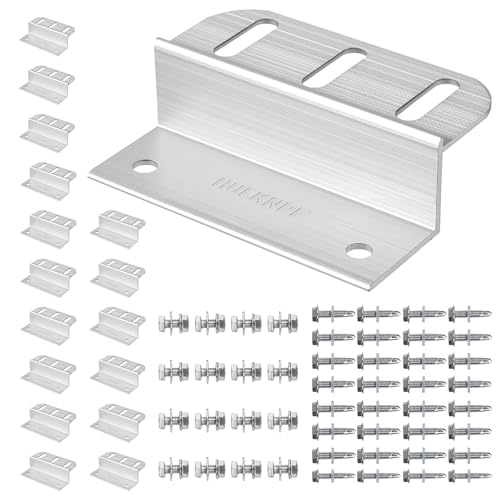
Durable & Wind-Resistant Build: Crafted from corrosion-resistant aluminum alloy, these heavy-duty Z brackets provide long-lasting, stable performance and withstand high winds for outdoor solar installations.

Full Tool Kit: Contain 1 pair of wire crimper, 10 pairs of solar panel connectors, 2 pairs of solar connector spanner, and a enduring and handy zipper case to keep all these parts together

Practical Design & Easy to Install: End clamps and T-shaped middle clamps ensure a secure and easy grip during the solar panel installation. It also reduces the impact of the weight of the PV system on the suction of the roof covering. The grooved strips of the rails allow for a more secure connection to the solar panels
Understanding Long-Term Benefits

The long-term benefits of investing in solar power extend far beyond mere savings on utility bills. By installing solar panels, you could save over $25,000 in electricity costs over 20 years, greatly reducing your long-term energy expenses. Once you've paid off the initial investment, your monthly utility bills could be eliminated, resulting in free energy generation for your system's lifespan. Additionally, solar installations often enhance property market value, enabling quicker sales at higher prices, which can effectively offset initial installation costs. With government incentives, such as federal tax credits and local utility rebates, the upfront costs are further diminished, enhancing your return on investment. Ultimately, shifting to renewable energy aligns with a sustainable lifestyle, reducing your carbon footprint while promoting energy independence.
Frequently Asked Questions
Do the Benefits of Renewable Energy Outweigh the Costs?
Think of renewable energy as a refreshing change; its benefits far outweigh the costs. You'll not only reduce your environmental impact, but you'll also embrace freedom from rising fossil fuel prices and pollution.
What Are the Costs and Benefits of Using Renewable Resources Vs Nonrenewable Resources?
When considering resource sustainability, you'll find renewable resources offer long-term savings and environmental benefits, while nonrenewables often lead to rising costs and pollution. Choosing renewables supports your freedom to create a healthier planet for future generations.
Is Renewable Energy More Cost-Effective Than Fossil Fuels?
You'll find renewable energy's becoming more cost-effective than fossil fuels, driven by market trends. As prices drop, you can embrace cleaner energy, gaining freedom from traditional energy sources and contributing to a sustainable future.
What Factors Are Important to Consider When Comparing the Cost of Renewable Vs Nonrenewable Energy?
When you're weighing energy costs, think of the weight of your choices. Environmental impact matters; it's freedom from pollution. Consider installation, maintenance, and hidden costs. Choose wisely, and you'll pave a cleaner path for future generations.


