
When exploring the best funding options for renewable energy projects, you should consider several avenues including grants, government incentives, crowdfunding, green bonds, public-private partnerships, and private equity. Grants from federal or state programs can notably reduce costs, while tax incentives tied to clean electricity generation still offer substantial value for commercial and utility-scale projects, even though the rules changed significantly in 2026 and 2026. Crowdfunding provides access to small-scale investments, promoting community involvement, and green bonds attract institutional investors focusing on sustainable outcomes. Additionally, public-private partnerships enable shared financial responsibilities, while private equity firms contribute vast sums to clean energy. Each option presents unique advantages and implications for project scalability and financial structuring. More insights await if you continue.
Key Takeaways
- Grants: Federal, state, and local grants significantly reduce financial burdens for renewable energy projects, such as solar and wind installations, with programs like USDA REAP covering up to 50% of eligible costs.
- Tax Credits: The residential federal solar tax credit (Section 25D) expired for systems installed after December 31, 2026, but the commercial Section 48E clean electricity credit still offers 30% for qualifying business and utility projects that start construction before July 4, 2026.
- Crowdfunding: Platforms like Kickstarter, Indiegogo, and Mosaic enable community investment in clean energy projects, democratizing funding and fostering local engagement in sustainability initiatives.
- Green Bonds: Issuing green bonds funds environmentally impactful projects while providing competitive returns; cumulative global green bond issuance has now surpassed $4 trillion.
- Private Equity: Global renewable energy investment reached a record $807 billion in 2026, with solar PV alone attracting $554 billion, according to IRENA.
Understanding Renewable Energy Financing
You may be interested

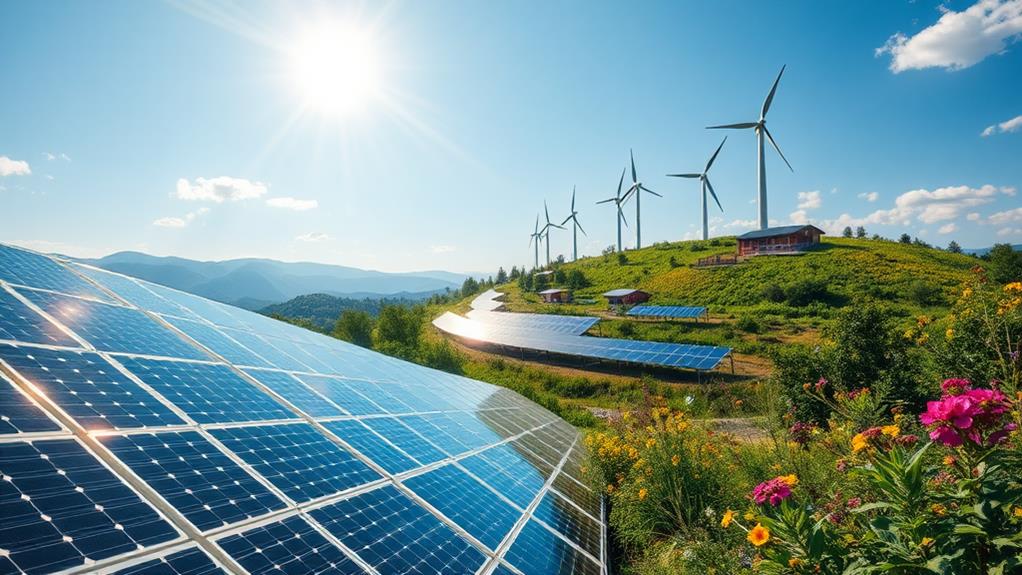

Understanding renewable energy financing can seem overwhelming, but it offers numerous options to help you fund your projects effectively. You can explore traditional loans, leases, and innovative programs like Property Assessed Clean Energy (PACE) financing, which enable energy efficiency enhancements without significant upfront costs. Additionally, Efficiency-as-a-Service allows you to pay for improvements based on actual savings, freeing up cash flow for other initiatives. If you’re weighing financing paths for a home system, it’s worth reviewing what residential solar panel installation actually costs before comparing loan and lease terms. For organizations, consider utilizing Green Revolving Funds — internal capital pools that allow organizations to finance energy efficiency projects, replenishing themselves through the savings generated. Globally, renewable power now attracts more capital than fossil fuel generation, with IRENA reporting that renewables accounted for roughly a third of the $2.4 trillion invested in the energy transition in 2026, underscoring the scale of opportunity for well-structured financing.
Grants for Renewable Energy Projects
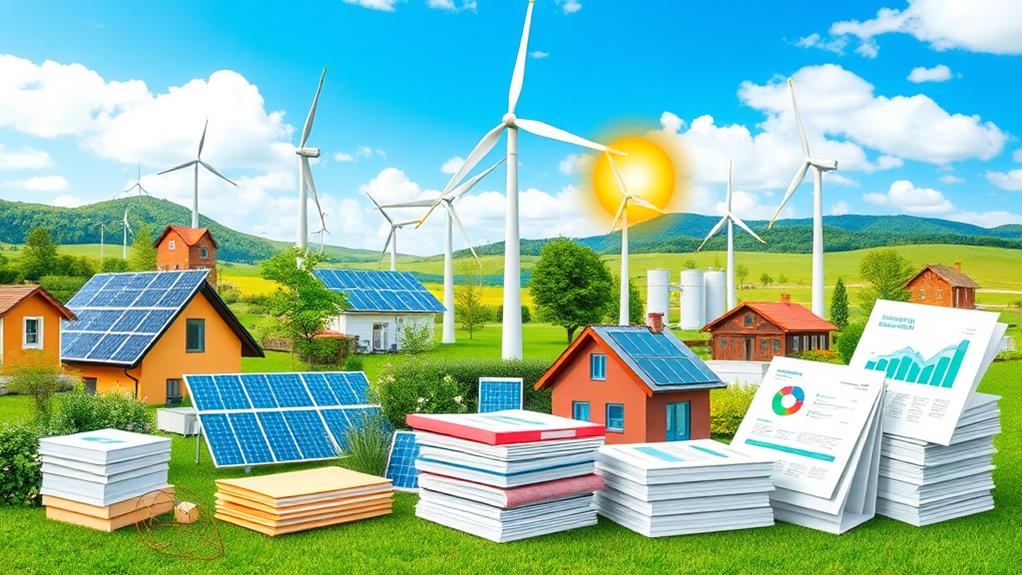
Grants can greatly reduce the financial burden of renewable energy projects, making them an attractive option for both businesses and homeowners. Various federal, state, and local governments offer grants targeting solar, wind, and geothermal installations, focusing on mitigating upfront costs. The U.S. Department of Energy provides competitive grants through initiatives like the Solar Energy Technologies Office, supporting innovative renewable energy research. The USDA’s Rural Energy for America Program (REAP) is one of the most substantial options for rural businesses and agricultural producers: it can fund up to 50% of eligible project costs for renewable energy systems and energy efficiency improvements in designated energy communities or for Tribal applicants, with a 25% share available to other projects, and combined grant-and-loan-guarantee packages can reach 75% of total costs. Renewable energy system grants range from $2,500 up to $1,000,000, while energy efficiency improvement grants range from $1,500 to $500,000. Many states also run their own incentive programs; for a state-by-state view of what’s available, see this breakdown of solar energy incentives by state.
Recommended Products


Government Incentives and Tax Credits
When you’re exploring funding options for renewable energy projects, understanding government incentives and tax credits is vital — and the rules shifted substantially under the One Big Beautiful Bill Act signed in mid-2026. Homeowners who purchase and own their solar systems outright can no longer claim a federal tax credit for systems installed after December 31, 2026, but businesses and third-party-owned systems still have a path forward through 2027 and beyond.
Federal Tax Incentives
Federal tax incentives still play a role in making renewable energy projects financially accessible, though the landscape has narrowed considerably. The residential Section 25D credit, which previously let homeowners deduct a share of solar system costs from federal taxes, expired for systems placed in service after December 31, 2026. However, the commercial Section 48E clean electricity investment credit remains available at 30% for qualifying business and utility-scale projects that begin construction by July 4, 2026 (with a placed-in-service deadline of December 31, 2030), or that begin construction after that date but are placed in service by December 31, 2027. After that, the commercial credit expires with no phase-down for solar, according to current guidance on Section 48E. Homeowners who lease systems or use power purchase agreements (PPAs) can still benefit indirectly, since third-party owners typically pass tax savings through as lower monthly rates. Businesses should also review accelerated depreciation under the Modified Accelerated Cost Recovery System (MACRS), which continues to let eligible renewable energy investors recover costs over an abbreviated schedule.
State-Level Benefits
With the residential federal credit gone, state-level incentives and tax credits have become even more important for making renewable energy projects affordable. Many states offer their own rebates, property tax exemptions, and performance-based incentives that reward you based on actual energy production. Many states also provide Property Assessed Clean Energy (PACE) financing, which enables you to spread the cost of a system over time through property tax assessments rather than relying on a federal credit that may no longer apply to your project. Because state programs vary widely and change often, it’s worth checking a current state-by-state solar incentive guide before you budget a project, and comparing financing paths using a resource like this solar financing options comparison.
Grant Opportunities Available
Numerous grant opportunities are available to further support your renewable energy projects, complementing the state-level incentives already discussed. Businesses pursuing solar, wind, or geothermal installations may still be eligible for the Section 48E credit described above, in addition to grant funding. The U.S. Department of Energy’s Solar Energy Technologies Office (SETO) continues to run competitive funding opportunities for innovative solar research and deployment. For agricultural producers and rural small businesses, the Rural Energy for America Program (REAP) was renewed for fiscal years 2026 through 2027, offering grants and guaranteed loans that can cover up to 50% of eligible project costs, promoting sustainable practices while enhancing energy efficiency. These programs can be pivotal in advancing your projects even as federal tax credit eligibility narrows.
Crowdfunding for Clean Energy Initiatives

Crowdfunding for clean energy initiatives provides a unique avenue for individuals like you to invest in sustainable projects, such as solar farms or wind energy installations, through established platforms like Kickstarter and Indiegogo. This approach not only democratizes investments, allowing smaller contributions to make a significant impact, but also helps startups and small businesses in the clean energy sector overcome traditional financing barriers. Platforms focused specifically on solar, such as Mosaic, have channeled substantial capital into residential and community solar projects, reflecting a growing global interest in impactful and sustainable investments. If you’re weighing whether a community project makes sense for your situation, this community solar participation guide is a useful starting point.
Benefits of Crowdfunding
Harnessing the power of crowdfunding can greatly boost clean energy initiatives by tapping into the collective resources of individuals who believe in sustainable projects. This approach democratizes funding, allowing you to invest in renewable energy solutions that align with your values.
The benefits of crowdfunding include:
- Accessibility: It opens doors for those without conventional funding sources to contribute to impactful projects.
- Community Engagement: Local participation fosters awareness about sustainability and promotes collective responsibility.
- Incentivized Investment: Campaigns often provide backers with equity stakes or future energy savings, ensuring that your interests are tied to the project’s success.
Popular Crowdfunding Platforms
In today’s world, finding the right platform to support clean energy initiatives can make all the difference in bringing innovative projects to life. Crowdfunding platforms like Kickstarter and Indiegogo have become popular avenues for funding renewable energy initiatives, enabling individuals to invest directly in groundbreaking technologies. Solar-specific platforms such as Mosaic allow smaller-dollar investments in solar projects, providing financial returns while advancing clean energy development, while other platforms focus on financing solar projects in developing countries, emphasizing social impact and sustainable development, reflecting the growing demand for sustainable investment opportunities in the clean energy sector.
Successful Campaign Examples
Numerous successful campaigns have demonstrated the power of crowdfunding in advancing clean energy initiatives. These projects not only highlight the effectiveness of grassroots funding but also showcase the potential for community engagement in renewable energy efforts, from community-owned wind projects in the UK to community solar campaigns in the United States that have each raised well over $1 million from individual backers. These examples illustrate how crowdfunding can mobilize individuals and investors alike, fostering innovative approaches to achieve clean energy goals. By leveraging platforms like Kickstarter, Indiegogo, and Mosaic, you can contribute to a sustainable future while enjoying the freedom to invest in meaningful initiatives.
Green Bonds for Sustainable Investments

Green bonds are revolutionizing the way we think about financing sustainable projects. These fixed-income securities are specifically tailored to fund initiatives that yield positive environmental impacts, such as renewable energy developments and energy efficiency improvements. According to Climate Bonds Initiative data, cumulative global green bond issuance has now surpassed $4 trillion, with annual issuance reaching roughly $653.5 billion in 2026, the second-highest annual volume on record after 2026. With returns comparable to traditional bonds, green bonds present an attractive option for those who desire to align their portfolios with climate initiatives. Many of these bonds receive certification from third-party organizations, ensuring proceeds are allocated appropriately, and the broader labeled sustainable debt market — which includes green, social, and sustainability-linked bonds — is now approaching $7 trillion in cumulative aligned issuance, reflecting continued momentum from institutional and development-bank investors.
Recommended Products


Private Equity in Renewable Energy

In the domain of renewable energy, private equity and broader private capital play a vital role by channeling significant funding into companies that develop and operate various clean energy projects, such as solar, wind, and battery storage. Global renewable energy investment hit a record $807 billion in 2026, according to IRENA, with solar PV alone attracting $554 billion — a 49% year-over-year increase — even as overall growth in investment slowed to 7.3% from the prior year’s 32% pace. Roughly 96% of renewable energy investment continues to flow into the power sector. Understanding the investment strategies and risk assessment techniques employed by private investors is essential, as they navigate the complexities of the market and the specific risks associated with the long-term viability of renewable energy projects, including shifting U.S. federal tax policy.
Investment Strategies Overview
Private equity’s role in renewable energy investment has become increasingly prominent as the world shifts towards sustainable solutions. By focusing on direct investments in private companies and projects, you can enhance your investment portfolios while capitalizing on the growing demand for clean energy. Fund managers in this arena typically leverage a mix of financing to optimize returns, often factoring in the remaining federal incentives available to commercial projects, such as the Section 48E credit.
- Potential for high returns through equity stakes in solar and wind projects
- Long investment horizons of 7-10 years align with project development needs
- Sustained global momentum, with renewable energy investment reaching a record $807 billion in 2026 per IRENA
This strategic approach not only supports the shift to renewable energy but also fosters financial growth in an evolving market landscape. Investors comparing the economics of different technologies may also find this cost-benefit analysis of green energy useful for framing return expectations.
Risk Assessment Techniques
Evaluating risks in private equity investments within renewable energy is essential for making informed decisions. Effective risk evaluation involves scrutinizing market volatility, as clean energy stocks often face significant fluctuations due to regulatory changes and technological advancements — the 2026 rollback of the residential solar tax credit is a clear example of how quickly policy can shift project economics. You’ll want to analyze the financial health of renewable energy companies, focusing on metrics like revenue growth, profit margins, and debt levels to understand potential investment risks. Additionally, consider the geographical locations of projects, since political stability and local infrastructure can greatly influence success. By diversifying across various renewable sectors — such as solar and wind — and asset types, you can mitigate risks tied to individual investments. Thorough due diligence, including evaluating the management team’s experience, is essential for identifying potential pitfalls in this dynamic landscape.
Public-Private Partnerships Explained

Public-Private Partnerships (PPPs) play an essential role in financing renewable energy projects by combining the strengths of public and private sectors. These partnerships leverage resources and expertise, leading to innovative financing mechanisms that can enhance project viability. Here’s what makes PPPs effective:
- Shared Risks and Responsibilities: Both sectors contribute, which mitigates financial burdens on public entities while promoting efficient project execution.
- Diverse Financing Mechanisms: Revenue-sharing models and performance-based contracts guarantee accountability and project success.
- Attracting Investments: Successful examples, like solar farms and wind energy projects, showcase how PPPs draw in both government funding and private investment, including community-owned wind projects.
Energy Efficiency Financing Mechanisms

Exploring energy efficiency financing mechanisms can release significant savings and sustainability for your organization. You have various financing options, including traditional loans and leases, as well as innovative solutions like Property Assessed Clean Energy (PACE) financing, which enables you to fund energy upgrades via property tax assessments. Efficiency-as-a-Service models allow building owners to enhance energy performance without upfront costs, paying for savings over time. Additionally, Green Revolving Funds empower organizations to create internal capital pools for energy efficiency and renewable energy projects, replenishing funds through cost savings. Specialized financing toolkits offer tailored guidance, helping you navigate the available options effectively, and pairing financing with ongoing upkeep — see these solar panel maintenance tips — helps protect the return on any financed system.
Impact Investing in Renewable Sectors
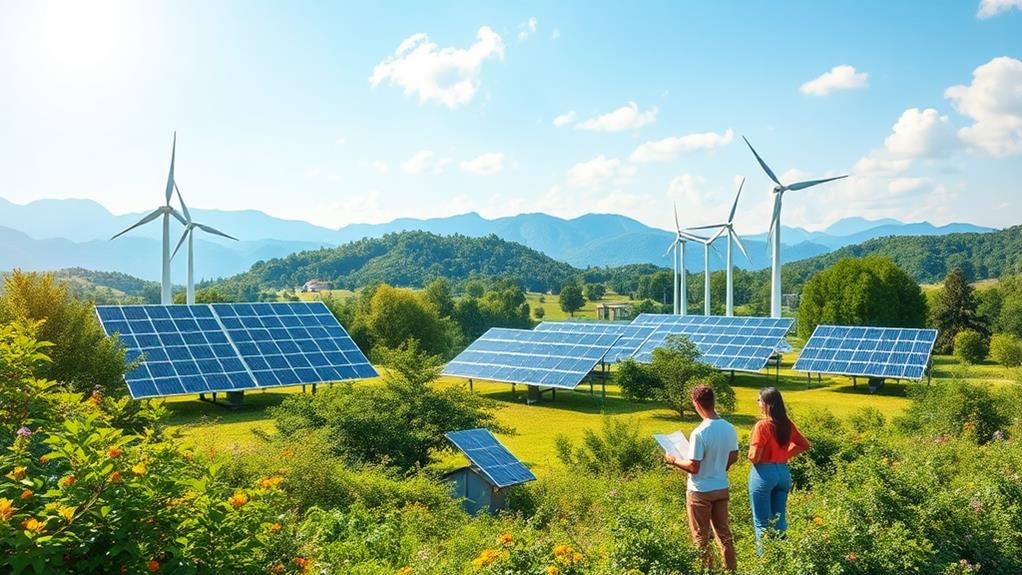
As organizations increasingly recognize the importance of energy efficiency, many are also turning their attention to impact investing in renewable sectors. This approach not only focuses on generating measurable environmental benefits but also seeks competitive financial returns, and the scale of capital involved keeps growing alongside record renewable energy deployment.
Key aspects include:
- Global renewable energy investment reached a record $807 billion in 2026, according to IRENA’s Global Landscape of Energy Transition Finance report.
- Solar PV investment alone hit $554 billion in 2026, a 49% year-over-year increase.
- About 96% of renewable energy investment continues to flow into the power sector, with financing still concentrated in advanced economies and China.
This trend demonstrates a strong commitment to combating climate change, while also highlighting the potential for sustainable funds to keep attracting capital even as policy landscapes shift.
Renewable Energy Project Loans
For anyone looking to finance renewable energy projects, understanding the various loan options available is essential. Renewable energy project loans are tailored financing solutions for initiatives like solar, wind, and energy efficiency upgrades. These loans often come from traditional banks, credit unions, or sustainable financing institutions, featuring favorable terms. A unique option is Property Assessed Clean Energy (PACE) financing, allowing property owners to repay loans through property tax assessments — a path that has become more important now that the residential federal tax credit no longer applies to newly installed owned systems. Many loans offer competitive interest rates, and some programs even provide subsidized rates for low-income projects, such as USDA REAP loan guarantees. Additionally, innovative models like Efficiency-as-a-Service enable organizations to fund energy upgrades without upfront costs by paying for improvements through energy savings. If you’re still deciding between financing paths, this guide to residential solar installation costs breaks down the numbers you’ll want to compare loans against.
| Loan Type | Interest Rate | Repayment Method |
|---|---|---|
| PACE Financing | Often subsidized | Through property taxes |
| Traditional Loans | Competitive | Fixed monthly payments |
| USDA REAP Loan Guarantee | Market rate, up to 75% guaranteed with grant combo | Fixed monthly payments |
| Efficiency-as-a-Service | Variable, based on savings | Monthly savings payments |
Recommended Products

Frequently Asked Questions
Is the federal solar tax credit still available in 2026?
Not for homeowners who purchase and own their system outright: the residential Section 25D credit expired for systems installed after December 31, 2026, under the One Big Beautiful Bill Act. Businesses and third-party-owned systems (leases and PPAs) can still qualify for the 30% Section 48E commercial clean electricity credit if construction begins before July 4, 2026.
What Is the Best Way to Invest in Renewable Energy?
If you’re looking to invest in renewable energy, consider strategies like dollar-cost averaging into diversified solar and wind energy funds, or direct participation through green bonds and crowdfunding platforms. This approach helps you navigate volatility while embracing the freedom of sustainable investing for a greener future.
How Much Can USDA REAP Grants Cover?
REAP grants can cover up to 50% of eligible project costs for renewable energy systems and energy efficiency improvements in designated energy communities or for Tribal applicants, and up to 25% for other projects. Combined grant-and-loan-guarantee packages can reach as much as 75% of total eligible costs.
Are Green Bonds a Good Option for Funding Renewable Projects?
Green bonds remain a strong option for larger-scale renewable projects seeking institutional capital. Cumulative global green bond issuance has surpassed $4 trillion, with annual issuance around $653.5 billion in 2026, reflecting continued strong demand from investors seeking both returns and verified environmental impact.
What Is the Best Option for Renewable Energy Funding?
There’s no single best option — it depends on your project type and scale. Homeowners should compare financing (loans, leases, PACE) since the federal tax credit no longer applies to owned systems, while businesses should evaluate the Section 48E credit alongside REAP grants, green bonds, or private equity depending on project size.


