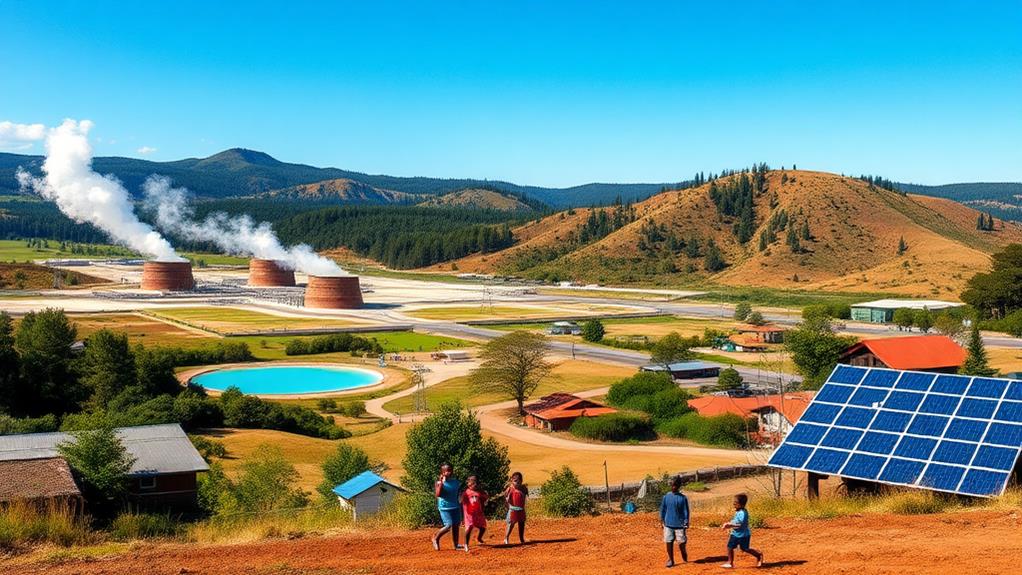
When comparing geothermal and solar power, the clearest difference is reliability versus flexibility: geothermal power plants run at an average capacity factor of about 65.9%, meaning they generate close to that share of their theoretical maximum output around the clock, compared with roughly 24.4% for utility-scale solar PV, which only produces during daylight hours. Geothermal also has a much smaller land footprint per unit of energy and very low lifecycle emissions — geothermal plants emit an estimated 99% less CO2 than comparable fossil fuel plants. The tradeoff is upfront cost and geography: geothermal requires specific geological conditions and high initial drilling investment, while solar can be deployed almost anywhere sunlight reaches, with equipment costs that have fallen sharply over the past decade. Each technology fits a different role in a diversified clean energy mix.
Key Takeaways
- Geothermal plants operate at roughly a 65.9% capacity factor on average, well above solar PV’s roughly 24.4%, making geothermal a more consistent baseload-style resource.
- Geothermal has a smaller land footprint per unit of energy generated and can often coexist with other land uses like agriculture.
- Upfront capital costs for geothermal are high, driven mainly by exploration and drilling, while solar installation costs have declined significantly and continue to fall.
- Geothermal plants emit roughly 99% less CO2 than similarly sized fossil fuel plants across their lifecycle, according to comparative lifecycle studies.
- Geothermal development is geographically limited to regions with accessible high-temperature resources, while solar can be installed in nearly any sunny location.
Historical Development of Geothermal Energy
You may be interested
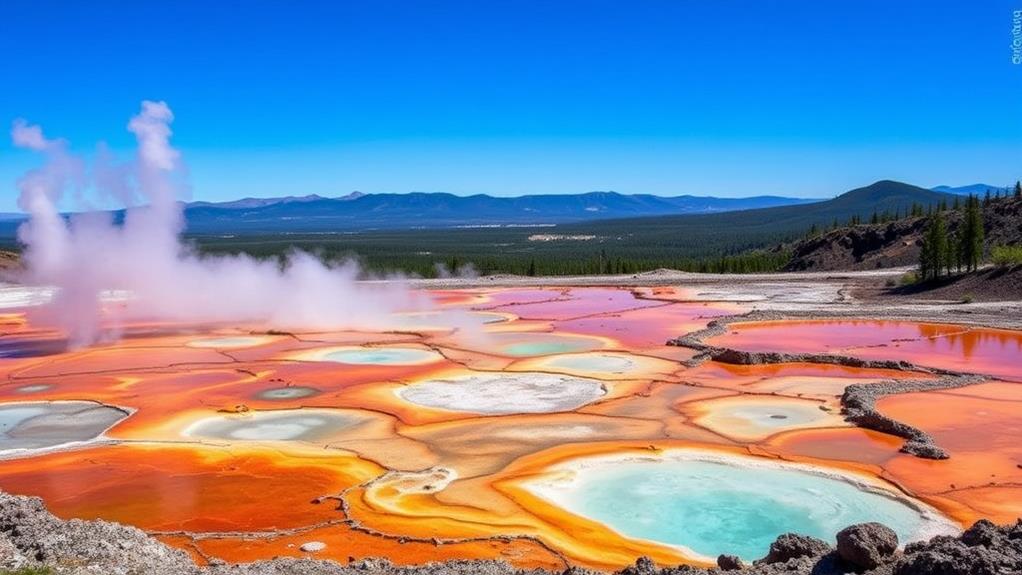
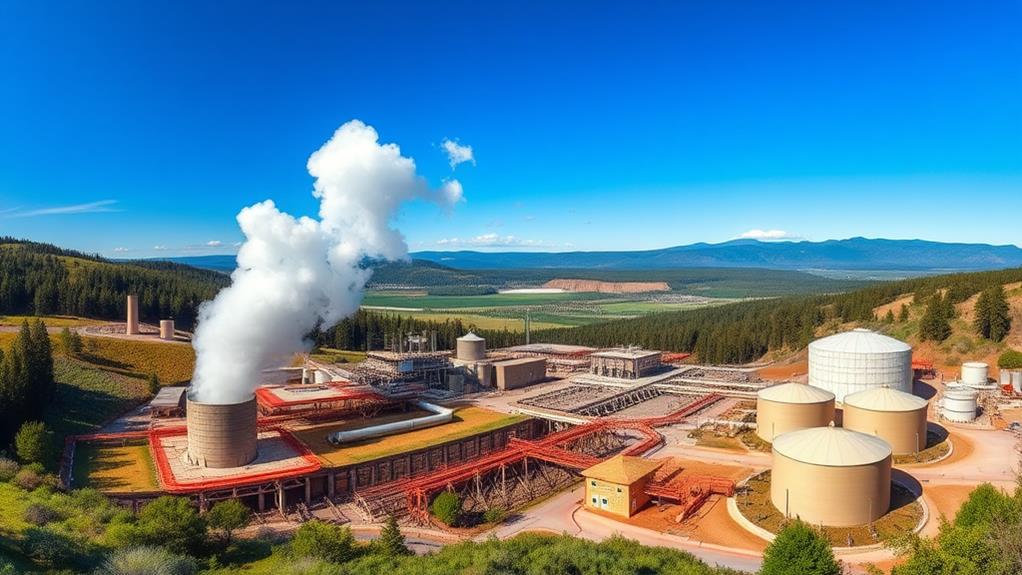
Commercial geothermal power dates back to 1904, when the first geothermal generator in Larderello, Italy, lit a small string of light bulbs. By 1911, Italy had built the world’s first commercial geothermal power station. New Zealand’s Wairakei plant introduced flash steam technology in 1958, and the US followed with The Geysers in California in 1960, which remains the largest geothermal complex in the world today. Binary cycle technology, developed in the following decade, later expanded geothermal’s reach to lower-temperature resources that earlier plants couldn’t use, broadening where the technology is viable.
Global Geothermal Capacity and Production
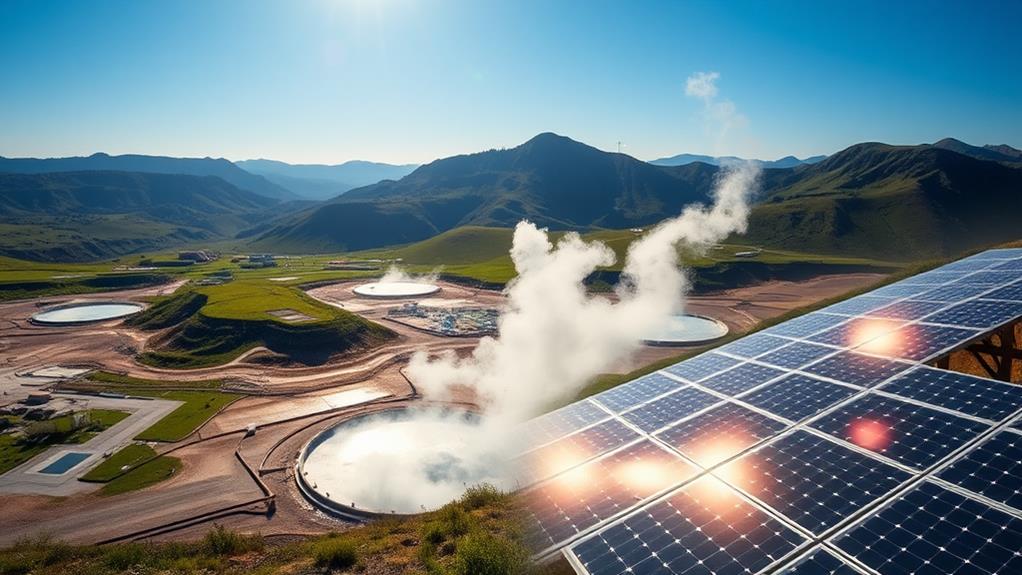
Global geothermal power capacity reached about 16 GW by the end of 2026, according to IRENA, with growth remaining relatively slow — roughly 0.3 GW added globally in 2026, led by the Philippines and Indonesia. That’s a small fraction of solar’s 2,392 GW and wind’s 1,291 GW installed globally in the same period, underscoring how geothermal remains a niche but highly reliable resource:
- The U.S., Indonesia, Turkey, the Philippines, and New Zealand together account for the large majority of global installed geothermal capacity.
- Indonesia holds some of the largest untapped geothermal potential in the world but has installed only a fraction of it to date.
- Growth has been gradual rather than rapid, reflecting the long lead times and high upfront costs of geothermal exploration and drilling.
Recommended Products

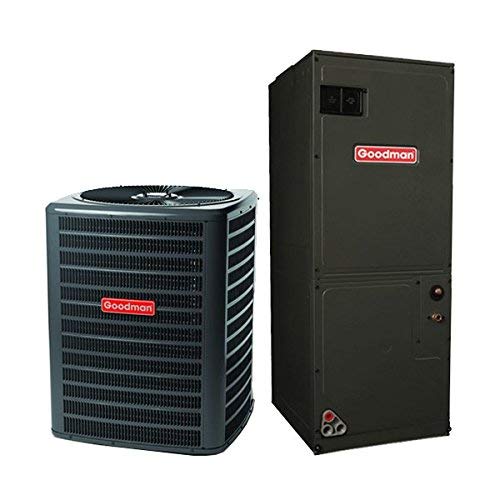
Home Comfort Solution: Elevate your living with Goodman's standout HVAC products. Merge the efficiency of the Goodman 2 Ton 15.2 SEER2 Heat Pump GLZS4BA2410 and the Goodman Multi-Position Air handler AMST24BU1300. This duo forms the basis of a system, promising efficient heating and cooling and precision in temperature control, all crafted to deliver sustained performance over years. Note that you will want a heat kit if you live in a cold climate.

Environmental Impact of Geothermal Energy
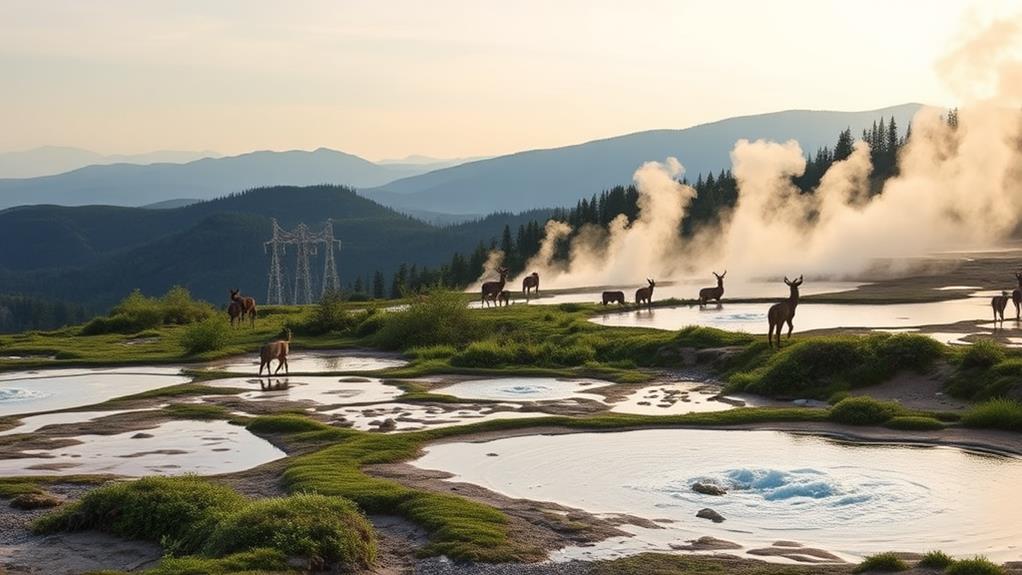
Geothermal plants have a strong environmental profile on two fronts: emissions and land use. Comparative lifecycle studies put geothermal emissions at a small fraction of coal or gas generation, and geothermal facilities occupy far less land per unit of energy produced than solar farms of equivalent output. That said, geothermal development carries its own site-specific risks — including land subsidence and, in some enhanced geothermal projects, induced seismicity — that require careful management.
Greenhouse Gas Emissions
Lifecycle studies consistently find geothermal among the lowest-emission electricity sources available, with estimates showing geothermal plants emit roughly 97% less sulfur compounds and about 99% less CO2 than comparably sized fossil fuel plants. Actual figures vary by plant type and resource — binary cycle plants, which use a closed loop, typically have near-zero direct emissions, while some flash steam plants release small amounts of naturally occurring gases from the geothermal reservoir itself.
Land Use Efficiency
Because geothermal plants draw continuous, high-density energy from a relatively small well field, their land footprint per megawatt-hour is substantially smaller than solar or wind, which need much larger areas to capture the same energy from lower-density sources like sunlight or wind. This makes geothermal attractive in areas where land is scarce or where dual land use — such as geothermal wells sited near agricultural land — is a priority.
| Energy Source | Relative Land Footprint per Unit Output | Typical Capacity Factor |
|---|---|---|
| Geothermal | Low | ~65.9% |
| Solar PV (utility-scale) | High | ~24.4% |
| Wind | Moderate | ~34.2% |
Capacity factor figures per the University of Michigan Center for Sustainable Systems geothermal factsheet; actual land-use ratios vary by project and region.
Types of Geothermal Power Stations
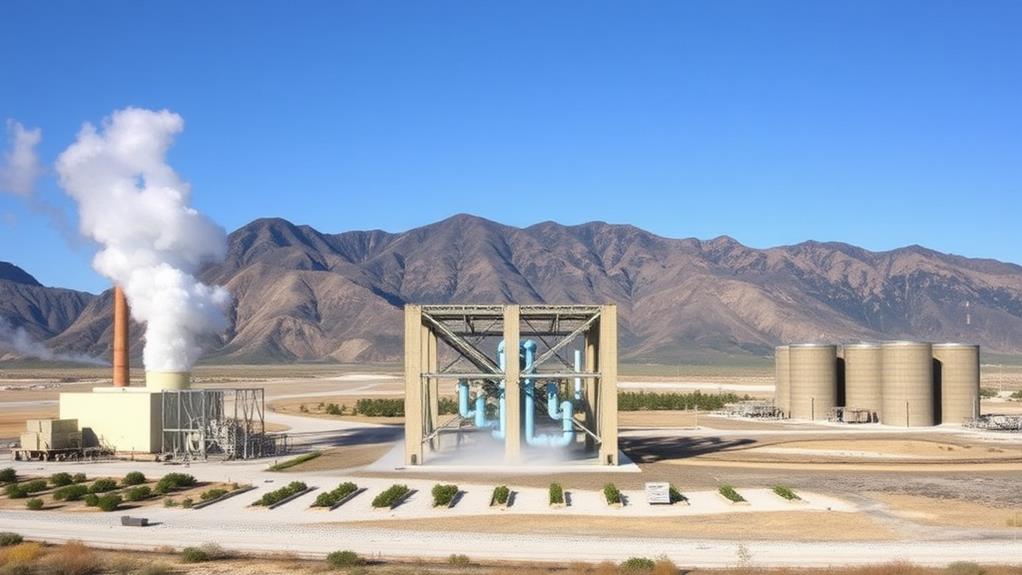
Geothermal plants fall into three main designs:
- Dry steam plants pipe steam directly from underground reservoirs to spin turbines — the original design, first used at Larderello in 1904.
- Flash steam plants pull high-pressure hot water to the surface, where it “flashes” into steam as pressure drops; this is the most common design at high-temperature geothermal fields worldwide today.
- Binary cycle plants transfer heat from moderate-temperature geothermal fluid into a separate working fluid with a lower boiling point, allowing power generation from resources too cool for flash or dry steam plants.
Enhanced Geothermal Systems (EGS), which use engineered fracturing to create reservoirs in hot rock that lacks natural permeability, are an active area of development aimed at unlocking geothermal potential well beyond traditional volcanic and tectonic hotspots.
Recommended Products

Economic Considerations of Geothermal Energy
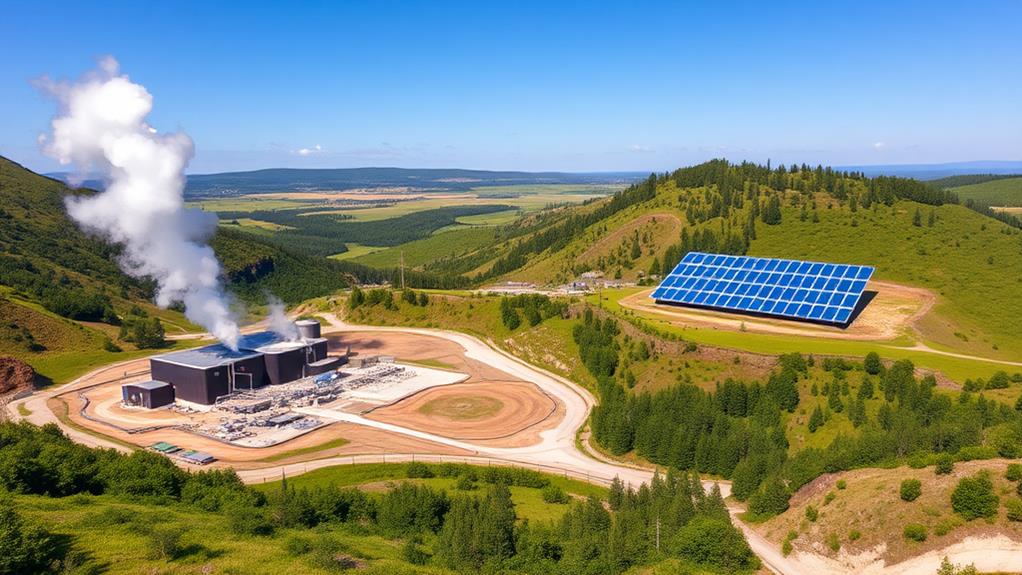
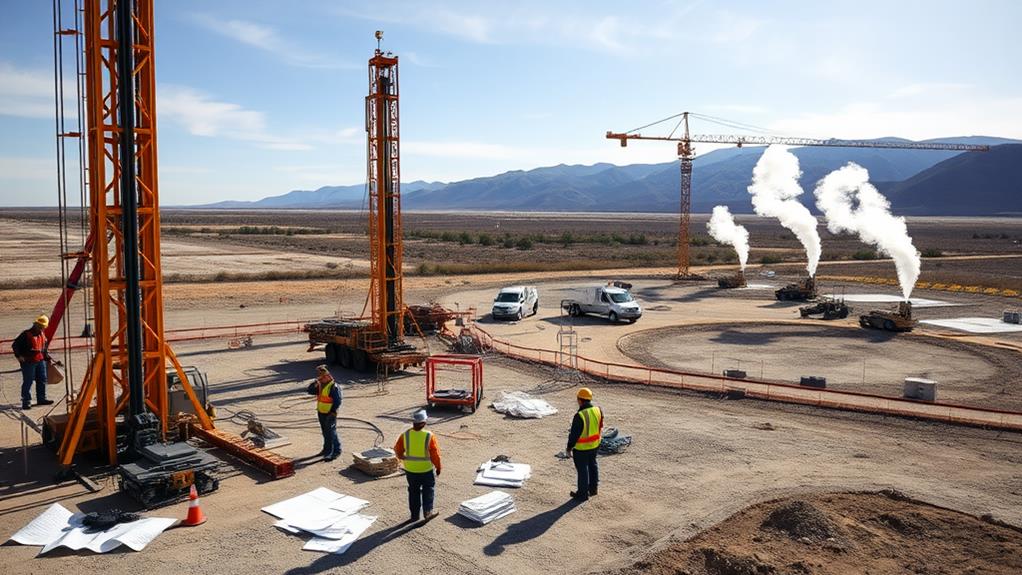
Geothermal’s biggest economic barrier is upfront capital: exploratory and production drilling can account for well over a third of total project cost, and there’s real financial risk in exploration if a well doesn’t hit a productive resource. Once operational, however, geothermal plants have relatively low ongoing fuel and maintenance costs compared with fossil generation, and they can run continuously for decades. Government support — including exploration risk-reduction programs in several countries — has historically played a significant role in getting projects past the highest-risk drilling phase.
Recommended Products

Used Book in Good Condition
Comparison of Solar and Geothermal Systems
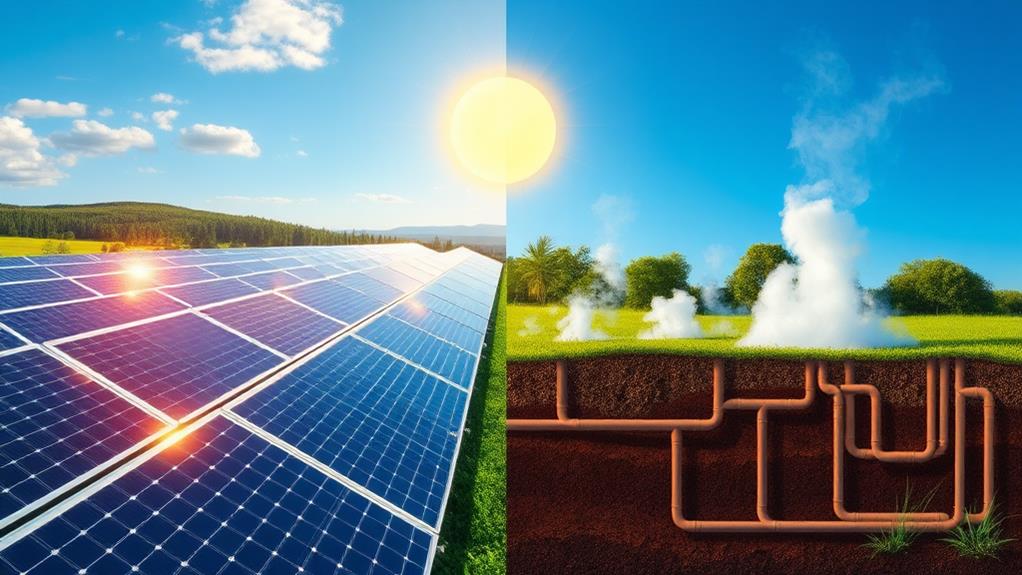
- Reliability: Geothermal’s ~65.9% capacity factor makes it far closer to a baseload resource than solar’s ~24.4%, which depends entirely on daylight and weather.
- Land footprint: Geothermal needs comparatively little surface land per unit of continuous output; utility-scale solar requires large tracts to reach equivalent energy totals.
- Cost structure: Solar hardware costs have fallen dramatically and continue to decline, while geothermal’s costs are concentrated in exploration and drilling — a very different risk profile for developers and investors.
Recommended Products


Benefits of Geothermal Energy
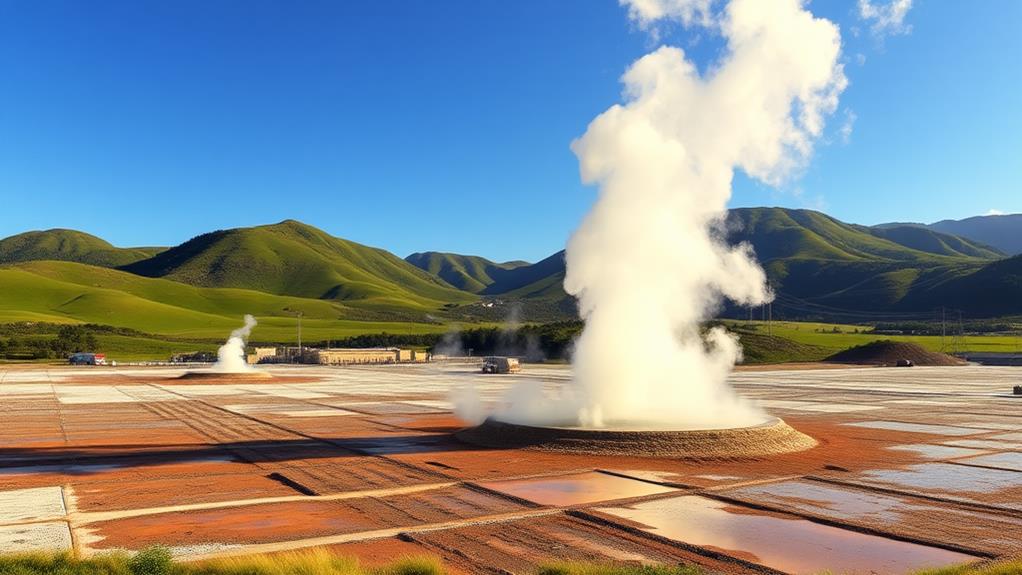
Geothermal’s standout advantage is consistency — a resource that runs at roughly two-thirds of its rated capacity around the clock provides a very different grid role than intermittent sources. Geothermal heat pumps used for direct heating and cooling (as opposed to electricity generation) can also achieve very high efficiency, since they move heat rather than generate it, often delivering several units of heating or cooling output per unit of electricity consumed. Combined with its strong emissions profile, geothermal remains one of the most consistently reliable renewable resources available where geology allows.
Recommended Products

ENERGY STAR CERTIFIED - Cielo Smart Thermostat guarantees you savings on your heating and cooling bills as tested by ENERGY STAR.


Taco 0013-SF3 Pump
Challenges Facing Geothermal Development
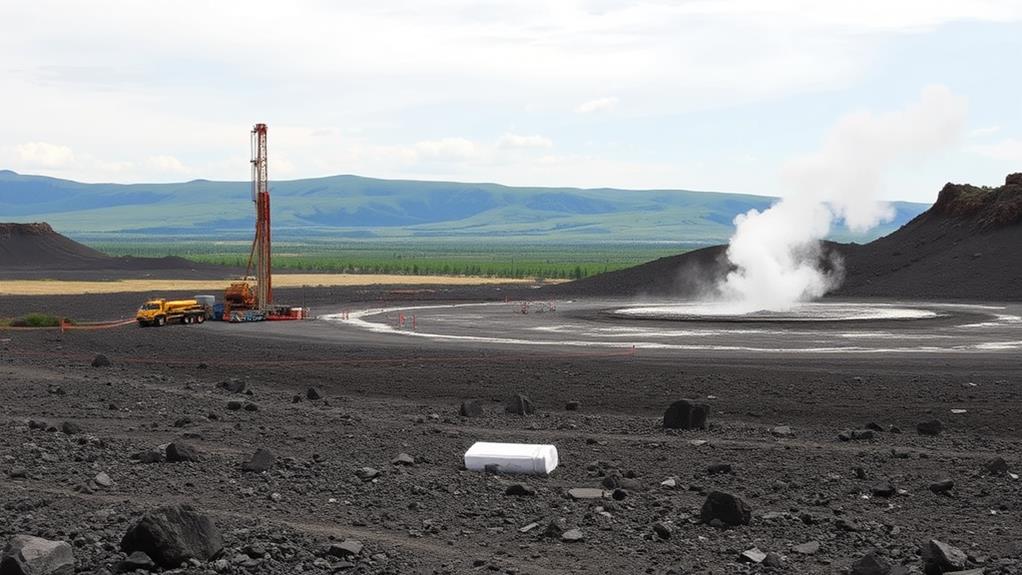
Geothermal’s main constraints are geographic and financial rather than technical. Suitable high-temperature resources are concentrated near tectonic plate boundaries, which rules out large parts of the world for conventional geothermal, though Enhanced Geothermal Systems are working to change that. High drilling costs remain a barrier to entry, and induced seismicity — while generally minor — has caused a small number of high-profile project cancellations, most notably a 2006 enhanced geothermal project in Basel, Switzerland, that was halted after triggering a series of small earthquakes.
Geographical Limitations and Suitability
Traditional geothermal power requires accessible high-temperature reservoirs, typically found near tectonic plate boundaries or volcanic regions. This limits where conventional projects can be sited, though EGS technology aims to extend geothermal’s reach into regions with hot rock but no natural reservoir.
High Initial Drilling Costs
Exploration and drilling represent the largest and riskiest share of geothermal project cost. Unlike solar, where a failed panel installation is rare and low-cost to remedy, an unsuccessful geothermal well can mean a significant sunk cost with no usable resource, which is a major reason geothermal has grown more slowly than solar despite its reliability advantages.
Induced Seismicity Risks
Some enhanced geothermal projects, which use hydraulic techniques to improve permeability in hot rock, carry a risk of triggering minor induced seismic events. Most are too small to be felt, but the 2006 Basel project is a well-documented case where seismic activity led to a project being shut down. Careful site selection, real-time seismic monitoring, and regulatory oversight are now standard practice for reducing this risk on new EGS projects.
Frequently Asked Questions
What is a major disadvantage of geothermal power?
The biggest disadvantage is geographic limitation combined with high upfront drilling risk — suitable high-temperature sites are concentrated in specific regions, and exploratory wells can fail to find a productive resource after significant investment.
Which costs more to develop, solar or geothermal, for the same land area?
Solar generally requires much more land area for the same energy output, but geothermal’s upfront drilling and exploration costs per project are typically higher and riskier. The right comparison depends on local land costs, resource quality, and financing structure.
Can geothermal and solar work together?
Yes — hybrid projects that pair geothermal’s steady baseload output with solar’s low-cost daytime generation are an active area of development, and some geothermal plants use solar thermal input to boost efficiency during peak sunlight hours.
Does a geothermal heat pump use more electricity than a standard system?
No — geothermal heat pumps typically use less electricity per unit of heating or cooling delivered than standard systems, because they move existing heat rather than generating it, though installation costs are higher upfront.