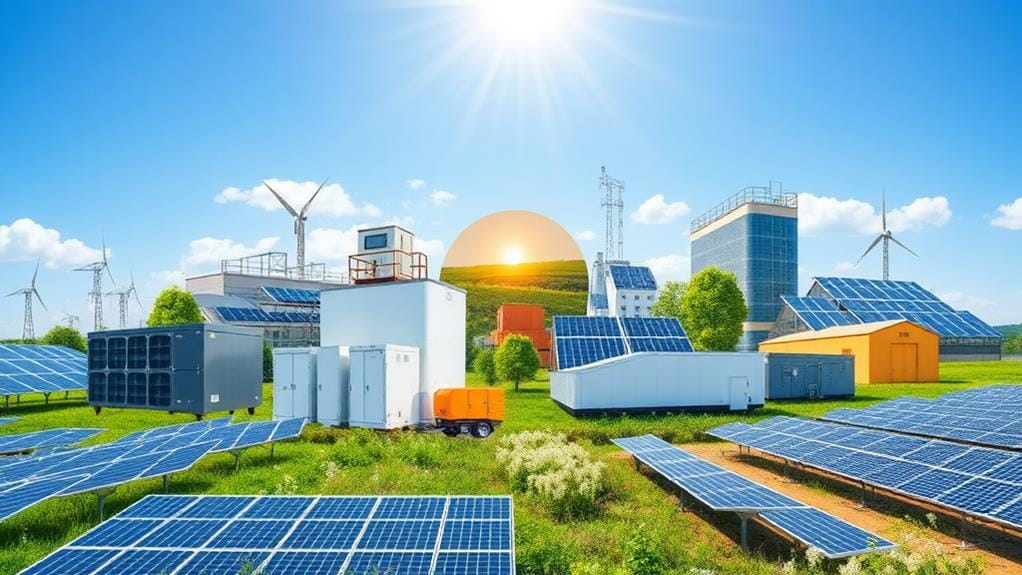
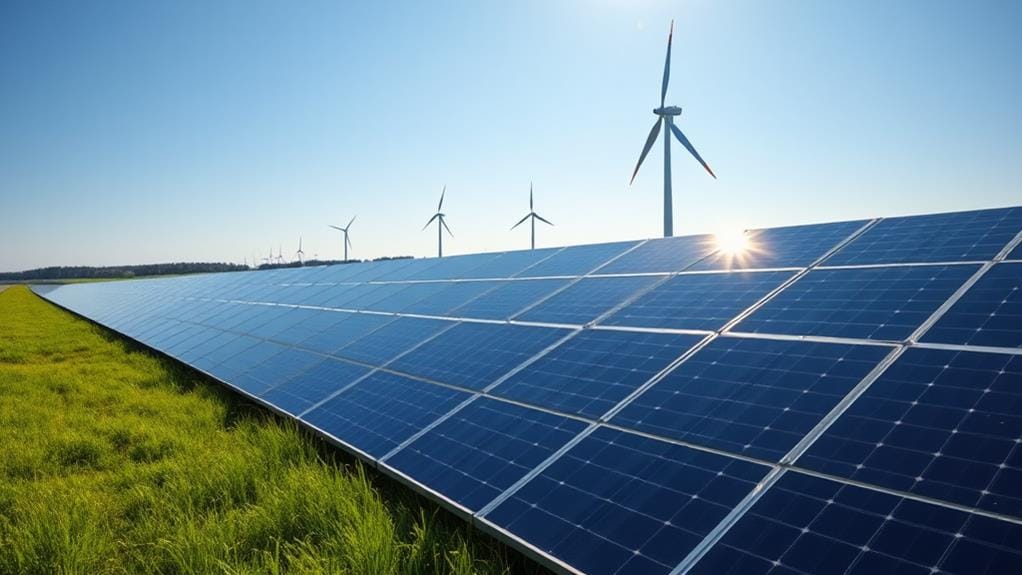
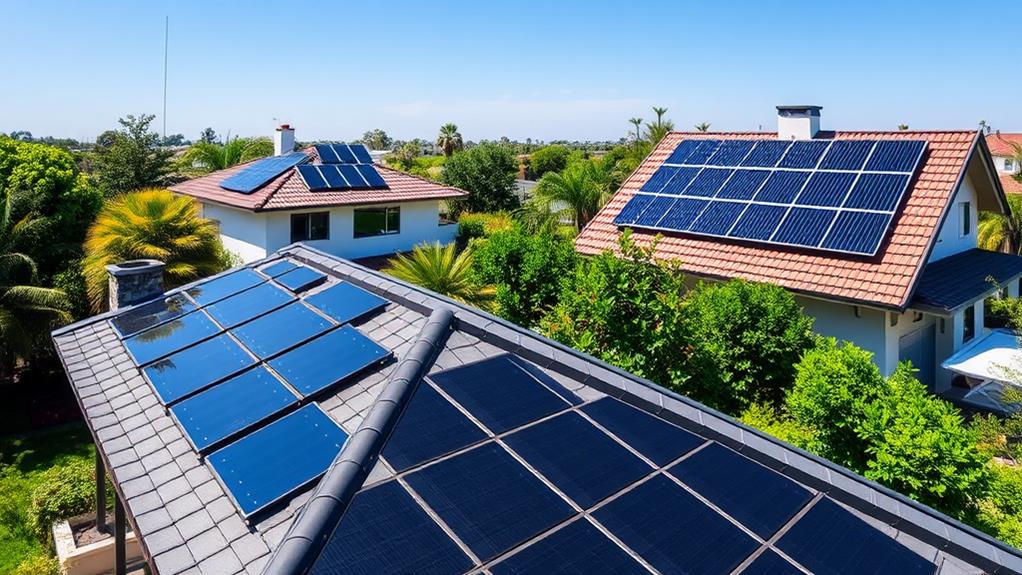
As we embrace the solar power revolution, farms are capitalizing on its numerous benefits, including up to 50% savings on electricity costs. This shift not only enhances our energy independence but also reduces reliance on fossil fuels, aligning with sustainable practices. We can implement solar irrigation systems, minimizing diesel expenses while producing surplus energy for sale back to the grid, creating additional revenue streams. In addition, advanced technologies, like battery storage systems and agrivoltaic solutions, allow us to maximize land use and improve crop yields. Exploring these innovative practices can greatly transform agricultural operations for the better.
Key Takeaways
- Farms can achieve significant savings of up to 50% on electricity costs by adopting solar energy solutions.
- Solar energy enhances energy independence, reducing reliance on fossil fuels and ensuring reliable power supply.
- The ability to sell surplus energy back to the grid creates diversified income streams for farmers.
- Agrivoltaic systems allow simultaneous crop cultivation and energy generation, promoting sustainable land use practices.
- Technological advancements in solar and battery storage improve efficiency and reliability, supporting modern agricultural practices.
Benefits of Solar Energy for Farms
You may be interested

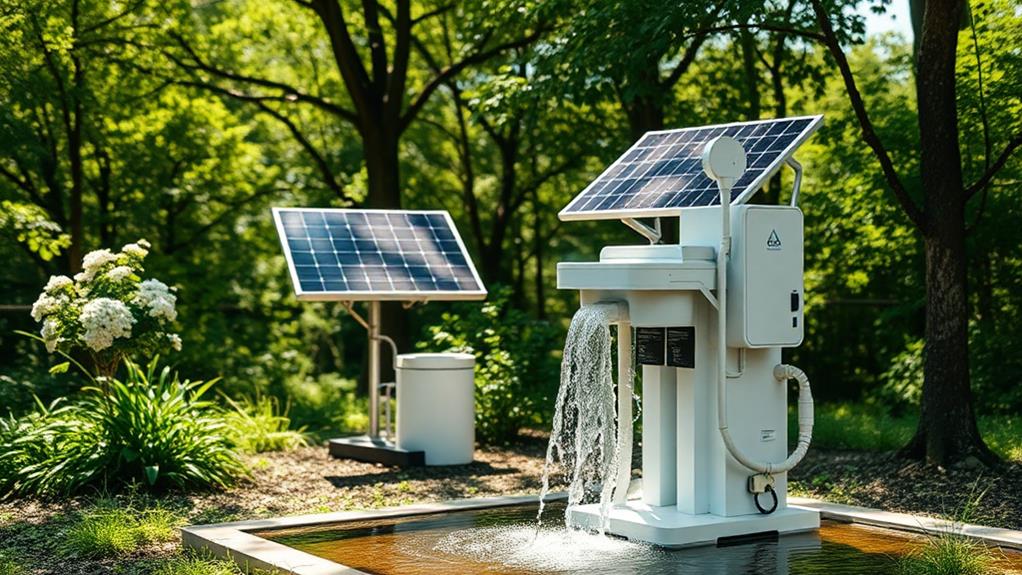
As we look to the future of farming, embracing solar energy can really pay off in multiple ways. The economic benefits of solar energy production are compelling—farms can save up to 50% on electricity costs, while declining solar technology prices promise long-term financial gains. By investing in green technology, we gain energy independence, lessening our reliance on fossil fuels and shielding ourselves from power outages and erratic energy prices. Furthermore, solar irrigation systems enhance productivity, allowing us to irrigate efficiently without the burdensome costs of diesel pumps. Additionally, the surplus energy generated can be sold back to the grid, creating new revenue streams. Shifting to solar not only bolsters our bottom line but also reduces our carbon footprint, promoting sustainable practices.
Recommended Products

Complete Drip Irrigation Kit for expansive Gardens: This comprehensive drip irrigation kit includes everything you need: 15 meters of tubing, 15 tees, 15 adjustable emitters, and a filter. Easily create a custom garden watering system for raised beds, greenhouses, or outdoor potted plants. It also functions as an effective indoor plant watering system near a sunny window.

🔥 95°F Heat Wave? Your Plants Won't Even Notice – When temperatures soar, vegetables need water every 12 hours. Manual watering twice a day is exhausting. Our solar system does it for you: set to 12H cycle, 15 minutes each. It waters at dawn and dusk – exactly when evaporation is lowest. Your tomatoes stay firm, leaves stay green

[Automated Plant Sitter] No more worrying about plants withering after you go home for a long holiday! This solar powered self watering system automates daily care to keep your plants hydrated while you are away.
Economic Impacts on Agriculture
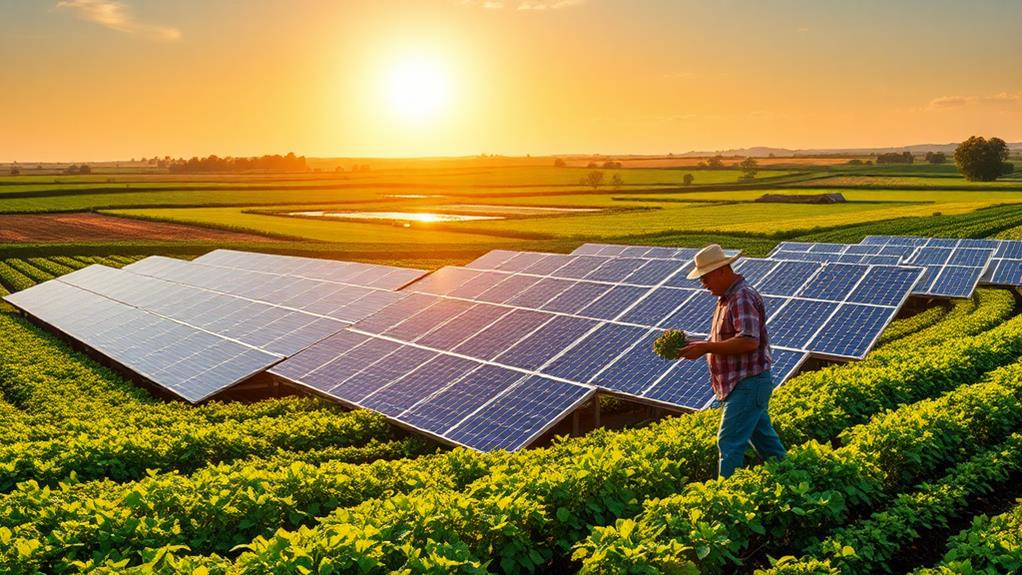
The economic impacts of solar energy on agriculture are significant and transformative. By embracing solar power, we can enhance our profitability while reducing reliance on conventional energy sources. Here are some key effects we've observed:
- Cost Savings: Shifting to solar leads to substantial reductions in energy expenses, allowing us to allocate resources more effectively.
- Diversified Income: Selling excess electricity back to the grid creates additional revenue streams, fostering economic resilience within our farming operations.
- Job Creation: The rise of solar adoption in agriculture is expected to stimulate local economies through job growth in the renewable energy sector, further benefiting our communities.
Ultimately, solar energy empowers us to achieve greater financial stability, ensuring a brighter future for agriculture while contributing to sustainable practices.
Recommended Products

【High Conversion Rate】This 20W solar panel with monocrystalline A+ solar cell has an excellent cell efficiency of 21%-30%. Designed to charge and maintain 12V rechargeable batteries like LiFePO₄, Lithium Ion, AGM, SLA, GEL, EFB, MF, etc. Keep batteries in charged for trailer, tractor, truck, boat, motorcycle, RV, car, lawn mower, water pump, gate opener, electric fence, etc

WIDE PROTECTION RANGE & LONG-LASTING:FarmNix solar powered electric fence charger can protect up to 30 miles of fences and features day and night mode, providing 24 hour uninterrupted protection.15W solar panel,12V 7Ah sealed lead-acid battery,solar+AC power provide you with high-quality protection.The solar battery charger with a continuous battery life of 18 days at 0.3J/6KV,0.8S/2S switchable discharge interval make it difficult for animals to cross,while also reducing loss
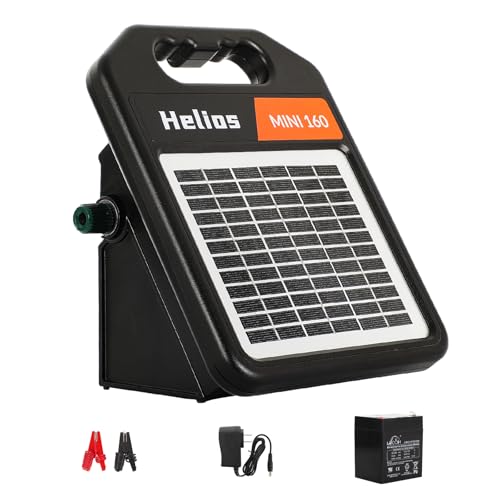
Powerful Energizer: Solar Fence Charger is compact and easy to install and move, making it the ideal solution for strip grazing. Energizes up to 10 miles of electric fencing
Sustainable Land Use Practices
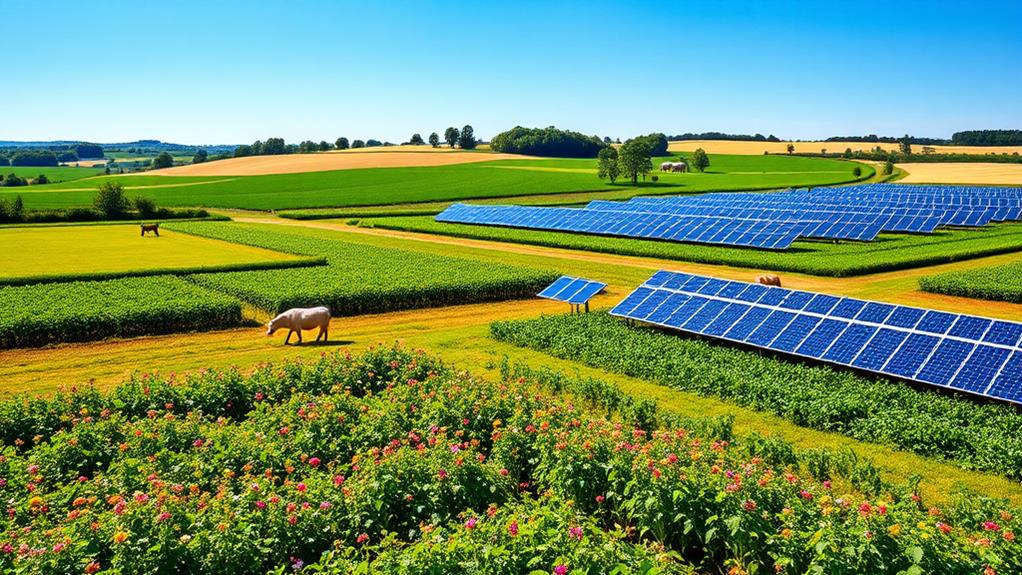
Embracing sustainable land use practices allows us to maximize both agricultural productivity and renewable energy generation. By integrating solar energy into our farming operations, we can install solar panels on unused or grazing land, optimizing space while generating clean energy. Agrivoltaic systems effectively combine solar power with agricultural production, enabling us to cultivate crops and raise livestock simultaneously. Research shows that these systems can enhance microclimate conditions, further increasing crop yields. Additionally, wind turbines, with their minimal ground footprint, facilitate continued agricultural use in the spaces between them. This dual utilization of land not only strengthens our energy independence but also promotes a resilient agricultural ecosystem, paving the way for a sustainable future where farming and renewable energy coexist harmoniously.
Technological Innovations in Solar
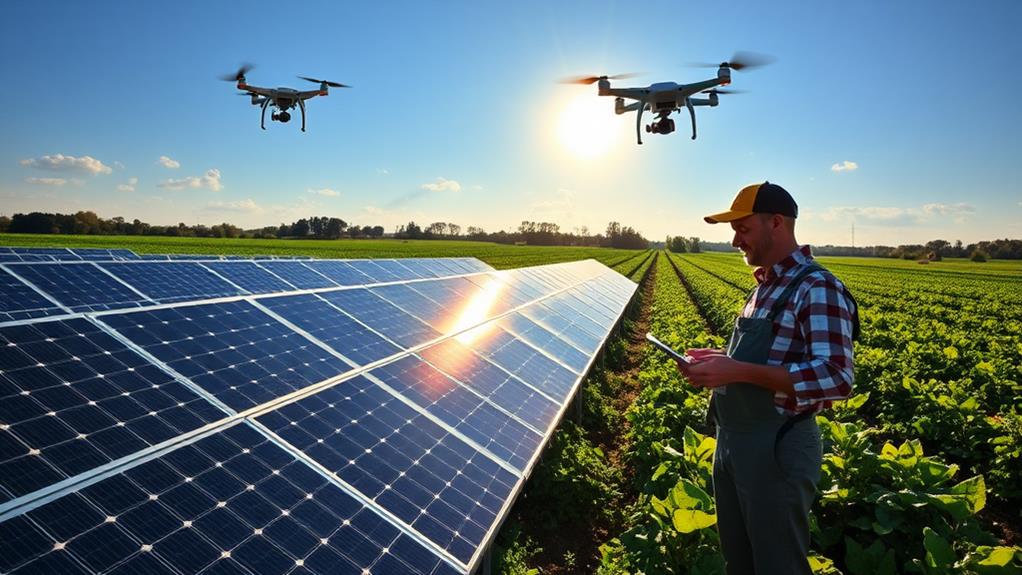
In recent years, we've witnessed remarkable technological innovations in solar energy that are transforming the agricultural landscape. These advancements are not only enhancing energy efficiency but also providing farmers with sustainable solutions to power their operations. Key innovations include:
- Energy storage systems, which guarantee reliable access to power during low generation periods.
- Floating solar farms that maximize space efficiency, particularly in regions where land is scarce.
- Building-integrated photovoltaic (BIPV) panels that seamlessly integrate into farm structures, generating energy without compromising usable space.
Moreover, smart grid technologies are improving the interconnectivity of solar energy with existing systems, optimizing load balancing and energy distribution. Ongoing research continues to enhance the efficiency of photovoltaic technologies, pushing the boundaries of energy conversion rates, thereby empowering farms to embrace a renewable future.
Recommended Products
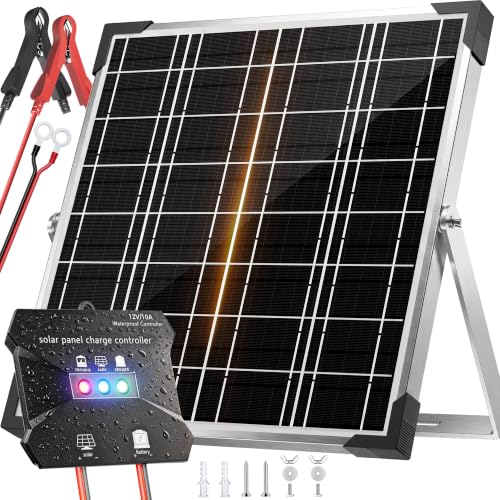
High-Efficiency MPPT Solar Charger - Advanced tracking technology delivers 20-30% faster charging for 12V batteries. A+ monocrystalline panels maximize power conversion. Perfect 20W solar trickle charger for cars, RVs, boats, and trailers. More sun captured, less time waiting.

24/7 Continuous Recording: This 4G LTE cellular security camera uses cutting-edge Always-On Video technology to intelligently adjust the frame rate—15 fps when a person is detected, 1 fps otherwise—achieving true, uninterrupted 24/7 recording that captures every detail before, during, and after an event. Unlike traditional solar cellular security cameras, which often miss the critical moments leading up to an alert, this no wifi security camera delivers complete, gap-free coverage for a smarter, more autonomous security experience.

True Wireless Freedom Powered by Sun and WiFi: Enjoy ultimate installation freedom. These security cameras wireless outdoor offer flexible power: a solar panel (detachable/integrated) for primary use, with a Type-C port as a reliable backup during extended cloudy days. As your dedicated cameras for home security paired with 2.4 GHz Wi‑Fi and IP65 rating, they install anywhere—yard, garage, barn, or farm—for year-round security. This versatile outdoor camera wireless eliminates wiring hassles.
Role of Battery Storage Systems
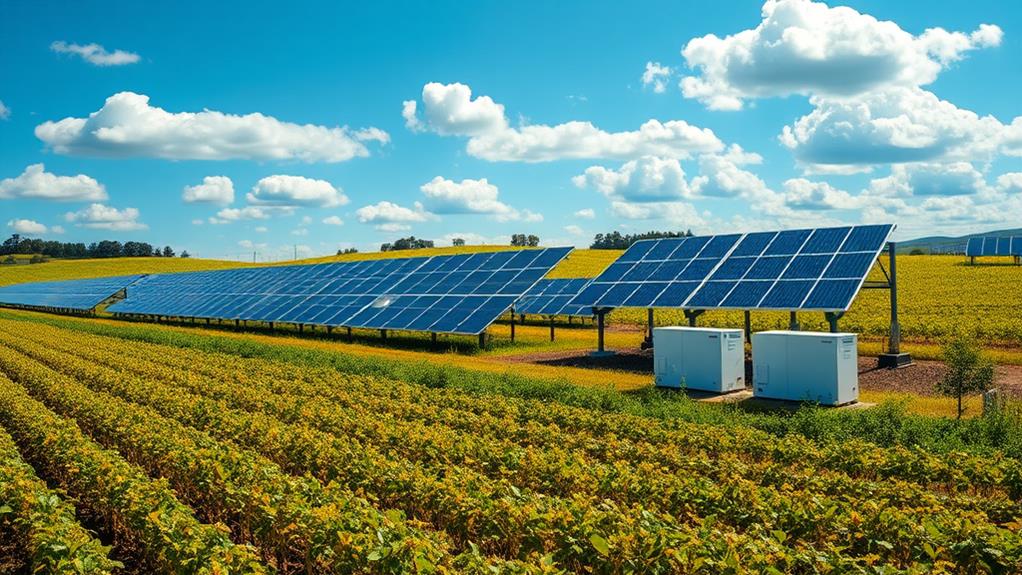
As we explore the advancements in solar energy, it's clear that battery storage systems play an essential role in enhancing solar power's effectiveness on farms. These systems enable us to store surplus energy generated during peak sunlight hours, ensuring a reliable power supply even during periods of low sunlight or unexpected outages. By requiring less land than traditional solar and wind technologies, battery storage becomes an efficient solution for farms with limited space. Furthermore, incorporating these systems greatly reduces our reliance on diesel generators during energy shortages, yielding both economic and environmental benefits. With advancements in battery technology and declining costs, investing in battery storage solutions fosters our shift to renewable energy, ultimately improving long-term sustainability and operational efficiency.
Recommended Products

Portable Generator with 60W Solar Panel Included: with a big battery pack, ZeroKor 300W solar powered generator are powerful enough to charge smartphones,tablets,laptops,headphones or other outdoor small camping supplies(Tips:Using electrical appliances over 300W may damage the portable solar generator, especially some devices that are prone to heat or built-in air compressor such as coffee maker,Hair dryer, water pump etc )

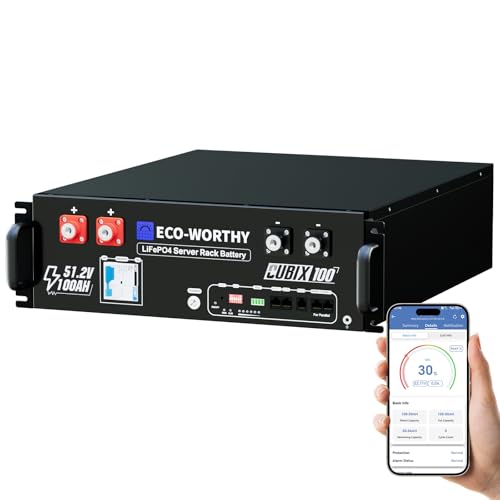
UL9540 | UL1973 | CEC LISTED - Completed comprehensive testing by Intertek and has officially earned three key North American safety certifications.And has met the standards set by the California Energy Commission.The outstanding performance in design, electrical safety, and thermal runaway management,providing users with greater quality assurance.
Environmental Considerations
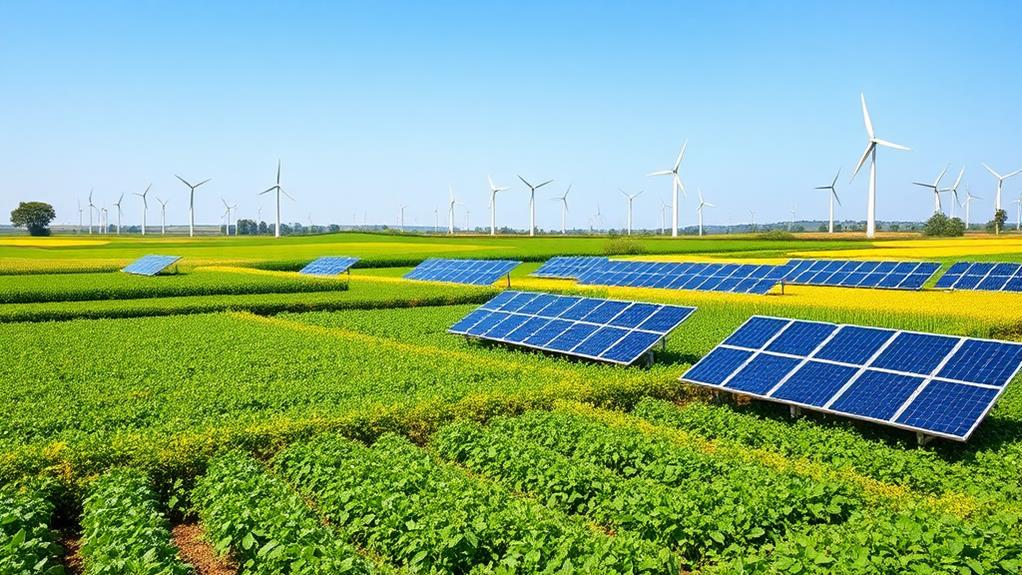
Harnessing solar power on farms brings considerable environmental benefits that align with sustainable practices. By adopting solar energy, we can drastically reduce greenhouse gas emissions, with typical farms generating up to 90% less carbon dioxide compared to traditional energy sources. In addition, implementing solar irrigation systems decreases reliance on diesel, contributing to cleaner air and reduced fossil fuel consumption. This shift not only conserves water through improved efficiency but also promotes biodiversity, particularly with agrivoltaics projects that integrate renewable energy with agricultural practices.
- Reduces greenhouse gas emissions markedly
- Enhances air quality by minimizing diesel reliance
- Supports biodiversity through thoughtful land use
Future Trends in Solar Farming
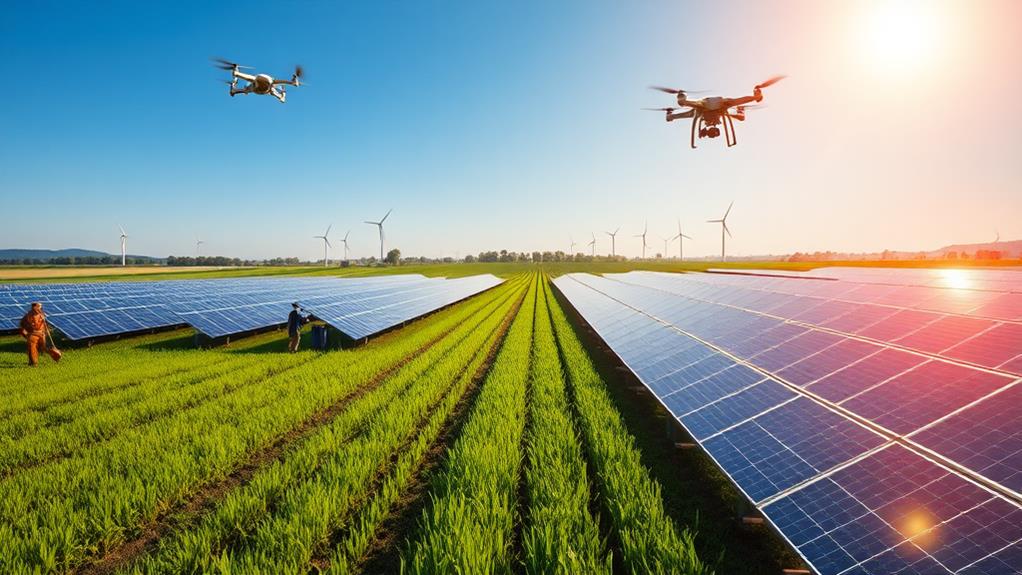
With the solar energy market for agriculture projected to surpass $5 billion by 2026, we're witnessing a significant shift toward sustainable farming practices. The rise of agrivoltaics, which seamlessly integrates solar panels with agricultural production, is revolutionizing land use and enhancing crop yields. As we look ahead, innovations like floating solar farms and building-integrated photovoltaics are emerging, maximizing land utilization and providing new avenues for solar energy in agriculture. In addition, the anticipated growth of solar generation to 14,000 GW by 2050 highlights the potential to meet a significant portion of the agricultural sector's energy needs, currently accounting for about 30% of global demand. Moreover, integrating battery energy storage systems enhances reliability, ensuring ideal energy usage even during low generation periods.
Case Studies of Successful Adoption
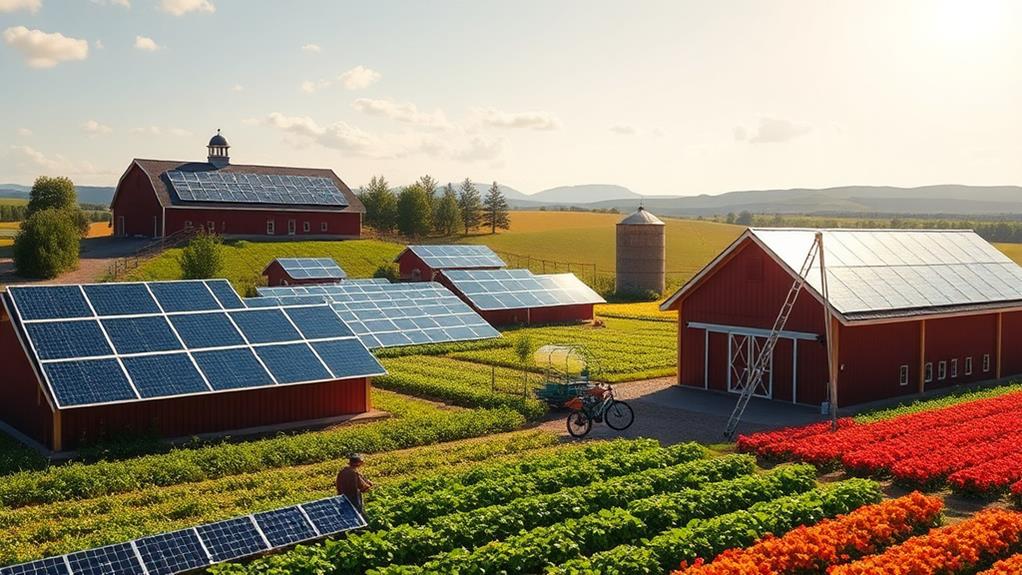
Solar power is making waves across the agricultural sector, and we've seen some impressive case studies that highlight its successful adoption. In Rajasthan, India, over 100,000 subsidized solar pumps have irrigated more than 1 million acres, boosting agricultural water use by over 25%. Similarly, Yemen has deployed around 100,000 solar panels for agricultural irrigation, addressing electricity supply challenges. In Afghanistan's Helmand province, over 60,000 opium farmers have switched to solar water pumps, despite facing significant water table declines. These case studies illustrate the potential of solar technology to revolutionize farming practices:
- Enhanced irrigation efficiency with solar pumps
- Reduction of fossil fuel reliance in agriculture
- Support from development agencies fostering solar adoption
Recommended Products

【 High LIFT 】Max Lift: 230ft (70m),Max flow: 1.6GPM,and the water output is inversely proportional to the head and directly proportional to the light intensity.

[Automatic Solar Irrigation System] Using solar-powered technology, the solar panels with high capacity and good water resistance, and the adjustable orientation allows it to receive sunlight in all directions.The drip irrigation kits can take water directly from a container such as a bucket without a tap. Drip irrigation system can automatically water plants at preset intervals and quantities.
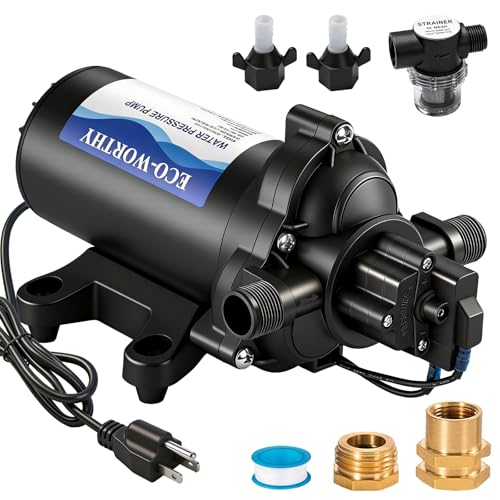
Diaphragm Pump: 110V AC water diaphragm pump provides 4.0GPM flow capacity. Turns on and off using water pressure at 50PSI, 1.3 Max amps. AC power supply, no need to carry marine battery with you
Frequently Asked Questions
What Initial Costs Are Involved in Installing Solar Panels on Farms?
We realize that installing solar panels does come with some initial costs, but those installation challenges are mere stepping stones to long-term savings and energy independence, paving the way for a brighter, freer future for all.
How Can Farmers Finance Their Solar Energy Projects?
When we think about financing solar projects, we can explore crowdfunding options, join solar cooperatives, or form financing partnerships. These methods empower us, providing flexibility and freedom to invest in sustainable energy together.
Are There Tax Incentives for Farms Using Solar Energy?
Yes, there're tax credits and grant programs available for farms using renewable energy. By taking advantage of these incentives, we can reduce our costs and invest in a sustainable future, embracing freedom through clean energy solutions.
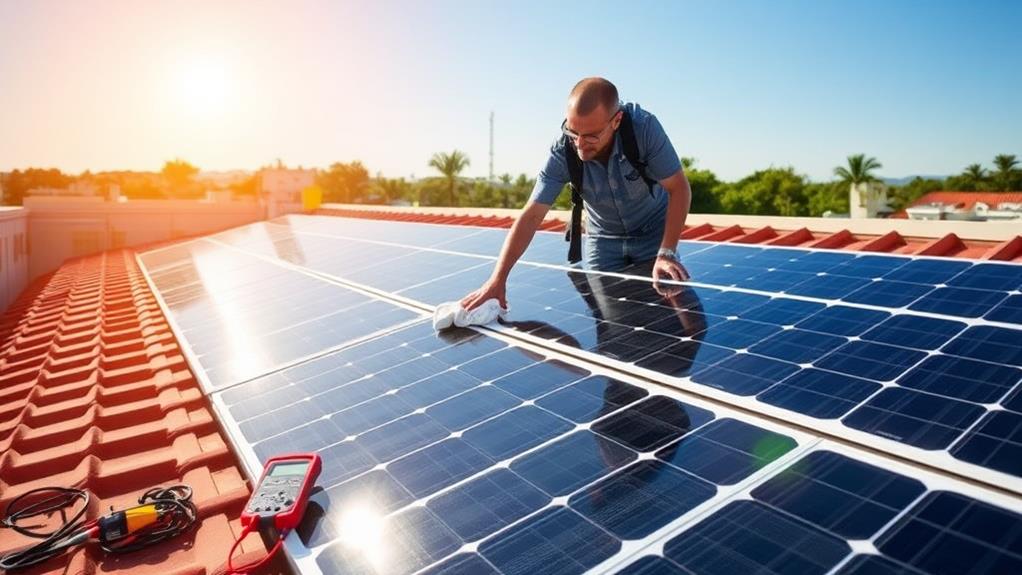
What Maintenance Is Required for Solar Power Systems?
When it comes to maintaining solar power systems, we should focus on system performance monitoring, follow inverter maintenance tips, and utilize effective panel cleaning techniques. This guarantees our energy independence and maximizes efficiency for our needs.
How Does Solar Energy Affect Crop Yields and Farming Practices?
Did you know farms using solar energy can boost crop yields by up to 20%? By enhancing energy efficiency and promoting crop diversity, we're embracing sustainable practices that empower us and our environment for a brighter future.