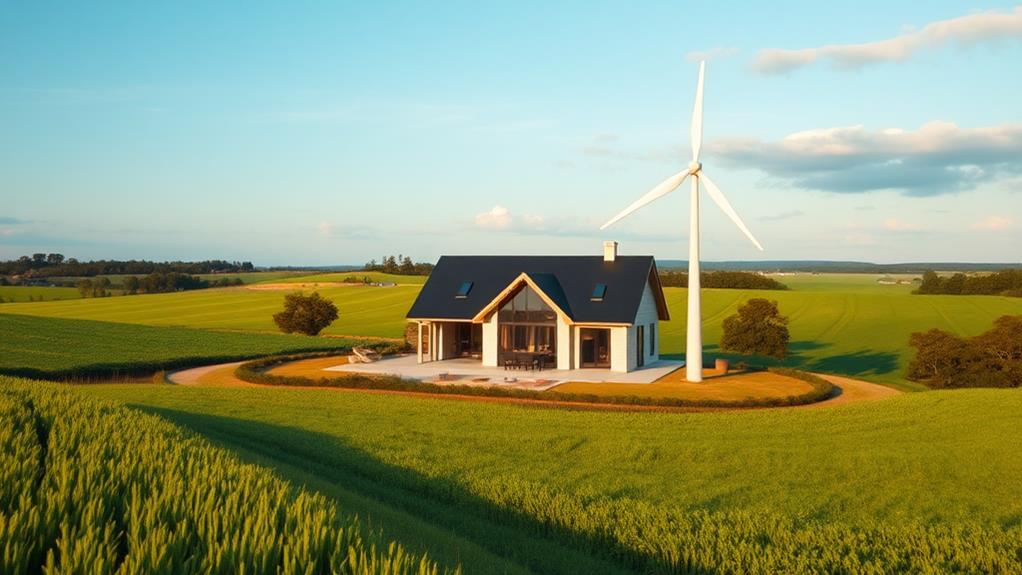
Vertical Axis Wind Turbines (VAWTs) are designed to harness wind energy efficiently for residential use, characterized by their ability to capture wind from any direction without requiring orientation adjustments. They come in two primary types: Darrieus and Savonius rotors, which provide efficiencies that generally fall well below those of conventional horizontal axis turbines, depending on design and site conditions. VAWTs are compact, making them suitable for rooftop and small-lot installations, particularly in urban settings with turbulent wind patterns. While they generally operate more quietly than horizontal axis turbines, they have lower efficiency rates and potential durability issues. Discover the latest data and trends impacting VAWTs in residential applications.
Key Takeaways
- Vertical Axis Wind Turbines (VAWTs) capture wind energy from any direction, making them ideal for urban environments with variable wind patterns.
- They come in two main types: Darrieus, known for higher aerodynamic efficiency, and Savonius, which is simpler and more cost-effective.
- VAWTs operate quietly and have a low center of gravity, enhancing safety and stability for residential installations.
- According to the U.S. Department of Energy, small wind turbines (100 kW or less) achieved an average capacity factor of just 13% in 2023, well below midsize and utility-scale turbines.
- The federal residential Section 25D tax credit that covered qualifying small wind property expired for systems placed in service after December 31, 2026, changing the economics of new residential installations.
Overview of Vertical Axis Wind Turbines
You may be interested
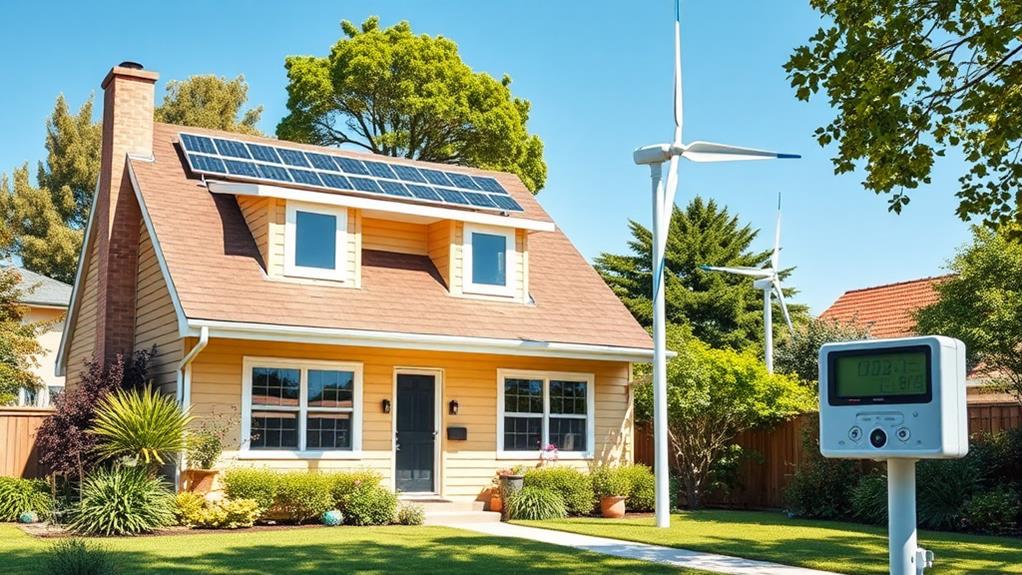

Vertical Axis Wind Turbines (VAWTs) are increasingly discussed as a residential energy option. Unlike traditional turbines, VAWTs, such as Darrieus wind turbines, harness wind energy from any direction without needing to adjust their orientation. This adaptability makes them potentially valuable in urban environments, where turbulent wind patterns often prevail. With their lower center of gravity, VAWTs provide enhanced stability, which can support safer installations in limited spaces. Real-world performance data tells a more modest story than early marketing claims, however: the DOE’s national laboratory analysis found that small wind systems averaged just a 13% capacity factor in 2023, compared with 21% for midsize and large distributed turbines. As a renewable energy source, VAWTs are generally quieter than their horizontal counterparts, which is one reason homeowners continue to consider them for urban and suburban properties pursuing greater energy independence.
Types of Vertical Axis Wind Turbines
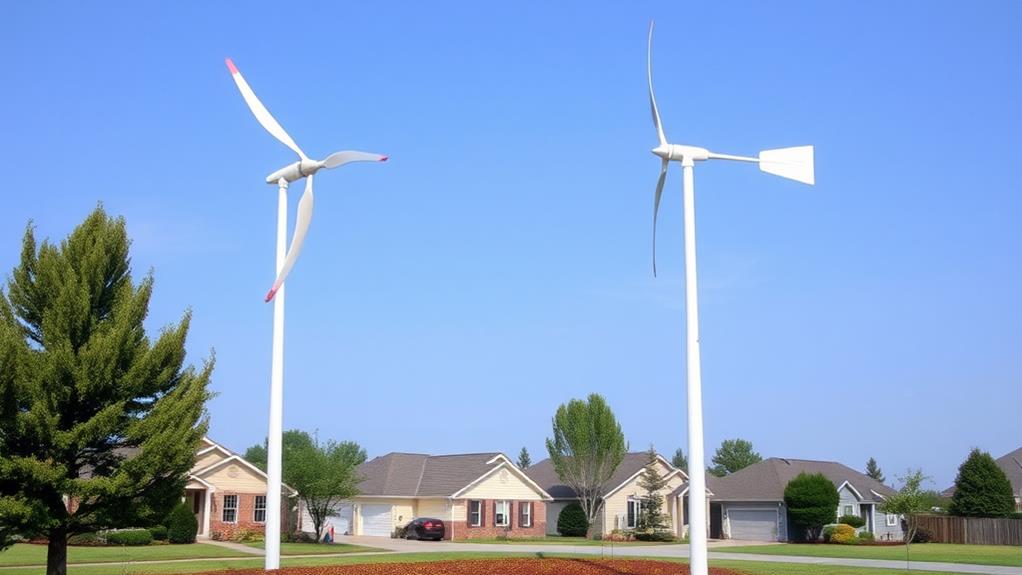
When it comes to vertical axis wind turbines (VAWTs), two primary types stand out: the Darrieus and Savonius rotors. The Darrieus rotor, known for its lift-driven design, generally performs better aerodynamically than drag-based designs, making it suitable for a range of wind conditions. It features designs like the helix-shaped and H-rotor configurations, which enhance aerodynamic performance through straight or curved blades. In contrast, the Savonius rotor operates primarily on drag forces and typically has a noticeably lower power coefficient than the Darrieus design. While the Darrieus rotor tends to outperform on efficiency, the Savonius rotor is valued for its simplicity, robustness, and cost-effectiveness, making it easier to manufacture and self-starting at low wind speeds. Both types of VAWTs capture wind from any direction, eliminating the need for the yaw/tracking mechanisms that horizontal axis turbines require.
Recommended Products

【VERTICAL WIND TURBINE】The blade material is synthetically injection molded with high-strength FRP material. At the same time, the fashionable The spiral blades are aerodynamically designed to make the rotor run smoothly and reliably, which leads to stable electricity generation. The wind turbine can start from the breeze and adapt to the wind 360°, no yaw system is needed.


High Quality Material: It adopts a permanent magnet generator with an iron core paired with two aluminum alloy blades, and the surface is sprayed with plastic, which can withstand bad weather and ensures the product's long and stable operation.
Advantages of VAWTs for Homes
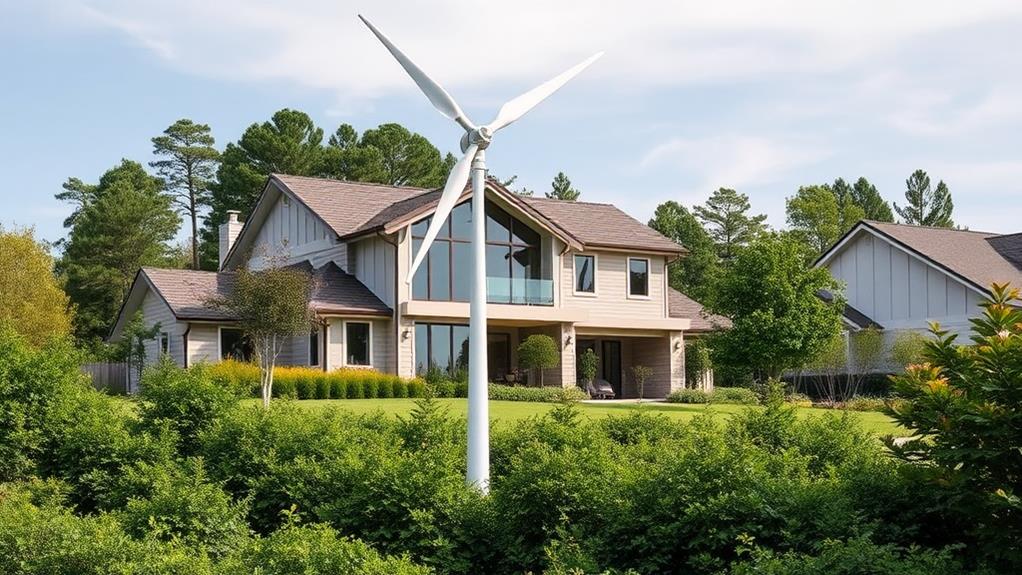
VAWTs offer several advantages that make them appealing for residential use. Their compact design allows for easier integration into limited spaces, which is useful for homeowners facing height restrictions or local ordinances. Unlike traditional horizontal axis wind turbines, a vertical axis wind turbine can capture wind from any direction, eliminating the need for complex tracking mechanisms, thereby simplifying installation. Additionally, VAWTs operate quietly relative to HAWTs, making them a better fit for urban environments where noise ordinances and neighbor proximity are concerns. Their low center of gravity enhances stability and safety, while the design generally allows ground-level or low-height access for maintenance. Finally, VAWTs can remain functional in turbulent wind conditions that would reduce output from a horizontal-axis machine, which is one reason they’re marketed for rooftop and near-building placements — though as the data below shows, this doesn’t necessarily translate into higher overall energy yield. Homeowners weighing a VAWT against other renewable options may also want to compare full residential solar installation costs as a benchmark for payback expectations.
Recommended Products

【Vertical Axis Wind Turbine】The blade material is synthetically injection molded with high-strength FRP material. At the same time, the fashionable The spiral blades are aerodynamically designed to make the rotor run smoothly and reliably, which leads to stable electricity generation. The wind turbine can start from the breeze and adapt to the wind 360°, no yaw system is needed.
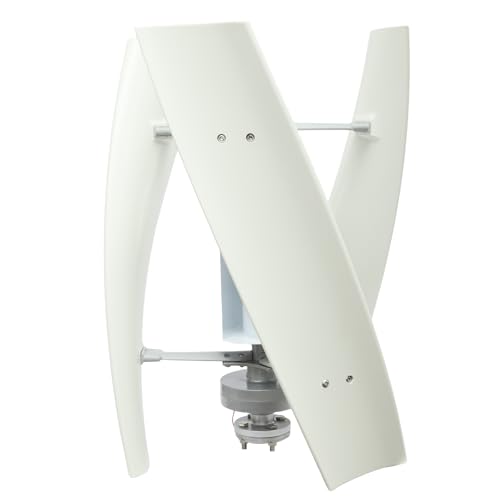
【Efficient Technology】This vertical wind turbine incorporates advanced permanent magnetic levitation within its copper-wire generator. This technology drastically reduces mechanical friction at the rotation axis

Sturdy and durable:The wind turbine adopts an iron core permanent magnet generator with two aluminium alloy blades,and the surface is sprayed with plastic to ensure the product's long-term stable operation
Disadvantages of VAWTs
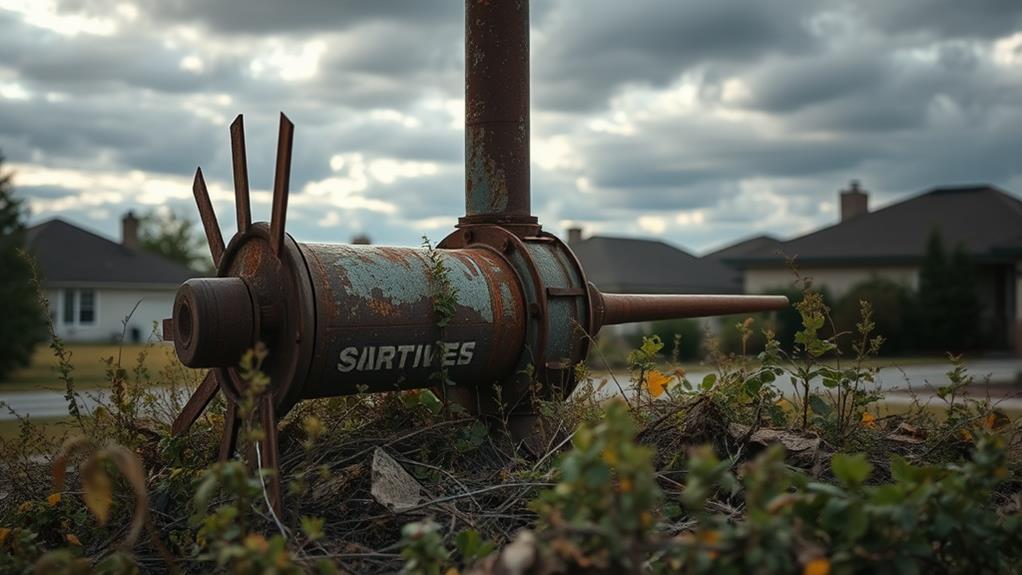
While VAWTs present several benefits, they also come with notable disadvantages that can impact their viability for homeowners. The most significant is lower real-world efficiency: DOE-tracked small wind projects (100 kW and under) averaged only a 13% capacity factor in 2023, with observed values ranging from 5% to 28%, versus a 21% average for midsize/large distributed turbines. Installed costs are also steep on a per-kilowatt basis — small wind systems averaged roughly $7,370 per kW in 2023 project data, several times the per-kW cost of midsize and large turbines. VAWTs may also experience power loss at high turbine velocities, and blade fatigue can result from the constantly varying aerodynamic forces during a full rotor rotation, increasing material stress over time. Dynamic stall can further complicate performance, causing rapid angle-of-attack changes that add mechanical wear.
| Disadvantage | Explanation |
|---|---|
| Lower Real-World Capacity Factor | DOE data shows small wind (≤100 kW) averaged 13% in 2023, vs. 21% for midsize/large turbines. |
| High Installed Cost per kW | Small wind averaged about $7,370/kW in 2023 project data — much higher than midsize/large systems. |
| Blade Fatigue | Varying aerodynamic forces through each rotation increase material stress. |
| Dynamic Stall | Rapid angle-of-attack changes can degrade performance and increase wear. |
Applications of Vertical Axis Wind Turbines
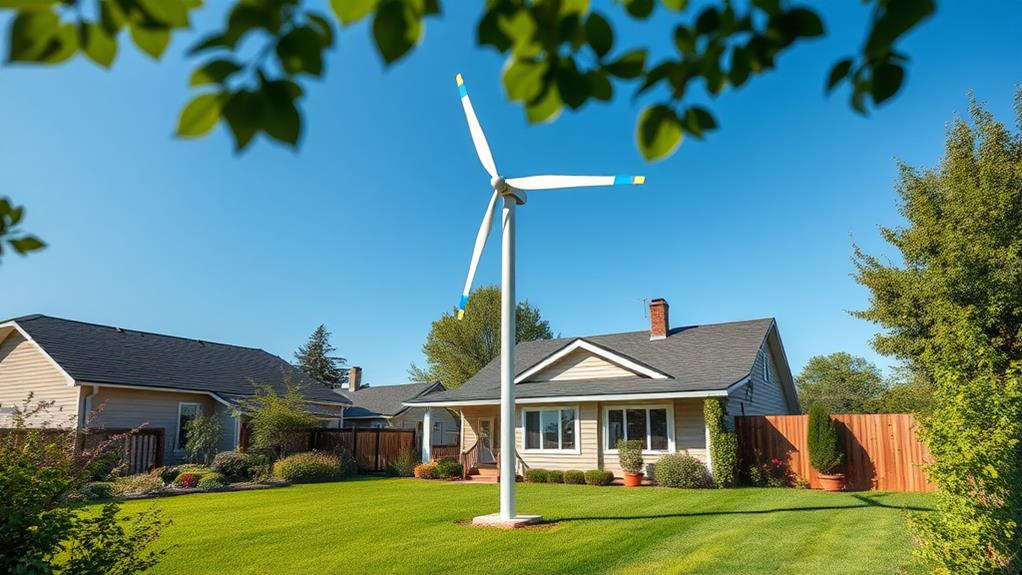
When considering the applications of Vertical Axis Wind Turbines (VAWTs) for residential energy generation, you’ll find their unique design potentially advantageous for capturing wind from any direction, which is especially useful in urban environments where space and aesthetic integration are key. These turbines can also serve as a supplemental option for off-grid living with renewable energy, enhancing energy independence in locations lacking reliable access to the grid. Furthermore, their lower center of gravity contributes to improved stability and safety, though homeowners in regions with strong, consistent, unobstructed wind resources will typically get better economics from a well-sited horizontal-axis turbine or a hybrid solar-plus-wind system.
Recommended Products

【👍600W Wind Turbine Generators Kit】This product is made of high-quality nylon fiber, which is strong, stable, anti-corrosion, and can be used for a long time.

PRODUCT DATA--Rated Power: 0.55 W Output Voltage: 5.5 V 4-Vane, diameter of Fan(installed): 100mm Rated Wind Speed: 5.5 m/s

This is a complete set of mini wind turbine model kits for educational and experimental use.
Residential Energy Generation
Homeowners looking for sustainable energy solutions sometimes consider Vertical Axis Wind Turbines (VAWTs) for residential energy generation. VAWTs are marketed as effective in urban environments, capturing wind from any direction, which is a fit for rooftops and compact spaces. They’re generally easier to service thanks to their lower height and more accessible gearbox placement, which can help reduce some operational costs. However, given the DOE’s 2023 finding of a 13% average capacity factor for small wind and installed costs around $7,370/kW, homeowners should run the numbers carefully — a wind turbine payback period calculator can help clarify whether a VAWT pencils out compared with solar or a hybrid system at a specific site. Pairing a VAWT with monitoring hardware, such as a solar energy monitoring device adapted for combined systems, can help track actual output against projections.
| Feature | Consideration |
|---|---|
| Directional Flexibility | Captures wind from any angle without a yaw mechanism |
| Maintenance Access | Lower height can simplify servicing |
| Cost per kW | Averaged about $7,370/kW in 2023 DOE-tracked small wind projects |
| Capacity Factor | Averaged 13% for small wind in 2023, per DOE/PNNL data |
Urban Integration Solutions
Some urban property owners are exploring Vertical Axis Wind Turbines (VAWTs) as a supplemental option for on-site energy generation. Their compact design can make them a candidate for building-integrated wind turbine applications, mounted on rooftops or as part of architectural structures, minimizing space usage. VAWTs are generally more tolerant of the turbulent wind conditions typical in dense urban settings than horizontal-axis machines, though absolute output remains modest given the capacity-factor data above. Ongoing research into integrating VAWTs with solar panels and smart grid technology is exploring ways to improve overall system reliability. If you’re evaluating financing for a combined system, comparing solar energy financing options alongside wind equipment costs can help identify the most cost-effective path.
Performance and Efficiency Considerations
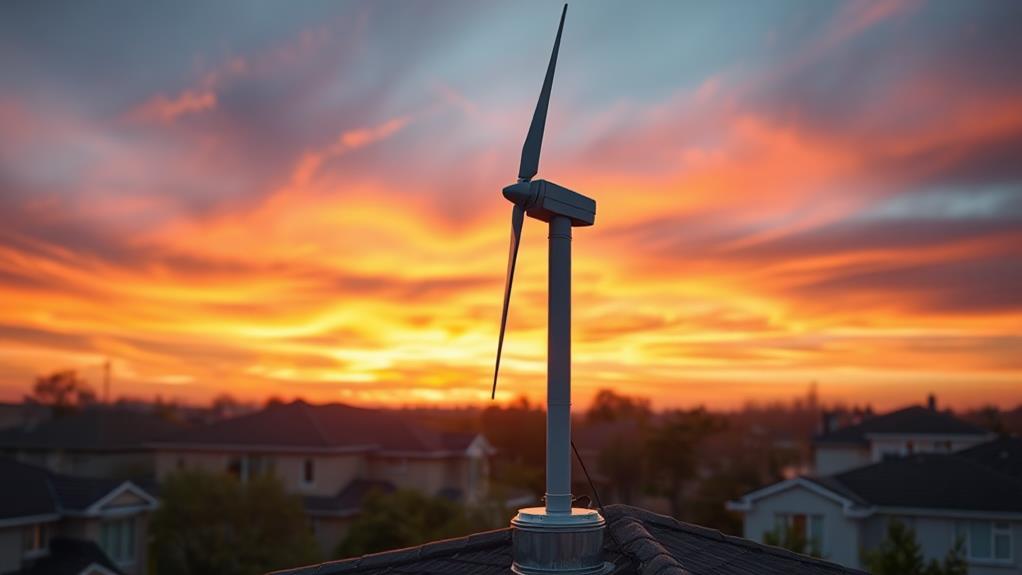
Considering the performance and efficiency of Vertical Axis Wind Turbines (VAWTs) is essential for anyone looking to harness wind energy for residential use. All wind turbines, VAWT or HAWT, are bound by the theoretical Betz limit of about 59.3% — the maximum share of kinetic energy in wind that can physically be converted to rotational energy. In practice, well-engineered large horizontal-axis turbines can reach efficiencies in the neighborhood of the mid-40% range under ideal conditions, while VAWTs — and small wind systems generally — tend to convert energy less efficiently once real-world siting, turbulence, and mechanical losses are factored in. That gap shows up directly in DOE’s field data: small wind projects (100 kW and under) averaged a 13% capacity factor in 2023, compared with 21% for midsize and large distributed turbines. Key factors influencing performance include blade pitch, rotor geometry, and — critically — how much undisturbed wind actually reaches the rotor, which is why site selection matters as much as turbine design in turbulent urban environments.
Recommended Products

EFFICIENT WORK: The wind generator has a power of up to 500W and a wind speed of up to 42.65ft/s, and the starting wind speed is lower than that of other wind turbines, and the power generation increases gently, so it can generate more power than other wind turbines within a certain range.

100W 12V Vertical Axis Wind Turbine: Featuring advanced helical vertical axis design, the turbine outperforms traditional horizontal wind turbines. It supports 100W max power output and works efficiently at low wind speeds with gradual power boost, maximizing energy production and making full use of wind resources for stable green power supply.

【Advanced Helical Design】This product utilizes an advanced helical design principle that allows it to operate efficiently in low wind speed environments, and with easy installation and maintenance and low noise, it can be efficiently integrated into a variety of environments
Recent Data on VAWT Technology and Costs
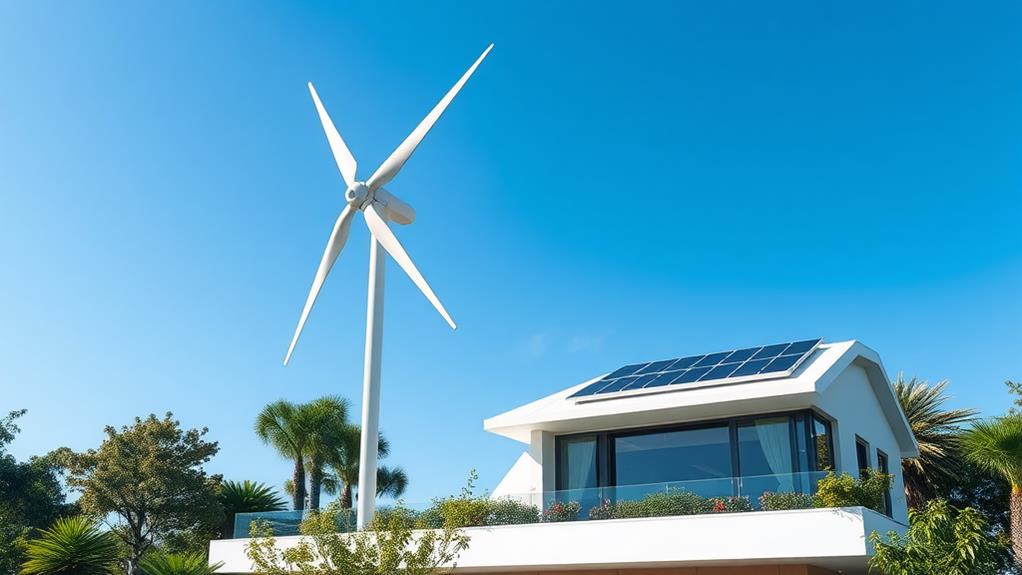
Recent data from the U.S. Department of Energy’s Distributed Wind Market Report gives a clearer picture of where small-scale wind, including VAWTs, actually stands. Cumulative U.S. distributed wind capacity reached roughly 1,110 MW from more than 92,000 turbines installed between 2003 and 2023, but small turbines (100 kW or less) made up only about 22% of the 10.5 MW added in 2023, with an average installed cost of approximately $7,370 per kW that year — several times higher on a per-kW basis than midsize and large turbines, which averaged closer to $4,160/kW over 2014–2023. Research into lightweight composite blades, refined blade-pitch control, and hybrid VAWT-solar systems continues, but homeowners should treat manufacturer efficiency claims with caution and look for independently verified, third-party performance data before purchasing. Ongoing research into hybrid systems that pair small wind with solar and storage aims to smooth out output variability for homeowners pursuing energy independence — see our overview of green energy storage system pricing for context on what backup capacity typically costs.
Recommended Products
Reliable and Durable Performance: This Vertical Axis Wind Turbine Generator utilizes an advanced permanent magnet rotor alternator paired with two aluminum alloy blades and...
Future Trends in Residential Wind Energy

As you look towards the future of residential wind energy, incremental design improvements in Vertical Axis Wind Turbines (VAWTs) may continue to nudge efficiency and durability upward. Urban integration opportunities exist where traditional Horizontal Axis Wind Turbines (HAWTs) aren’t feasible due to space or zoning constraints, but the economics have shifted: a major federal incentive that helped offset the high upfront cost of small wind is no longer available for new installations. In addition, the development of hybrid energy solutions combining solar and wind technologies is one path homeowners are exploring to diversify generation and improve overall system reliability.
Policy and Incentive Changes
One of the most consequential recent changes for residential wind energy isn’t technical — it’s a matter of tax policy. The federal Residential Clean Energy Credit under Section 25D of the tax code, which had offered a 30% credit for qualifying small wind energy property under the Inflation Reduction Act, was terminated for systems placed in service after December 31, 2026, under the One Big Beautiful Bill Act. That means homeowners installing a residential VAWT or small HAWT system starting in 2026 can no longer claim that federal credit, which materially changes the payback math discussed above. State- and utility-level incentives may still apply and vary widely, so it’s worth checking a resource like solar energy incentives by state (many state clean-energy incentive programs also cover small wind) or the DSIRE database for current state and utility programs before budgeting a project.
Urban Integration Opportunities
Compact designs continue to make VAWTs a candidate for integration into urban environments, where space is often limited and rooftop real estate is at a premium. VAWTs offer a form factor that can fit into residential architecture without the tall tower and swept area a HAWT requires, potentially generating supplemental clean energy without extensive new infrastructure. Their omni-directional capabilities allow them to respond to variable wind patterns typical in urban settings, though as covered above, this comes with a real-world efficiency tradeoff that homeowners should weigh carefully — comparing options via resources like solar panel efficiency vs. cost can help frame the decision against a more established residential renewable technology.
Hybrid Energy Solutions
In the search for reliable on-site generation, hybrid energy systems are one option homeowners consider. By pairing a small VAWT with solar panels, it’s possible to diversify generation sources across different weather conditions, though given current small-wind capacity factors, solar typically carries the larger share of generation in most U.S. locations. The integration of small wind with battery storage can help smooth output and reduce grid reliance, but given the removal of the federal 25D credit for systems installed after 2026 and the relatively high cost per kW documented by DOE, homeowners should carefully model expected savings — including a full cost-benefit analysis of green energy options — before committing capital to a residential wind component.
Frequently Asked Questions
What Is the Main Disadvantage of a Vertical Axis Wind Turbine?
The main disadvantage of vertical axis wind turbines is real-world energy output: DOE data shows small wind systems averaged just a 13% capacity factor in 2023, well below larger turbines. They also tend to have higher installed costs per kilowatt, along with maintenance considerations like blade fatigue.
Why Are Vertical Axis Wind Turbines Not as Widely Used as Horizontal Axis Turbines?
Vertical axis wind turbines face lower aerodynamic efficiency in most site conditions, higher per-kW installed costs (around $7,370/kW in 2023 DOE-tracked small wind projects), and durability challenges from the varying forces experienced during each rotation. These factors have limited large-scale commercial adoption compared with horizontal-axis designs.
Are Vertical Axis Wind Turbines a Good Investment for Homeowners?
It depends heavily on site wind resource and budget. VAWTs generally underperform horizontal-axis turbines on efficiency, and with the federal Section 25D tax credit no longer available for systems installed after December 31, 2026, the payback period for a residential VAWT has lengthened. Running the numbers with a payback calculator before purchasing is essential.
What Is an Advantage of a Vertical Axis Wind Turbine for a Residential Area?
Key advantages include quieter operation relative to horizontal-axis turbines, omni-directional wind capture without a yaw mechanism, a lower center of gravity for stability, and a compact form factor suited to rooftop or small-lot installations in space-constrained urban settings.
Do Small Wind Turbines Still Qualify for Any Federal Incentives?
The Section 25D residential credit that covered qualifying small wind property expired for systems placed in service after December 31, 2026, per the One Big Beautiful Bill Act. Homeowners should check current IRS guidance and the DSIRE database for any remaining state, local, or utility incentives.