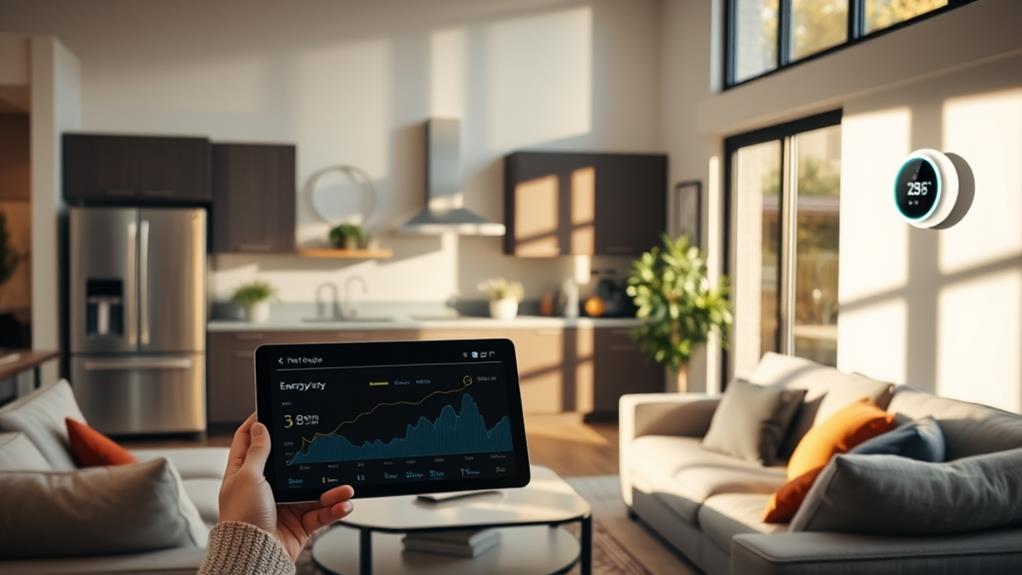
To effectively assess your home for renewable energy, start by evaluating your energy needs with a detailed energy audit, examining insulation performance and appliance efficiency, while reviewing past energy bills for baseline consumption. Next, assess potential renewable sources like solar, wind, or biomass, considering factors such as roof orientation and local wind speeds. Implement energy-efficient practices, including upgrading to LED lighting and high-efficiency appliances. Understand the costs associated with installation — a typical residential solar system now averages roughly $2.60 per watt before incentives, or about $31,000 for a 12 kW system, and the federal residential tax credit landscape changed significantly at the end of 2026 — while exploring available state incentives. Finally, utilize local resources for support programs and expert consultations to enhance efficiency and sustainability. Further insights await.
Key Takeaways
- Review past electricity bills to determine your average monthly energy use in kWh; the average U.S. residential electricity price has climbed to roughly 17.5 cents per kWh, making efficiency and renewables more valuable than ever.
- Conduct a home energy audit to identify areas of energy waste and potential for improvement.
- Evaluate renewable energy sources like solar and wind by assessing your property’s conditions and resources.
- Implement energy-efficient practices such as upgrading to LED lights and high-efficiency appliances to reduce consumption.
- Research current state and utility incentives closely, since the federal residential solar tax credit (Section 25D) expired for systems installed after December 31, 2026 under the One Big Beautiful Bill Act.
Assess Your Energy Needs
You may be interested


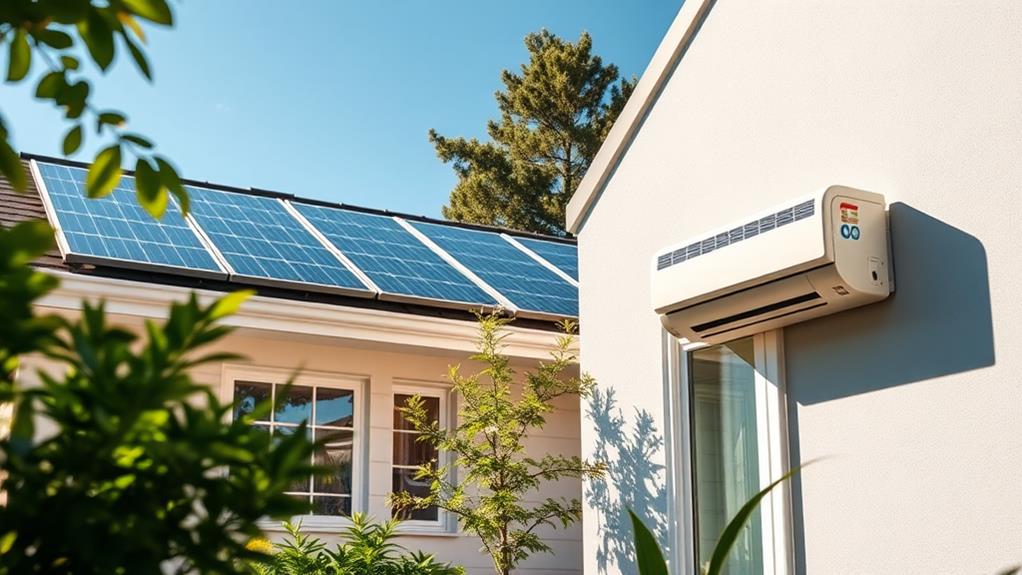
Before diving into renewable energy options, it’s essential to assess your energy needs, as understanding your consumption is the first step toward making informed decisions. Start by reviewing past electricity bills to determine your average monthly energy use in kilowatt-hours (kWh) — a useful baseline given that average U.S. residential electricity prices have risen to about 17.5 cents per kWh. This data helps identify the appropriate size for a renewable energy system. Conducting a thorough home energy audit can pinpoint areas of energy waste, revealing where efficiency upgrades are most needed; a professional whole-home energy audit typically costs a few hundred dollars, though some utilities and the DOE’s Home Energy Score program offer free or subsidized assessments. Additionally, check your insulation levels to minimize heat loss during heating and cooling. Evaluate the efficiency of your appliances, as older models often consume excessive energy — look for the ENERGY STAR label when comparing replacement options. Finally, utilize energy monitoring devices to track usage patterns over time, providing insights into your overall energy consumption and potential renewable contributions — see our guide to the best solar energy monitoring devices for options.
Recommended Products
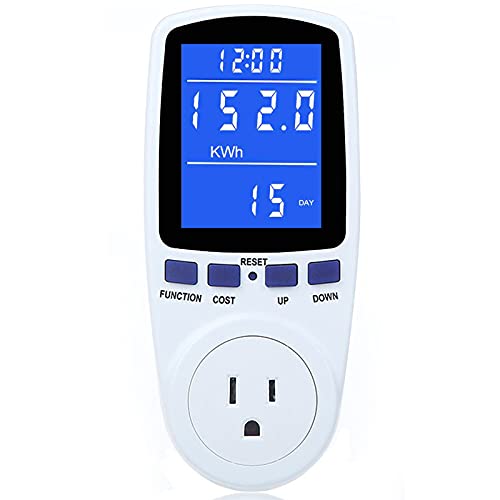
Various Monitoring Parameters: The power meter plug can monitor the power (W), energy (kWh), volts, amps, hertz, power factor, cost, minimum and maximum power (W), cumulative days and time of your appliances. By switching 7 display modes, you can easily know the various parameters while the appliance is working. The home energy monitor can also calculate and display how much power your appliance uses and how much electricity bill it cost in cumulative time

⚡ EASY INSTALLATION: Installs in circuit panel of most homes with clamp-on sensors. Supports single-phase up to 240VAC line-neutral; single, split-phase 120/240VAC; and three-phase up to 415Y/240VAC (no Delta). The branch lines can automatically match different phases and have no restrictions in terms of quantity and voltage.Panels with access only to busbars will need flexible sensors available from SEM-Meter.

Multi-function power monitor: Our electric usage monitor can monitor the power (W), electricity(kWh), voltage(V), frequency(Hz), current(A), power factor(PF), unit price($/kWh), total cost($) of your appliances. By switching 8 display modes, you can easily know the various parameters while the appliance is working. The “electricity” mode can calculate and display how much power your appliance uses. And the “total cost” mode will show how much electricity bill it cost in cumulative time
Evaluate Renewable Energy Sources
Evaluating renewable energy sources is essential for making the best choice for your home. Begin by evaluating your solar potential, considering factors like roof orientation, shading, and available space. Tools such as the U.S. Department of Energy’s PVWatts calculator and NREL solar resource maps can assist in determining ideal solar panel placement and expected output. If you’re weighing panel types and pricing, our breakdown of solar panel efficiency versus cost can help narrow the decision. Next, examine local wind conditions; small-scale residential wind generally becomes more viable at annual average wind speeds above roughly 10 miles per hour (about 4.5 m/s) at hub height, per Department of Energy guidance — our guide on small-scale wind turbines for homes walks through the site requirements. If you have access to organic material, researching biomass energy options such as residential biomass energy solutions can provide additional renewable options. Finally, compare the installation costs, maintenance requirements, and energy output of various systems. Shifting to renewable energy can meaningfully reduce your carbon footprint and hedge against rising utility rates, with a well-sized solar system able to offset a large share of a typical household’s annual electricity bill depending on sun exposure, system size, and local rates.
Recommended Products

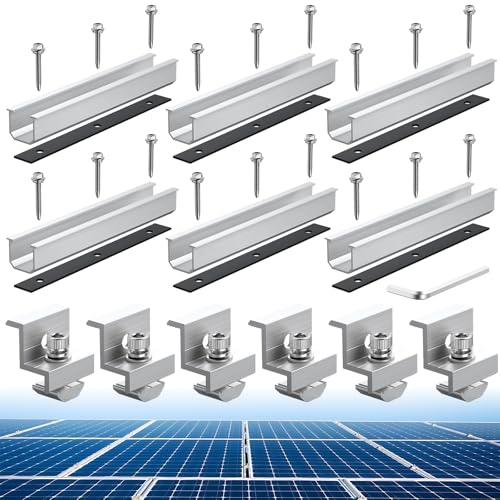
Practical Design & Easy to Install: End clamps and T-shaped middle clamps ensure a secure and easy grip during the solar panel installation. It also reduces the impact of the weight of the PV system on the suction of the roof covering. The grooved strips of the rails allow for a more secure connection to the solar panels
Easy to Install: Z-type, easy to install, save time and effort. This solar panel roof mounting kit create a strong connection between the panels. This type of installation reduces the impact of the weight of the PV system on the suction of the roof covering
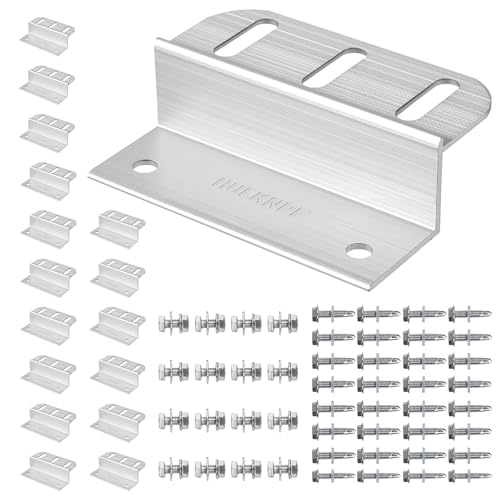
Durable & Wind-Resistant Build: Crafted from corrosion-resistant aluminum alloy, these heavy-duty Z brackets provide long-lasting, stable performance and withstand high winds for outdoor solar installations.
Implement Energy-Efficient Practices

Making the switch to renewable energy is just one part of reducing your home’s overall energy consumption. Implementing energy-efficient practices can greatly lower your electricity bills while minimizing your carbon footprint. Start by replacing incandescent bulbs with LED lights, which the U.S. Department of Energy notes use at least 75% less energy and last far longer than incandescent lighting. Consider installing ENERGY STAR certified smart thermostats, which ENERGY STAR-certified models are verified to deliver real household energy savings when used with recommended settings; pairing one with good insulation and routine system maintenance compounds the benefit. Unplugging electronics when not in use helps prevent phantom, or standby, energy consumption, which the DOE has identified as a meaningful year-round drain in many homes. Upgrade to high-efficiency, ENERGY STAR-certified appliances for long-term savings, and improve your home’s insulation and air sealing, which the DOE and ENERGY STAR both cite as one of the most cost-effective ways to cut heating and cooling costs.
Recommended Products

EASY DIY INSTALLATION: Do it yourself fast with a built-in level and simple step-by-step instructions. Works with the HVAC equipment found in most homes

Save up to 23% every year on heating and cooling costs, adjusts to your set schedule to save energy when you’re gone and optimize comfort when you’re home. Compared to a hold of 72

PRIVACY PROTECTION*: Sensi won’t sell your personal information to third parties
Understand Costs and Incentives
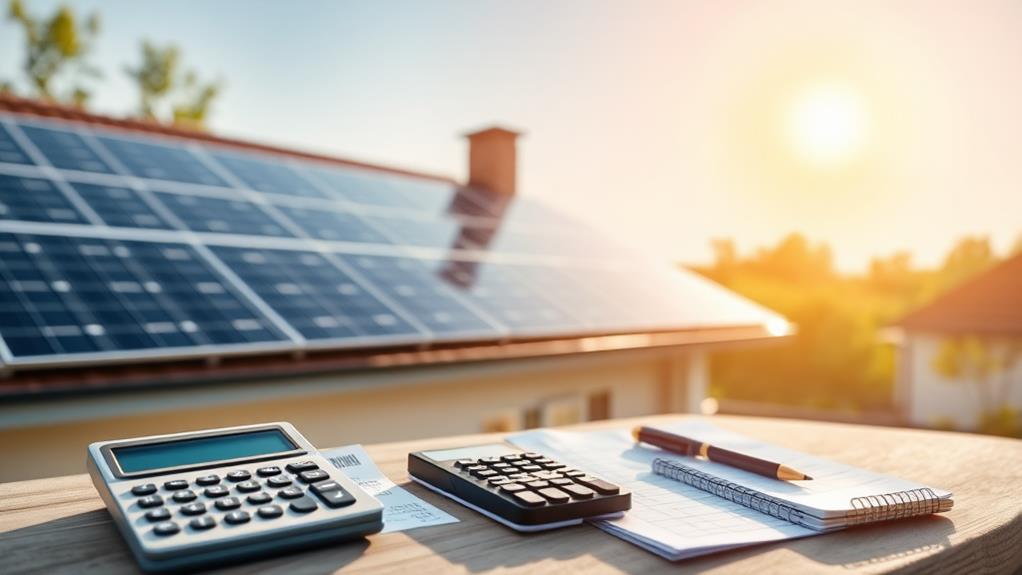
Understanding the financial aspects of renewable energy can make a notable difference in your decision to invest. Initial installation costs for a residential solar system currently average around $2.60 per watt before incentives, putting a typical 12 kW system at roughly $31,000, according to EnergySage’s 2026 marketplace pricing data; actual costs vary by system size, equipment, and region — see our detailed residential solar installation cost guide for a full breakdown. Importantly, the federal residential Clean Energy Credit (Section 25D), which previously let homeowners deduct 30% of installation costs from federal taxes, expired for systems placed in service after December 31, 2026 under the One Big Beautiful Bill Act, so homeowners installing solar now should not assume that federal credit applies and should confirm current eligibility directly on IRS.gov. State-level incentives, utility rebates, and net metering programs remain widely available and can still meaningfully offset costs; the DSIRE database, maintained with support from the U.S. Department of Energy, is the most reliable place to check what’s currently offered in your state — our state-by-state solar incentives guide is a good starting point. Long-term energy savings can still offset the upfront investment over time, though payback periods will generally lengthen without the federal credit, making it worth comparing financing options through our solar financing comparison.
Recommended Products

[LARGE DISPLAY] - The huge LCD screen that clearly displays big numbers makes it easy to read from afar, and it’s aesthetically pleasing.

Country Of Origin: China

EASY-TO-USE DESIGN - With its large screen, this calculator is made for convenient and comfortable everyday use. Its tilted and angled display allows you to easily see your calculations without straining your eyes.
Explore Local Support and Resources

Considering the variety of local support and resources available, homeowners can simplify their journey toward renewable energy adoption. Engaging with local utility companies, community programs, and energy professionals can provide essential insights and financial incentives that make this shift more accessible, especially now that the federal tax credit landscape has changed.
| Resource Type | Description | Potential Benefits |
|---|---|---|
| Local Utility Companies | Offer rebates and incentives for renewable energy solutions | Reduced installation costs |
| DSIRE / State Programs | DOE-supported database of state and local renewable energy incentives | Find current rebates, grants, and net metering rules by state |
| Community Programs | Provide free or low-cost home energy assessments | Assess energy needs efficiently |
| Energy Professionals | Connect homeowners with experts on energy efficiency | Tailored advice and installation guidance |
Utilizing these resources can empower you to enhance your home’s energy efficiency and successfully navigate the renewable energy landscape, even as federal incentive rules continue to evolve. For a broader look at how renewable costs compare to conventional utility bills over time, see our green energy versus fossil fuel price comparison.
Recommended Products

【Dual Mode Inspection】Combines conventional thermal imaging (Center/Hot/Cold spot modes) with thermometer mode for flexible temperature analysis. Use full-screen thermal imaging to monitor moving animals, machinery, automotive, or HVAC systems in real time, ensuring continuous observation with no detail loss. When you need exact numbers such as kitchen use, thermometer mode provides quick, point-and-shoot readings with a clear digital display.

【GW340 Beyond Resolution Thermal Imaging】As an upgraded version of GW192A, it has been enhanced from the original 192×192 resolution to 512x384, delivering sharper visuals. It captures clearer images and records smoother video.

[High-Resolution Thermal Detection Heat Thermal Camera] Equipped with a 240 x 240 TISR display and 128 x 128 IR resolution, this infrared thermometer provides crisp thermal imaging for detecting even minor temperature anomalies with high accuracy
Frequently Asked Questions
How to Do an Energy Audit of Your Home?
To audit your home’s energy efficiency, review utility bills, inspect insulation, and consider upgrades. Track energy consumption, then explore renewable resources like solar panels or wind turbines for home improvements that enhance savings and sustainability.
How Can I Make My House Run on Renewable Energy?
To make your house run on renewable energy, consider solar panel installation, explore wind turbine benefits, invest in energy-efficient appliances, utilize home battery storage, and check current state incentives and net metering programs, since the federal residential solar tax credit expired for systems installed after December 31, 2026.
Is a Home Energy Assessment Worth It?
Absolutely, a home energy assessment is worth it. You’ll uncover cost-saving opportunities, energy savings, and eligibility for local incentives. Professional evaluations can also guide technology choices and long-term planning more accurately than a DIY assessment alone.
Did the Federal Solar Tax Credit Really Expire?
Yes. The 30% federal residential Clean Energy Credit under Section 25D expired for systems installed after December 31, 2026, following the One Big Beautiful Bill Act. Homeowners should verify current eligibility on IRS.gov and check DSIRE for any remaining state or utility incentives.
How to Conduct a Personal Energy Audit?
Start by reviewing your utility bills to understand consumption patterns, then walk through your home evaluating insulation, appliances, and potential air leaks. Plot efficiency upgrades and consider renewable sources afterward for the biggest long-term impact.