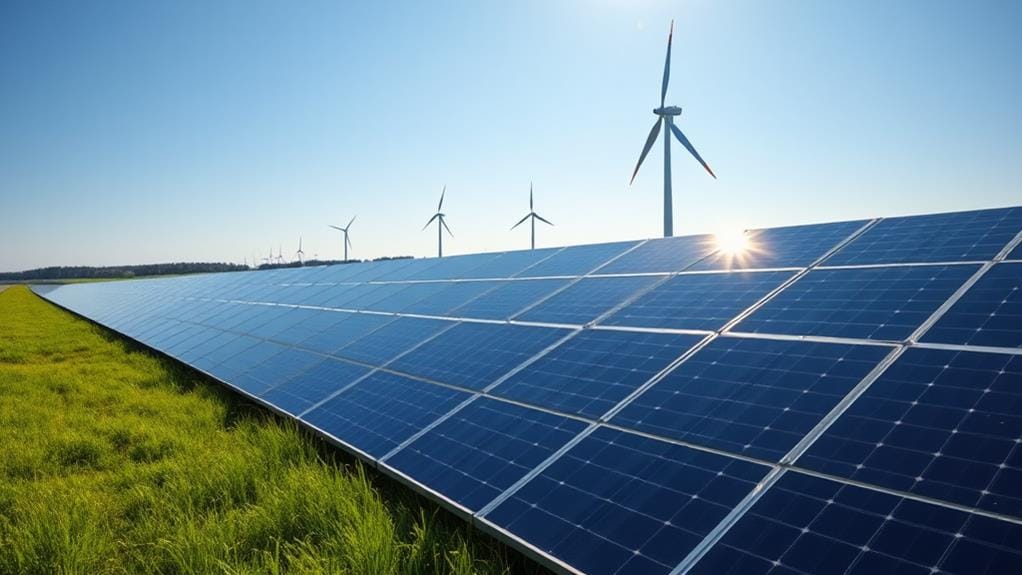
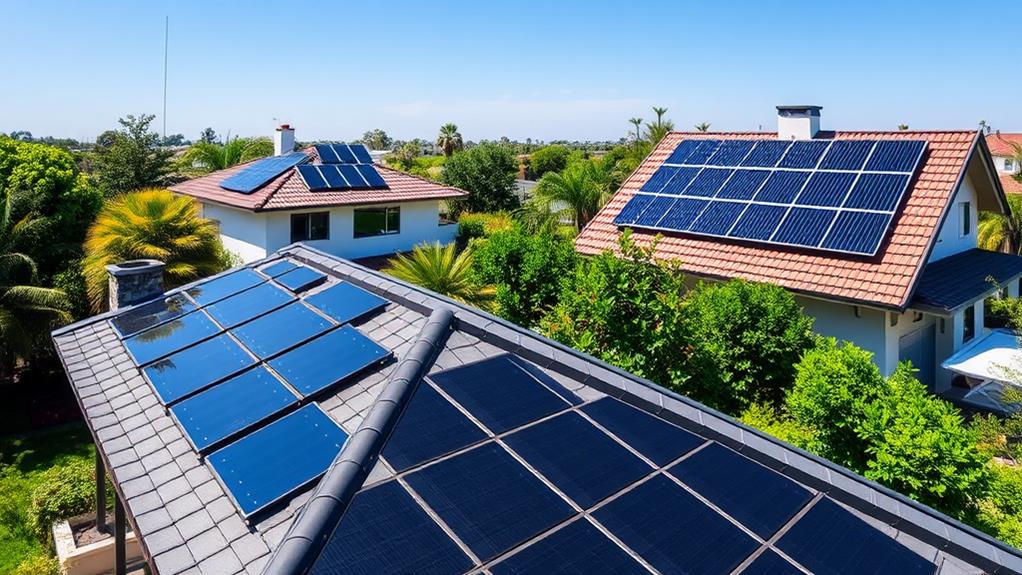
Solar-powered EV charging stations are the future of sustainable transportation, as they efficiently harness renewable energy to minimize carbon emissions and enhance energy independence. By utilizing battery storage systems, these stations guarantee continuous operation, even during non-sunny periods, considerably reducing reliance on traditional power grids. Financially, they offer substantial savings, averaging around $60 monthly on charging costs, supported by federal tax credits that can offset installation expenses by 30%. Additionally, innovations like bidirectional charging systems optimize energy management, while policy backing, including a $7.5 billion investment, paves the way for an expanded charging infrastructure. There's more to explore on this topic.
Key Takeaways
- Solar-powered EV charging stations significantly reduce carbon emissions, supporting global efforts to achieve net-zero emissions by 2030.
- They provide substantial cost savings on charging expenses, with potential monthly savings averaging around $60.
- Battery storage systems ensure a reliable power supply, enhancing energy resilience and reducing dependence on the electrical grid.
- Technological innovations, such as bidirectional charging, improve energy management and maximize solar energy utilization.
- Policy support and incentives, including federal tax credits, encourage widespread adoption and expansion of solar EV charging infrastructure.
Overview of Solar-Powered EV Charging
You may be interested

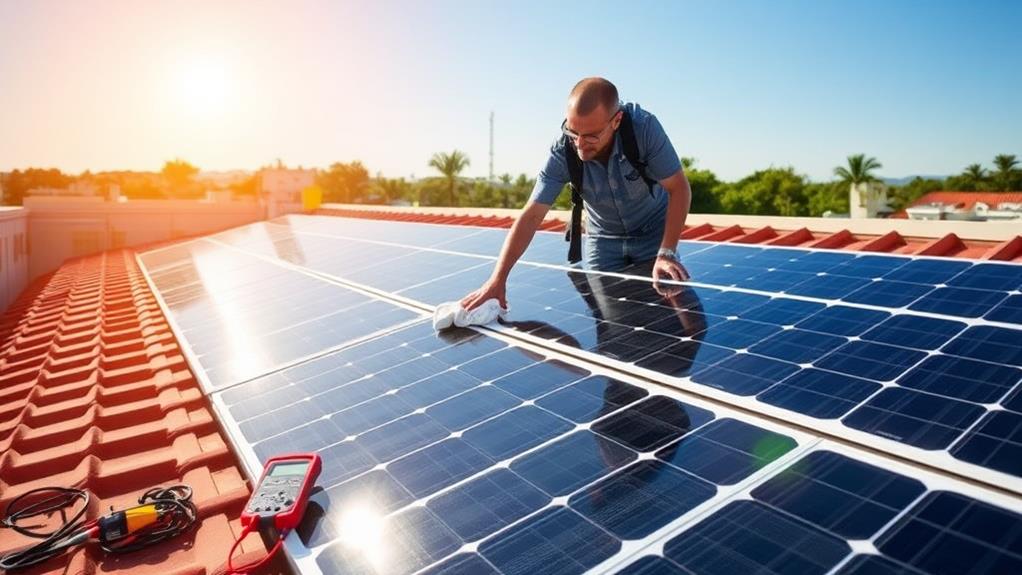
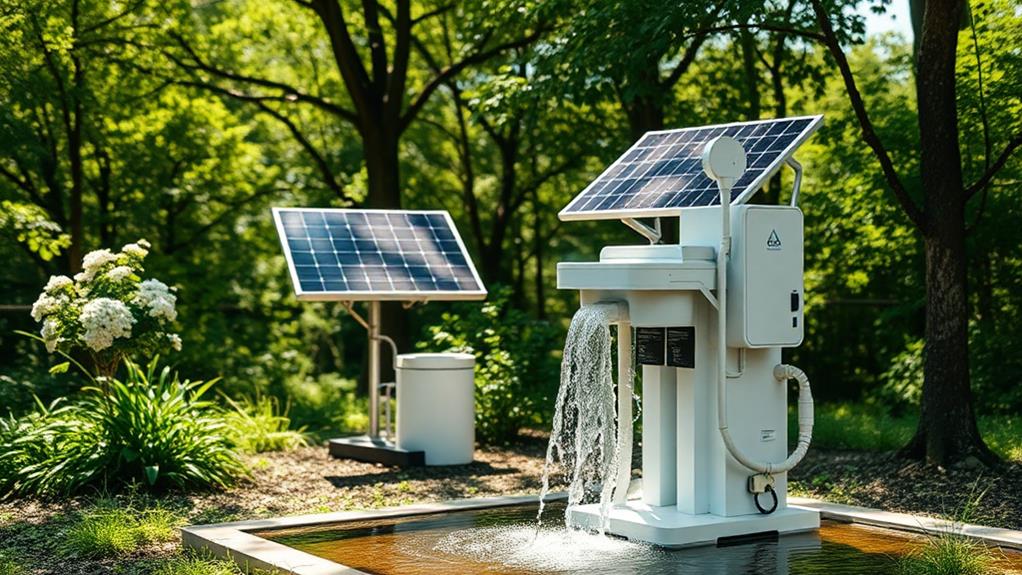
In recent years, solar-powered EV charging stations have emerged as an essential solution for sustainable transportation. By harnessing renewable energy sources, these stations enable solar energy charging, which greatly reduces carbon emissions compared to traditional fossil fuel-generated electricity. Integrating solar panels into the EV charging infrastructure not only allows for on-site energy generation but also enhances energy independence for both residential and commercial users. Additionally, incorporating battery storage systems means we can capture surplus energy for use during non-sunny hours, thereby improving the reliability of charging services. This innovative approach not only bolsters community resilience by providing backup power but also addresses range anxiety, promoting a wider adoption of electric vehicles and paving the way for a cleaner, more sustainable future.
Recommended Products

SOLAR GENERATOR WITH SOLAR PANEL: Power your outdoor adventures with the MARBERO Solar Generator M82MAX and 30W Solar Panel. Ideal for camping, road trips, or off-grid living, this duo delivers reliable electricity wherever you go. With a high-capacity power kit, you'll enjoy uninterrupted device charging, ensuring your outdoor fun never ends.

Large Capacity. Featuring a 3600Wh LFP battery capacity, DELTA Pro provides strong electrical storage for home battery backup power supply and outdoor camping. Applied with DELTA Pro Extra Batteries or Smart Generators, the electric generator can expand its capacity from 3.6kWh to 25kWh.
Environmental Impact of Solar Charging
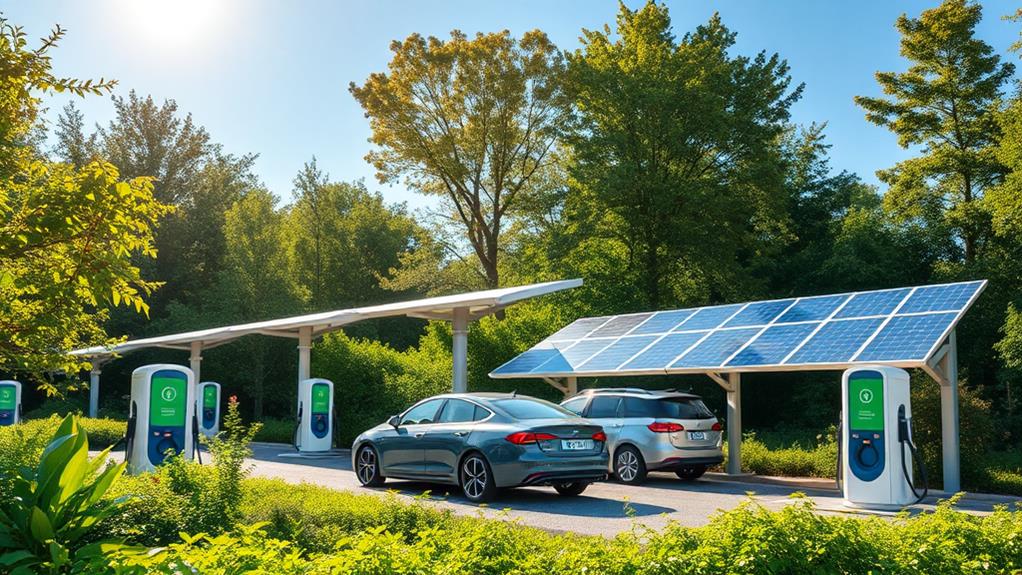
Solar-powered EV charging stations greatly benefit the environment by drastically reducing emissions associated with traditional energy sources. By harnessing solar power, we eliminate the greenhouse gas emissions tied to fossil fuel-generated electricity, which is vital for combating climate change. Each gallon of gasoline burned emits approximately 20 lbs. of CO2, and by shifting to solar charging, we considerably decrease our carbon footprint. These stations operate with little to no carbon emissions, promoting cleaner air quality and enhancing community resilience. Additionally, integrating solar energy into EV infrastructure supports our collective goal of achieving net-zero emissions by 2030, urging the widespread adoption of renewable energy sources for transportation. This sustainable approach contributes to a healthier planet for all.
Cost Savings and Economic Benefits

Harnessing solar energy for EV charging not only benefits the environment but also leads to significant cost savings for users. By investing in solar-powered EV charging stations, we can substantially reduce our monthly charging costs, which average around $60 based on $0.16 per kWh. Once we've paid off the initial installation of solar panels, ongoing charging costs can be eliminated entirely, offering long-term savings. Additionally, federal tax credits can offset installation expenses by up to 30%, while incentives for EV chargers may yield another $1,000 in savings. As EV adoption surges, projected charging loads will increase by 1,850% by 2040, making solar energy a financially viable solution for sustainable, cost-effective EV charging without reliance on volatile energy markets.
Recommended Products

Universal Compatibility: Designed to work with all American Standard (AS) EV chargers with an M4 thread base or a wall mount/adapter plate. Compatible with US EV chargers only

Enhancing Energy Resilience

The advantages of solar-powered EV charging stations extend beyond cost savings; they also play a pivotal role in enhancing energy resilience. By providing a decentralized energy source, solar charging reduces our reliance on grid power and fossil fuels, particularly during peak demand or outages. The integration of battery storage with these systems allows us to store excess solar energy, guaranteeing continuous power supply for EV charging even when sunlight isn't available. Moreover, utilizing solar energy alleviates strain on the electrical grid during high usage times, promoting grid stability. Additionally, EV batteries can serve as backup power sources during outages, enhancing community resilience and providing essential power for homes. This accessibility, especially in remote areas, guarantees reliable EV charging options are within reach.
Technological Innovations in Solar Charging

Innovations in solar charging technology are transforming how we power electric vehicles, making it more efficient and reliable than ever before. Key advancements include:
- Maximum Power Point Tracking (MPPT) to optimize solar energy extraction, ensuring effective charging for battery electric vehicles (BEVs) even under varying sunlight.
- Bidirectional EV charging systems that not only allow vehicles to draw power from the grid but also enable them to supply energy back, enhancing energy management systems.
- Hybrid integration with renewable sources like wind and biogas, addressing solar energy intermittency, and improving reliability.
- Flexible and roof-mounted solar panels designed for urban settings, maximizing space utilization for solar-powered EV charging stations.
These technologies collectively enhance operational efficiency, enabling a sustainable and autonomous energy future.
Recommended Products

Power for Every Scenario: EcoFlow DELTA 3 Classic delivers 1800W output (3600W surge) with X-Boost technology—enough for refrigerators, microwaves, laptops, and more. Expandable up to 2600W with X-Boost for even heavier loads.

【Charge 7x Faster with ELECQ EV Charger】The ELECQ Home Level 2 Charger with a NEMA 14-50 plug delivers up to 38 miles of range per hour with a 40-amp output. Compared to Level 1 chargers, it charges up to 7 times faster while significantly improving the safety of your home’s electrical system. With advanced power management and built-in safety features, the ELECQ L2 charger helps prevent common risks such as overheating, overloading, and fire hazards, ensuring safe and reliable charging at home.
Integration With Existing Infrastructure

By seamlessly integrating solar-powered EV charging stations with existing infrastructure, we can make significant strides toward sustainability while maximizing the use of available spaces. Utilizing rooftops and parking lots for solar arrays, we can generate renewable energy without requiring additional land. This approach not only reduces electricity costs for businesses—by allowing excess solar energy to power EV chargers—but also enhances urban sustainability through retrofitted parking structures equipped with solar canopies. These dual-use spaces provide shade while generating energy. In addition, incorporating an energy management system allows us to optimize solar generation with EV charging demands, efficiently managing grid capacity and minimizing peak load strain. Ultimately, this integration expands access to clean energy in both urban and rural settings, bridging current charging gaps.
Recommended Products

PLUG AND PLAY AND HARDWIRE ALL IN ONE - Plug directly into a household 220v - 240V NEMA 14-50 outlet with 50A circuit for immediate plug and play use (no electrician required) or choose up to 50A hardwired installation (electrician required). For Tesla EVs, this will require an adapter.

For use with the EGO Nexus Power Station and recommended solar panels
Policy Support and Incentives

As we explore the critical role of policy support and incentives in the expansion of solar-powered EV charging stations, it is crucial to recognize the significant funding and tax benefits provided by government initiatives. The Bipartisan Infrastructure Law has earmarked $7.5 billion specifically for the development of EV charging infrastructure, while federal tax credits can yield up to 30% savings on solar installations, making it financially viable for many. In addition, programs like net metering not only enhance the affordability of these stations but also align legislative support with our collective goal of achieving net-zero emissions through renewable energy adoption.
Recommended Products

【Powerful 1000W Output for All Needs】1000W continuous power and 999Wh capacity—powers small appliances, tools, and electronics. Great for camping (runs floodlights for...
Government Incentives Overview
There's a growing recognition of the importance of government incentives in promoting solar-powered EV charging stations. These incentives not only facilitate the shift to cleaner energy but also enhance the financial viability of adopting these technologies. Consider the following key incentives available to us:
- The Bipartisan Infrastructure Law allocated $7.5 billion for EV charging improvements, aiming for 500,000 public charging stations by 2030.
- Federal Tax Credits can provide up to 30% savings on solar installations.
- The Alternative Fuel Vehicle Tax Credit offers up to $1,000 for installing EV chargers.
- Net metering programs allow solar energy users to sell excess electricity back to the grid.
Legislative Support Impact
While the push for renewable energy intensifies, legislative support plays an essential role in shaping the future of solar-powered EV charging stations. With the Bipartisan Infrastructure Law allocating $7.5 billion to enhance EV charging infrastructure, the goal of installing 500,000 public charging stations by 2030 becomes increasingly attainable. Federal tax credits of up to 30% for solar installations further incentivize the integration of solar energy into these charging networks. Additionally, the Alternative Fuel Vehicle Tax Credit provides up to $1,000 savings for EV charger installations, encouraging widespread adoption among businesses and homeowners. Local policies promoting net metering allow solar energy users to monetize surplus energy, enhancing the economic viability and sustainability of solar-powered EV charging stations across the nation.
Future Trends in Solar EV Charging

As we look towards the future of solar EV charging, we can anticipate significant technological innovations that will enhance both efficiency and user experience, such as bidirectional charging systems that allow energy to flow back to the grid. In addition, expanding the infrastructure network will be essential in accommodating the projected 1,850% increase in EV charging load by 2040, necessitating the integration of solar energy to meet this demand sustainably. By leveraging advancements in energy management solutions and increasing the availability of solar-powered stations, we can create a more reliable and independent charging ecosystem that supports our shift to sustainable transportation.
Technological Innovations Ahead
With the rapid pace of innovation in solar-powered EV charging, we're on the brink of a transformative era for electric mobility. As we look ahead, several technological advancements are emerging that will revolutionize our experience:
- Bidirectional EV charging systems, allowing vehicles to feed energy back to the grid.
- Sophisticated energy management systems, enabling real-time monitoring of solar energy usage.
- Hybrid renewable energy systems, integrating solar and wind to guarantee consistent power supply.
- Flexible, roof-mounted solar panels, optimizing space in urban areas for enhanced energy capture.
These innovations not only promise greater efficiency in EV charging but also elevate our energy independence, reinforcing the role of solar power in a sustainable future. Together, we can embrace these advancements for a cleaner, more empowered world.
Expanding Infrastructure Network
The rapid advancements in solar-powered EV charging technology set the stage for an expansive infrastructure network that can meet the surging demand for electric vehicles. With the Biden Administration's commitment of $7.5 billion to establish 500,000 chargers by 2030, we can anticipate a significant integration of solar energy into our charging infrastructure.
| Projected Needs | Key Developments |
|---|---|
| 500,000 public chargers | Solar carports |
| 1.2 million public chargers | Off-grid charging stations |
| 28 million private chargers | Residential solar systems |
| EVs making up 50% of sales | Grid independence |
As we embrace these innovations, our goal of facilitating EV adoption while promoting sustainability becomes more attainable. The future of our roads depends on this robust solar-powered charging network.
Frequently Asked Questions
Can EV Charging Stations Be Solar Powered?
Like the sun rising over a new horizon, we can harness solar technology advancements for EV charging. It's possible with smart charging infrastructure integration, supporting sustainability initiatives that empower us toward greater freedom and energy independence.
Why Is Solar Energy the Energy of the Future?
We believe solar energy's the future because it harnesses renewable resources, minimizes environmental impact, and enhances energy efficiency. Together, we can embrace this change, liberating ourselves from fossil fuels and creating a sustainable world for generations.
What Are the Benefits of Powering Your EV With Solar Energy?
Imagine a world where we're free from high energy costs and pollution. By powering our EV with solar energy, we enjoy cost savings, reduce our environmental impact, and gain energy independence. Together, let's drive toward a sustainable future!
Why Don T They Put Solar Panels on EV Cars?
We often wonder why solar panels aren't on EVs. It's mostly about solar panel efficiency and vehicle design, plus the challenges of energy storage. Balancing weight and performance makes it tough to integrate them effectively.