
In evaluating the key cost factors in tidal power generation, you should consider initial capital investments, operational and maintenance expenses, environmental assessment costs, and infrastructure expenditures. Tidal projects often require substantial upfront investments, exemplified by the Sihwa Tidal Power Station’s roughly $298 million construction cost for a 254 MW capacity. Operational costs can exceed 50% of total lifecycle costs, influenced by technology choice and maintenance needs. Additionally, geographic location markedly affects installation expenses, while thorough environmental assessments can require millions of dollars. According to IRENA, current tidal stream costs remain higher than mature renewables like offshore wind and solar, but are following a similar cost-decline trajectory as deployment scales up. Strategic planning is essential for economic viability and competitive standing in the energy market. Further insights await exploration.
Key Takeaways
- Tidal power generation incurs high initial capital investments, with projects like Sihwa costing roughly $298 million for 254 MW of capacity.
- Operational and maintenance expenses can exceed 50% of total lifecycle costs, with maintenance often the largest ongoing expenditure.
- Environmental assessment costs, including thorough Environmental Impact Assessments, significantly affect project budgets and ongoing operational expenses.
- Geographic location plays a critical role in cost-effectiveness, with favorable sites reducing installation and operational expenses.
- IRENA reports current tidal stream costs are still above offshore wind and solar PV, but are projected to fall to around $140/MWh for tidal stream once 2 GW of global capacity is deployed.
Overview of Tidal Power Costs
You may be interested

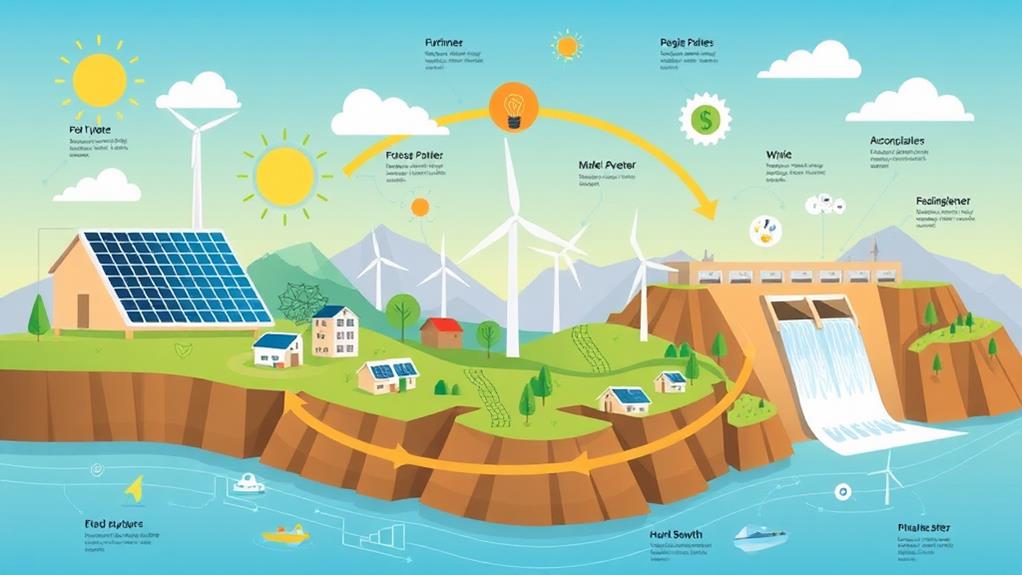

When considering tidal power generation, it is vital to understand the various costs involved. According to IRENA’s Renewable Power Generation Costs in 2026 report, global weighted-average electricity costs for mature technologies were about $0.079/kWh for offshore wind and $0.043/kWh for solar PV in 2026. Tidal stream and wave energy remain earlier in their commercial development, and IRENA’s separate cost-trajectory analysis projects tidal stream costs falling to roughly $140/MWh (about $0.14/kWh) once global deployment reaches 2 GW — still above offshore wind’s current average, but following the same cost-reduction pathway offshore wind itself once followed. The Sihwa Tidal Power Station in South Korea, the world’s largest tidal barrage at 254 MW, illustrates how a large, well-sited barrage project can achieve much lower per-kWh generation costs than smaller, newer tidal stream demonstration projects. Life-cycle cost (LCC) analysis remains important for tidal projects, evaluating economics from initial concept through decades of operation and maintenance. Installed capacity plays a vital role, with facilities like the UK’s MeyGen array — currently operating at 6 MW in Phase 1 with additional phases planned to expand toward roughly 65 MW in the near term — exemplifying ongoing efforts to scale tidal energy’s contribution to grid electricity.
Initial Capital Investment Factors

Typically, the initial capital investment for tidal power generation can be quite substantial, influenced by several key factors. The construction costs of tidal energy projects can vary markedly: the Sihwa Tidal Power Station required roughly $298 million for its 254 MW capacity, while newer tidal stream arrays such as MeyGen have been built incrementally, phase by phase, partly to manage capital risk as the technology matures. Understanding the typical budget structure of a renewable energy project can help developers benchmark tidal investment against other technologies.
| Factor | Description | Impact on Investment |
|---|---|---|
| Tidal Energy Converter (TEC) | Turbine blades and rotor assembly represent a major share of unit cost. | Directly affects rotor and drivetrain costs. |
| Foundation / Support Structure | Costs depend on steel mass, seabed conditions, and turbine count. | Influences overall capital expenditure. |
| Infrastructure Reuse | Using existing grid connections or barrage structures can reduce costs. | Enhances economic feasibility. |
Thorough economic assessments, including Life-Cycle Cost (LCC) analyses, are vital for evaluating the sustainability of your initial capital investment.
Operational and Maintenance Expenses
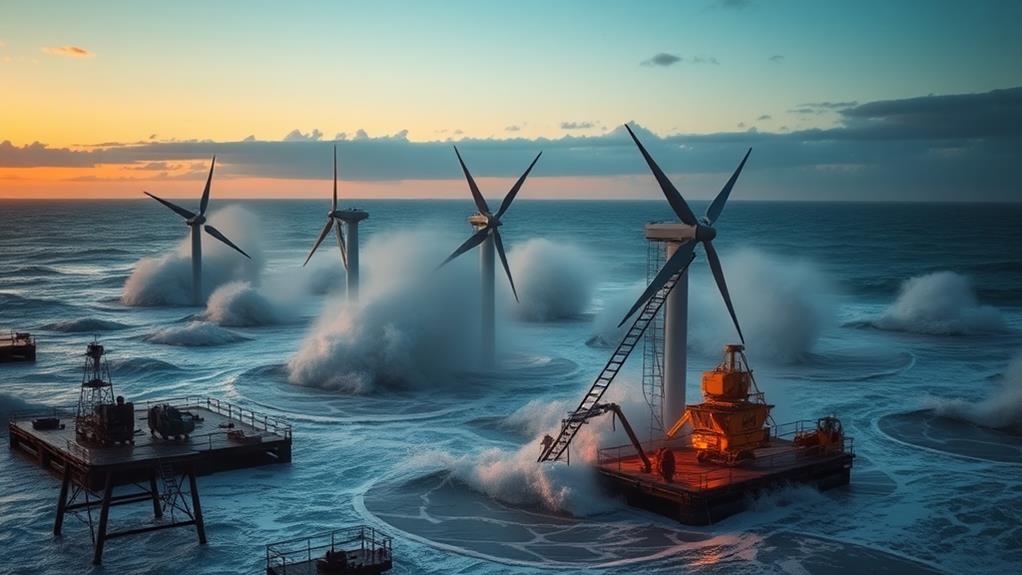
Operational and maintenance expenses (OPEX) can account for over half of the total lifecycle costs in tidal power generation, making them a critical factor to contemplate. Typically, these operational expenditures include significant maintenance costs, which are often the largest components, especially for submerged tidal stream turbines that require specialized marine vessels for access. The reliability of tidal turbine performance is paramount — MeyGen’s Phase 1 has notably demonstrated that a well-engineered subsea turbine can run for years without unplanned maintenance, one unit having logged over six years of continuous operation, which underscores how robust maintenance strategy and equipment design directly reduce long-term OPEX. Annual operational costs can fluctuate dramatically based on the technology employed and the specific environmental conditions at a site, emphasizing the need for meticulous financial planning, similar to the ongoing upkeep considerations covered in wind turbine maintenance best practices. By implementing a well-structured maintenance approach, developers can mitigate unexpected costs and enhance the overall economic viability of tidal energy projects, ensuring a more sustainable energy future.
Environmental Assessment Costs

In tidal power generation, environmental assessment costs can considerably impact a project’s budget, often requiring extensive studies to gauge potential effects on marine ecosystems, fish migration, and marine mammals. Conducting thorough Environmental Impact Assessments (EIAs) can range from tens of thousands to millions of dollars, depending on the project’s scale and complexity. Key factors influencing these costs include the necessity for baseline studies, ongoing monitoring programs, and tailored mitigation plans to protect specific local wildlife and habitats. Additionally, regulatory compliance mandates ongoing environmental monitoring post-installation, contributing to long-term operational expenditures. For a broader look at how marine renewable projects weigh ecological tradeoffs, see this overview of the environmental impact of hydroelectric dams, which shares many assessment considerations with tidal barrage schemes. Investing in detailed environmental assessments not only mitigates risks but also addresses stakeholder concerns, ultimately enhancing investor confidence and improving funding opportunities for a project’s sustainability and success in the competitive tidal energy market.
Infrastructure Development Expenditures
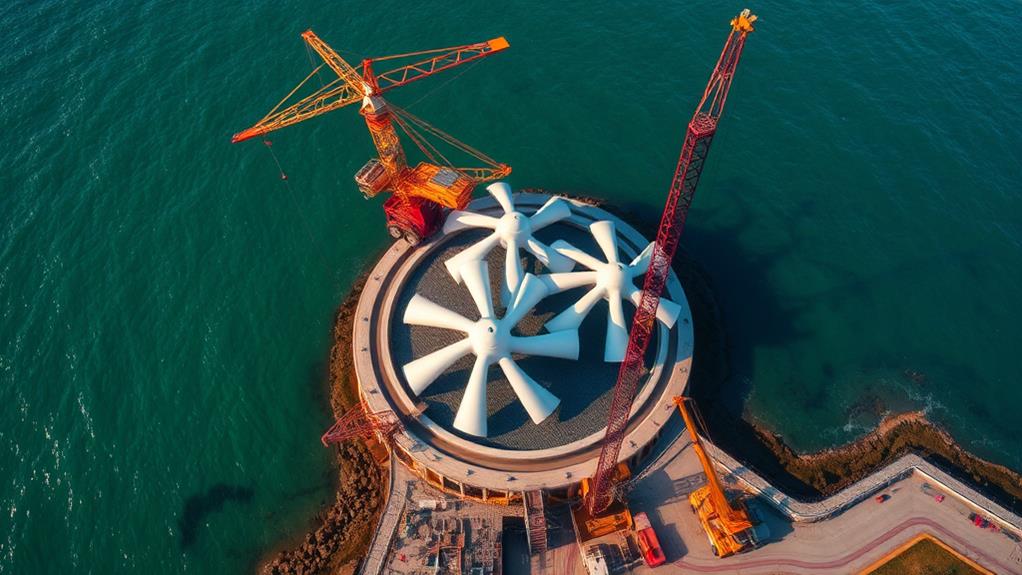
When you consider the infrastructure development expenditures for tidal power generation, it is crucial to account for the significant costs associated with construction materials and installation labor. Turbine rotor and blade manufacturing, foundation or mooring systems, subsea electrical cabling, and onshore substation equipment all add up, and the added complexities of underwater installation and grid connection can be substantial. Each element, from the turbine structure to the submarine cabling, not only contributes to the overall investment but also impacts the long-term viability and efficiency of the tidal energy platform.
Construction Material Costs
Tidal power generation’s construction material costs play a crucial role in determining overall infrastructure development expenditures. Key components include steel and composite materials for tidal energy converter (TEC) blades and structural framing, along with the foundation or mooring hardware needed to hold turbines in place against strong tidal currents. Foundation costs are influenced by the number of turbines deployed and the mass of steel or concrete required at each site. Additionally, electrical equipment costs — covering subsea cabling, connectors, and internal wiring — heavily impact the budget, and anchoring or mooring system weight can run into the hundreds of tonnes for larger floating or moored platforms, making anchoring materials a significant cost driver.
| Material / Component | Cost Driver |
|---|---|
| Turbine blades and rotor | Steel/composite mass and blade count per unit |
| Foundation / support structure | Varies with turbine count and seabed conditions |
| Subsea electrical equipment | Cable length and power rating |
| Mooring or anchoring systems | Can reach hundreds of tonnes on larger platforms |
| Onshore substation and grid tie-in | Distance to existing grid infrastructure |
Installation and Labor Expenses
The installation and labor expenses for tidal power generation greatly shape the overall project budget. Installation involves constructing essential infrastructure, including tidal energy converters (TECs), mooring or foundation systems, and subsea electrical equipment, all of which can greatly impact costs. Labor costs are a substantial component of this equation, varying based on the installation’s complexity and the workforce’s experience with specialized marine and subsea construction. Underwater cabling and turbine placement demand specialized vessels and skilled crews, which is one reason MeyGen’s phased build-out approach — adding turbines incrementally rather than all at once — has helped manage installation risk and cost. Effective project management is essential, as it minimizes labor costs and guarantees timely completion. Consequently, understanding these installation and labor dynamics is critical for successful infrastructure development in tidal energy projects.
Geographic Location and Accessibility
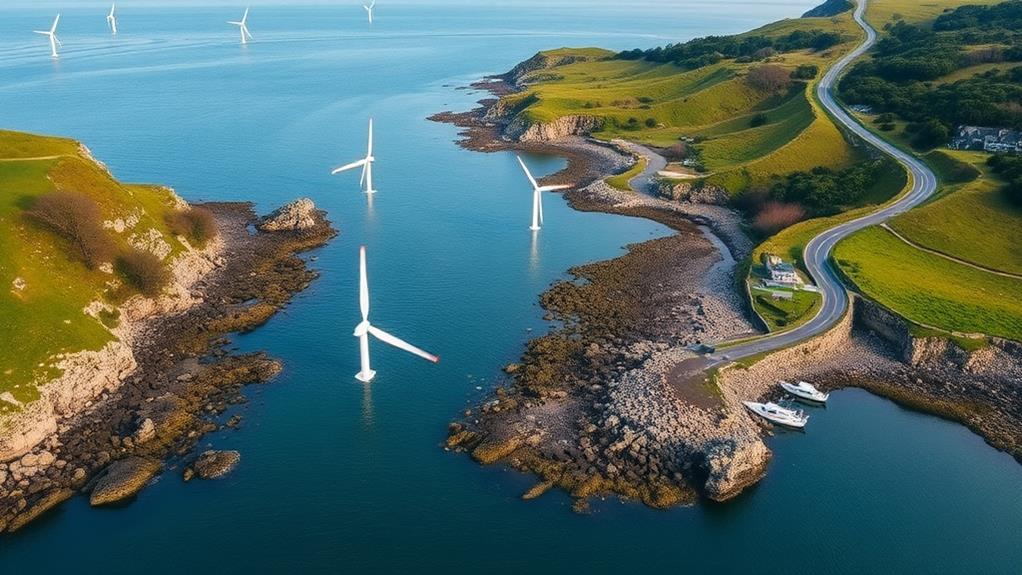
Geographic location plays an essential role in determining the cost-effectiveness of tidal power generation projects. Favorable sites — those with strong, predictable tidal currents such as the Pentland Firth in Scotland, home to the MeyGen array — often exhibit higher energy potential, and they typically incur lower installation expenses when located near existing grid infrastructure. Accessibility to these tidal sites greatly influences operational costs, as remote locations may necessitate extensive transportation logistics for both equipment and personnel, which can inflate overall project expenses. Careful geographic assessment is essential to achieve cost-effective energy production while considering environmental and regulatory factors that may affect permitting processes, much as site selection drives cost outcomes in offshore wind farm construction.
Recommended Products

[Transparent shell]:Our hydroelectric generator has a transparent shell, you can view the turbine and power generation in real time, and you can also enjoy your DIY handmade creations

1/2" THREAD & STAINLESS STEEL WIRE SCREWS: Standard 1/2" external thread, the inlet and outlet all adopt1/2" external thread and about 20mm outer diameter, with stainless steel wire screws, high-quality materials to create more product.
Comparative Analysis With Other Renewables
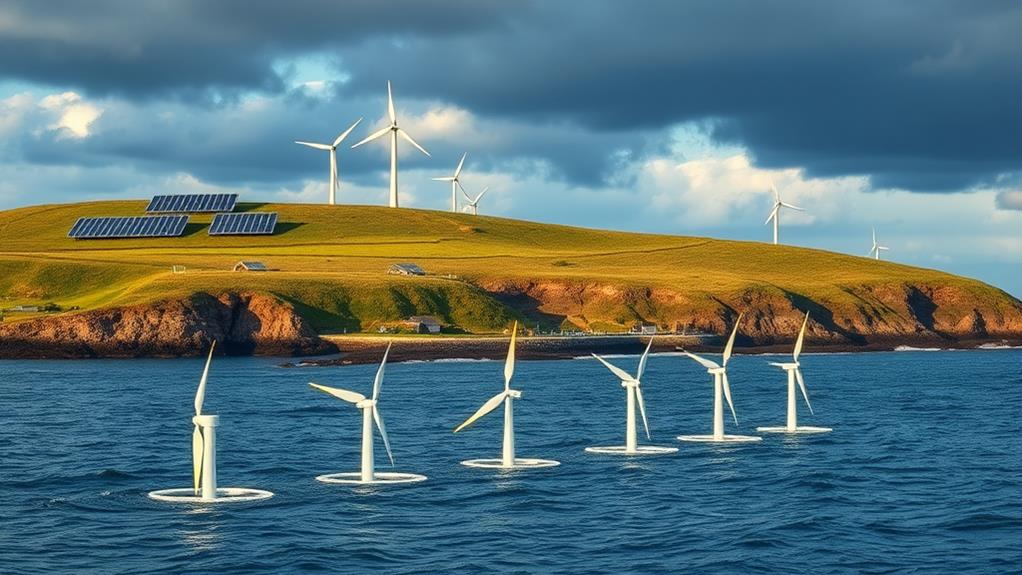
When you compare tidal energy’s costs per kilowatt-hour (kWh) to other renewables such as offshore wind or solar, significant disparities remain. Per IRENA’s 2026 global cost data, offshore wind averaged about $0.079/kWh and solar PV about $0.043/kWh worldwide, while tidal stream technology — still in an earlier commercial phase — is on a trajectory toward roughly $0.14/kWh as deployment scales toward 2 GW. Additionally, the operational maturity of tidal energy projects often lags behind that of wind and solar, which impacts overall investment returns and can complicate financial viability. As you assess these metrics, it’s vital to take into account the high capital and operational expenditures associated with tidal energy, alongside the extensive environmental assessments required, which may not be as demanding for other renewable sources. For homeowners and site developers weighing options, comparing solar panel efficiency versus cost alongside marine energy options can help clarify which technology fits a given site.
Recommended Products

Cost per kWh Comparison
Cost per kWh serves as a crucial metric in evaluating the economic viability of tidal power compared to other renewable energy sources. While tidal energy can harness the ocean’s rhythmic power reliably and predictably — unlike the variable output of wind or solar — its costs often still exceed those of more mature alternatives like offshore wind and solar PV, based on IRENA’s global weighted-average figures for 2026.
| Energy Source | Global Weighted-Average LCOE (2026) | Source |
|---|---|---|
| Tidal Stream (projected, at 2 GW scale) | ~$0.14/kWh | IRENA |
| Offshore Wind | $0.079/kWh | IRENA, 2026 |
| Solar PV | $0.043/kWh | IRENA, 2026 |
These figures highlight the pressing need for innovative strategies and continued deployment to enhance tidal energy’s competitiveness in the evolving renewable landscape, following the same cost-reduction pathway that brought offshore wind costs down over the past decade.
Energy Production Reliability
Tidal power’s predictability offers a compelling comparison to other renewable sources, particularly when looking at specific projects like MeyGen and the Sihwa Tidal Power Station. While tidal stream energy’s current costs remain above offshore wind and solar, tidal currents are far more predictable years in advance than wind or sunlight, which gives grid operators a planning advantage. Consider these key factors:
- The Sihwa Tidal Power Station, a 254 MW barrage, remains the largest tidal power facility in the world.
- MeyGen’s Phase 1 turbines have demonstrated multi-year continuous operation with minimal unplanned maintenance, a key proof point for commercial-scale reliability.
- Global tidal stream capacity remains in the tens of megawatts today, far behind offshore wind’s multi-gigawatt scale, which is a major reason for the cost gap.
- IRENA projects tidal stream costs will continue falling as deployment scales toward the 2 GW mark, mirroring offshore wind’s own historical cost-decline curve.
Investment and Return Considerations
Investment in tidal energy presents a unique challenge compared to other renewable sources, primarily due to its higher current Levelized Cost of Electricity relative to mature technologies like offshore wind and solar. When evaluating return metrics, such as net present value (NPV) and internal rate of return (IRR), it becomes clear that sustained investor interest and policy support are vital for advancing tidal technologies toward cost parity. Large historical barrage projects such as Sihwa and France’s La Rance Tidal Power Station demonstrate that scale and decades of operating experience can bring per-kWh costs down substantially compared to early-stage tidal stream demonstration arrays. As a result, thorough analyses of discounted payback periods are essential for fostering investment in tidal energy, similar to the frameworks used in wind turbine payback period calculations and enabling competitive viability within the broader renewable sector.
Future Trends in Tidal Energy Costs
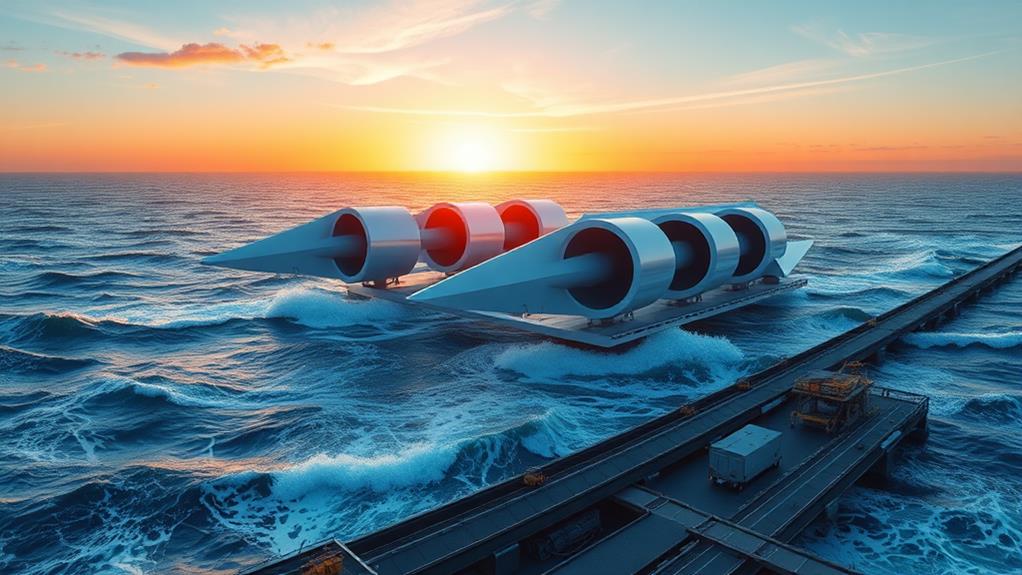
As the tidal energy sector gears up for growth, the outlook is promising when it comes to reducing costs. IRENA’s analysis indicates that, at an equivalent stage of technological development, today’s wave and tidal costs are already lower than other renewable technologies were at the same point in their own commercial journeys — a strong signal for future cost declines. Several factors will play a vital role in shaping these trends, including:
- Technological advancements that enhance energy capture efficiency and turbine reliability.
- Economies of scale from increased investment and larger arrays, following the path MeyGen is taking through its phased expansion.
- Reduction in capital expenditures (CAPEX) through innovative engineering and standardized turbine designs.
- Lower operational expenditures (OPEX) as proven technologies and maintenance practices become industry standard.
Developers and investors evaluating tidal projects alongside other options may also find it useful to review cost-benefit analysis approaches for green energy projects generally, since many of the same financial frameworks apply across renewable technologies.
Frequently Asked Questions
What Are the Main Costs of Tidal Energy?
Tidal energy costs are driven by turbine and foundation manufacturing, subsea installation and cabling, ongoing maintenance (often the largest lifecycle expense), environmental assessment and monitoring, and grid connection. Site selection and geographic accessibility also strongly influence total project cost.
What Factors Should Be Considered for a Tidal Power Plant?
When considering a tidal power plant, developers assess site selection and tidal resource strength, environmental impact, technology choice (barrage vs. tidal stream), regulatory framework, maintenance access, energy conversion efficiency, and grid integration to guarantee a successful, cost-effective project.
What Is the Typical Capital Cost of a Tidal Power Project?
Capital costs vary widely by technology and scale. Large historical barrage projects like Sihwa (254 MW, roughly $298 million) required substantial upfront investment, while modern tidal stream arrays like MeyGen are built incrementally in smaller phases to manage capital risk as the technology matures.
How Does Tidal Energy Compare to Offshore Wind on Cost?
Per IRENA’s 2026 global data, offshore wind’s weighted-average cost was about $0.079/kWh, while tidal stream energy remains earlier in its cost-reduction curve, with IRENA projecting costs near $0.14/kWh once global deployment reaches 2 GW — still higher than offshore wind today, but following a similar downward trajectory.
Why Is Tidal Energy Considered a Reliable Renewable Source?
Unlike wind or solar, tidal currents follow predictable astronomical cycles that can be forecast years in advance, giving grid operators confidence in output timing even though current costs remain higher than more mature renewable technologies.


