
Geothermal power generation remains one of the most reliable forms of clean electricity available today, with installed capital costs typically running $2,500 to $6,000 per kilowatt of capacity depending on plant type and resource depth, according to the U.S. Department of Energy. Geothermal plants also stand out for their capacity factor, which U.S. Energy Information Administration data shows has averaged roughly 64% to 76% over the past decade—far higher than solar or wind, though below the 90%+ figure often cited in older industry marketing. Historically, the levelized cost of energy (LCOE) for geothermal has ranged from about $49 to $85 per megawatt-hour per IRENA data, and the U.S. Department of Energy’s Enhanced Geothermal Shot initiative is targeting a 90% cost reduction to reach $45 per MWh by 2035. Importantly, the 30% federal residential tax credit for geothermal heat pumps expired for systems placed in service after December 31, 2026, which changes the incentive picture for homeowners going forward. Let’s explore what’s driving these numbers and what to expect next.
Key Takeaways
- Installed capital costs for geothermal power plants typically run $2,500 to $6,000 per kW of capacity, according to the U.S. Department of Energy.
- Historical LCOE for geothermal power has ranged from roughly $49 to $85 per MWh, per IRENA’s cost analysis.
- U.S. geothermal plants have averaged a 64% to 76% capacity factor over the past decade (EIA data), among the highest of any renewable source.
- The 30% federal residential tax credit (IRS Section 25D) for geothermal heat pumps expired for systems placed in service after December 31, 2026.
- The DOE’s Enhanced Geothermal Shot aims to cut geothermal costs 90% and reach $45/MWh by 2035.
Overview of Geothermal Power Costs
You may be interested
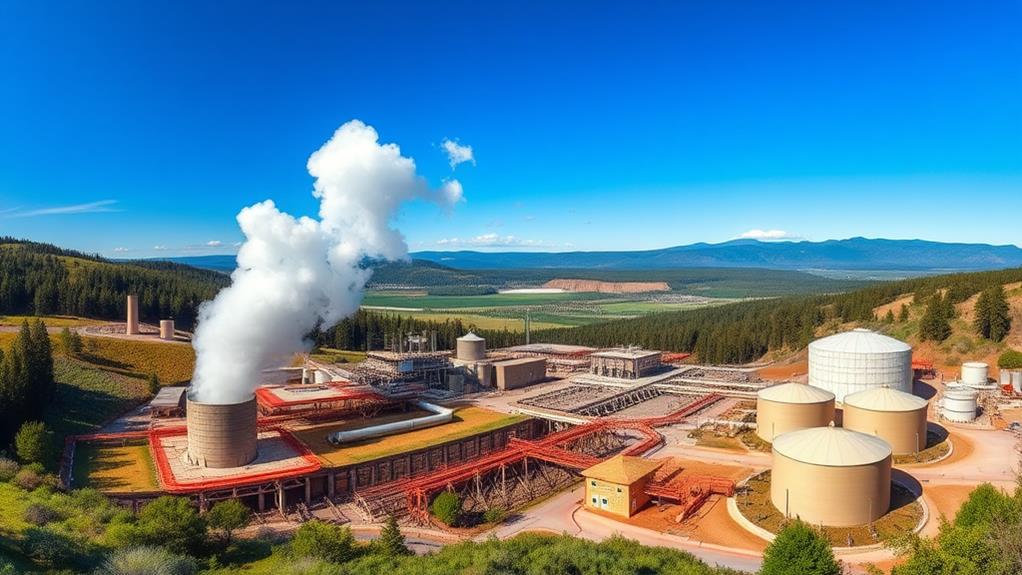
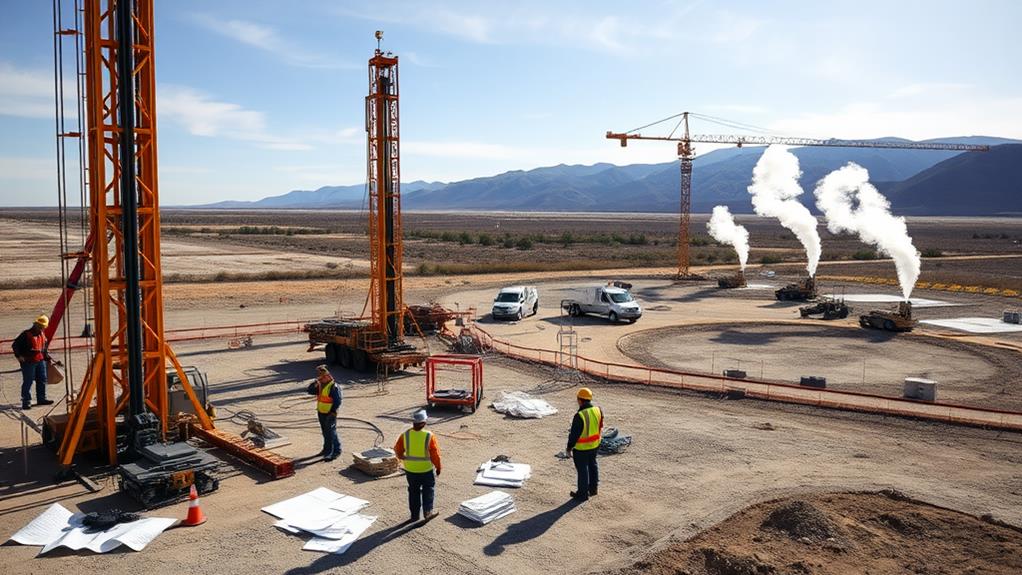
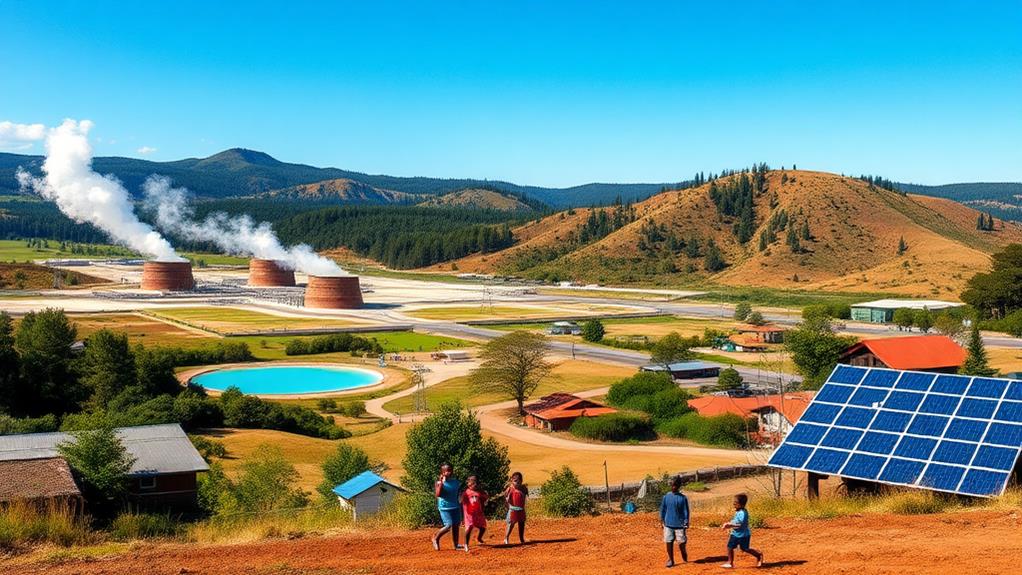
When we look at the costs associated with geothermal power generation, we see a capital-intensive investment that pays off through decades of reliable operation. The U.S. Department of Energy notes that installed costs for utility-scale geothermal plants generally fall between $2,500 and $6,000 per kW of capacity, a wider and more realistic range than older single-figure estimates, reflecting differences between conventional hydrothermal plants and newer enhanced geothermal systems (EGS). Historically, geothermal’s LCOE of roughly $49 to $85 per MWh (IRENA, 2010–2020 data) has made it competitive with fossil generation. Combined with a strong capacity factor—EIA reports 64% to 76% for U.S. plants over 2014–2026—geothermal remains one of the most dependable baseload renewable resources. For homeowners comparing upfront costs across renewable technologies, it can help to review a broader cost-benefit analysis of green energy options before committing to any single system.
Installed Costs of Geothermal Plants
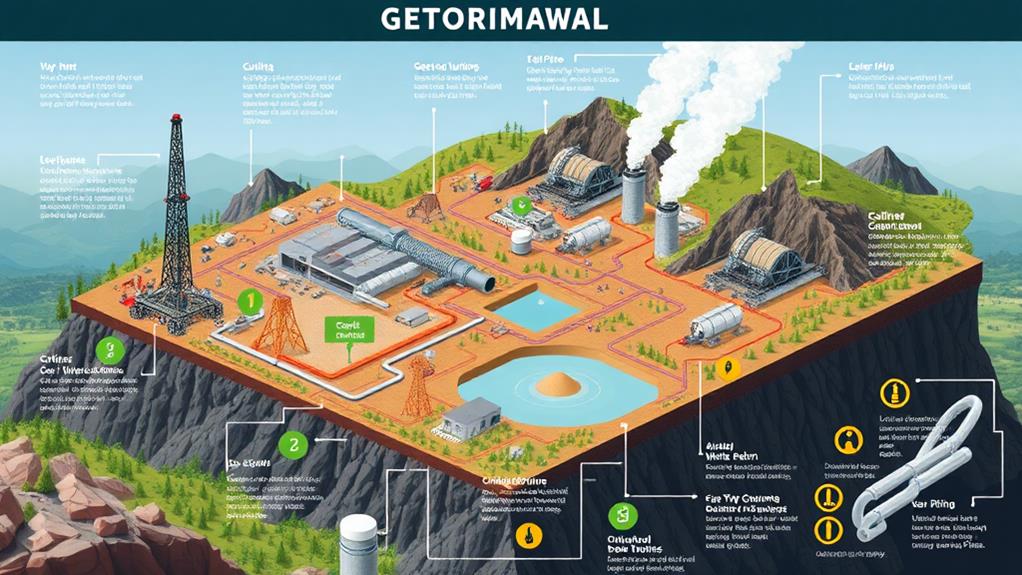
Geothermal plants involve significant upfront investment, with installed costs for utility-scale facilities typically in the $2,500 to $6,000 per kilowatt (kW) range, per U.S. Department of Energy figures. These capital costs vary widely based on plant type (dry steam, flash steam, or binary-cycle), resource depth, and drilling risk. On the residential side, ground-source (geothermal) heat pump systems are a different cost category entirely—typically ranging from roughly $8,000 to $40,000 installed depending on loop configuration and site conditions, well below the per-kW cost of utility-scale plants but a real consideration for homeowners. While upfront installed costs can be high, it’s worth weighing the relatively low operational costs of geothermal generation against the long service life of these systems. Readers evaluating overall project economics may find it useful to compare figures with a geothermal energy system pricing guide for a more detailed breakdown by system type.
Recommended Products


1.【Specific】: Voltage: 110V/60Hz; Max Flow: 14.5/11.3/8.4GPM;Max Head: 19.6/16.4/9.8FT;Inlet/Outlet: 1’’

Levelized Cost of Energy (LCOE)
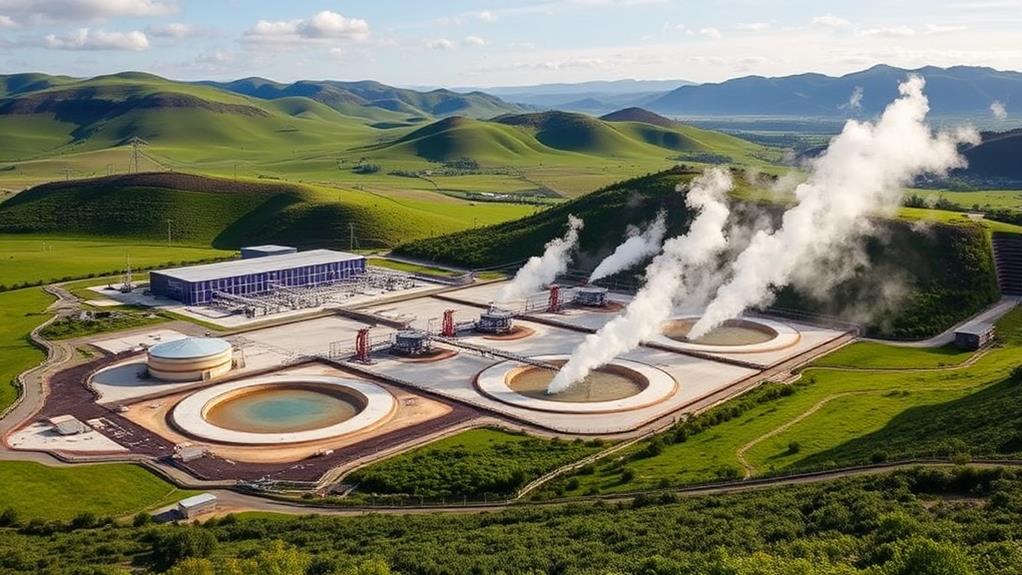
The Levelized Cost of Energy (LCOE) serves as an essential metric for evaluating the economic feasibility of geothermal power. According to IRENA’s cost analysis, the historical LCOE for geothermal energy has ranged from about $49 to $85 per megawatt-hour (MWh), positioning it competitively against other generation sources. To better understand its advantages, consider these points:
- Geothermal’s capacity factor of 64% to 76% (EIA, U.S. plants) is far higher than solar or wind, supporting steady baseload output.
- Geothermal has historically undercut the LCOE of many fossil and nuclear alternatives in favorable resource areas.
- The U.S. Department of Energy’s Enhanced Geothermal Shot targets a 90% cost reduction, aiming for an LCOE of $45 per MWh by 2035.
- Enhanced geothermal systems (EGS) could unlock resources in many more locations, expanding where competitive LCOE is achievable.
These factors underscore geothermal energy’s potential in electricity generation while highlighting the ongoing cost-reduction push driven by federal research funding and technological advancements in drilling and reservoir engineering.
Recommended Products


Factors Influencing Geothermal Costs
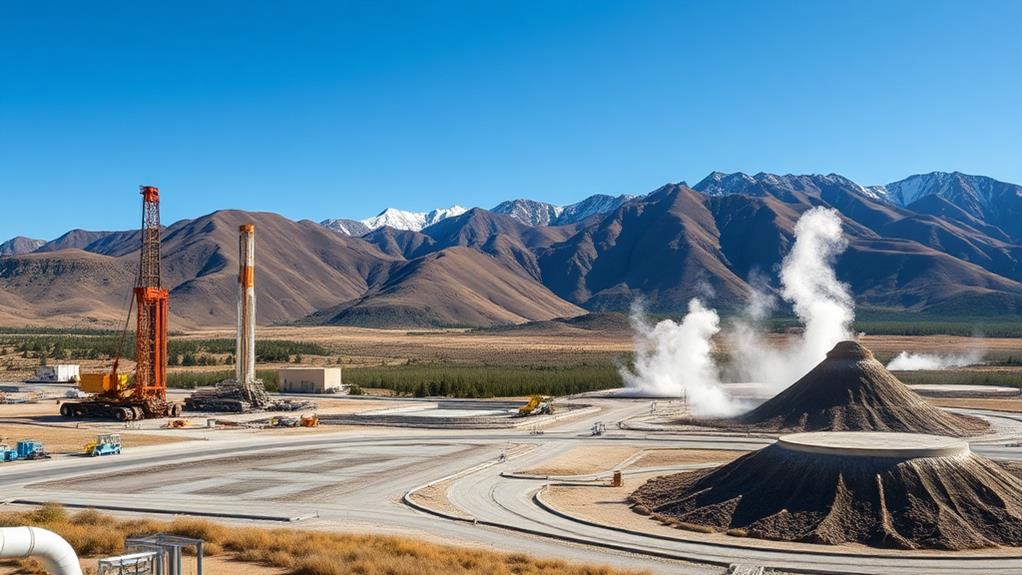
As we explore the factors influencing geothermal costs, it’s vital to take into account the significant variability across project types. Utility-scale plant costs depend heavily on drilling depth, resource temperature, and exploration risk, while residential ground-source heat pump costs depend on loop configuration and property size. The choice between horizontal and vertical loop systems for residential installations introduces meaningful cost differences, with horizontal systems generally cheaper to install where land is available, and vertical systems costing more due to deeper drilling but requiring less surface area. Understanding these cost drivers is imperative for making informed decisions about geothermal project investments, whether at utility scale or for a single home. For homeowners specifically, our residential geothermal heating systems cost breakdown offers a closer look at typical price ranges.
Installation Cost Variability
When considering the installation costs of residential geothermal heat pump systems, several key factors come into play that can greatly influence pricing. Here are a few major influencers:
- Accessibility: Easier access to the installation site can meaningfully reduce drilling and excavation costs.
- Local Geology: Soil type, rock composition, and moisture content affect both system choice and complexity.
- Heat Pump Specifications: ENERGY STAR-certified heat pumps vary in price and performance, and certification is required to qualify for most remaining incentive programs.
- Regulations: Local permit requirements and building codes vary widely and can add to overall project expenses.
Equipment and Labor Expenses
Understanding equipment and labor expenses is essential for anyone considering a geothermal system. Ground-source heat pump equipment costs vary by capacity and manufacturer, and installation labor can vary considerably based on system complexity and loop type. Horizontal loop systems require more land but generally involve less intensive drilling, while vertical loop systems need deeper boreholes and typically cost more to install per system, though they work well on smaller lots. Additionally, ground conditions, including soil type and moisture, can complicate installation and raise costs. Local regulations and permitting requirements also play an essential role in determining overall system costs and project feasibility. For ongoing cost planning after installation, see our guide on renewable energy system maintenance practices that also apply broadly to geothermal upkeep.
Comparison With Other Energy Sources
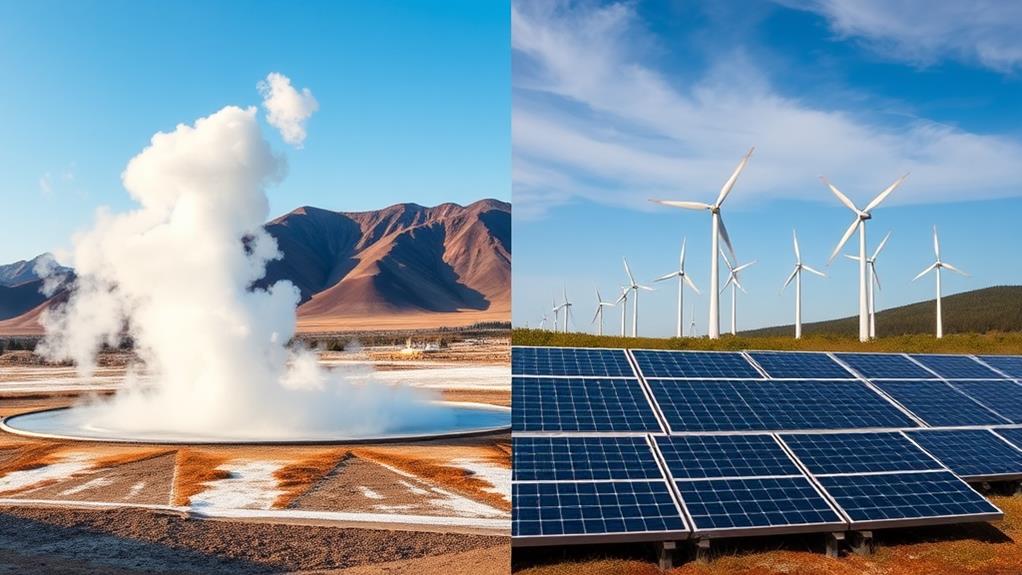
As we compare geothermal energy to other sources, its historical LCOE range of roughly $49 to $85 per MWh (IRENA) has generally positioned it favorably against many fossil and nuclear options, though exact rankings shift with fuel prices, financing costs, and regional resource quality. Geothermal’s defining advantage is reliability: unlike intermittent renewables, it delivers steady output around the clock, which is reflected in its comparatively high 64%–76% capacity factor.
| Energy Source | Typical Capacity Factor | Cost Characteristics |
|---|---|---|
| Geothermal | 64% – 76% (EIA, U.S. avg.) | Historical LCOE ~$49–$85/MWh (IRENA) |
| Solar PV (utility) | ~24% (EIA) | Lower capital cost, intermittent output |
| Wind (onshore) | ~34% (EIA) | Low LCOE, intermittent output |
| Coal | Varies by plant age/use | High fuel and emissions costs |
| Natural Gas | Varies by dispatch role | Exposed to fuel price volatility |
Recommended Products


Geothermal vs. Fossil Generation
The financial and operational comparison between geothermal power and fossil generation reveals several consistent advantages for geothermal:
- Reliability: Geothermal’s 64%–76% capacity factor (EIA) far exceeds the availability many intermittent sources achieve, and it operates independently of weather.
- Fuel Price Stability: Unlike coal and natural gas, geothermal has no fuel-price exposure, insulating operating costs from commodity swings.
- Emissions: Geothermal power plants emit dramatically less CO2 than fossil-fired plants per unit of electricity generated, per DOE data.
- Long-Term Cost Trajectory: DOE’s Enhanced Geothermal Shot targets a 90% cost cut by 2035, while fossil fuel costs remain tied to volatile global markets—a dynamic explored further in our green energy vs. fossil fuel prices comparison.
In this context, geothermal stands out as a dependable, increasingly cost-competitive alternative to fossil generation.
Geothermal’s Competitive Edge
When we look at the competitive edge of geothermal energy, it becomes clear that this renewable source stands out in several key areas:
- Geothermal offers near-continuous, firm power, a reliability profile closer to fossil fuels and nuclear than to intermittent renewables.
- Historical LCOE in the $49–$85/MWh range (IRENA) has made geothermal cost-competitive in resource-rich regions.
- Capital costs run higher than solar or wind on a per-kW basis, but low fuel and operating costs help offset this over a plant’s multi-decade lifespan.
- Growing demand for firm, carbon-free power—especially from data centers and industrial users—continues to support geothermal investment.
Long-Term Economic Benefits
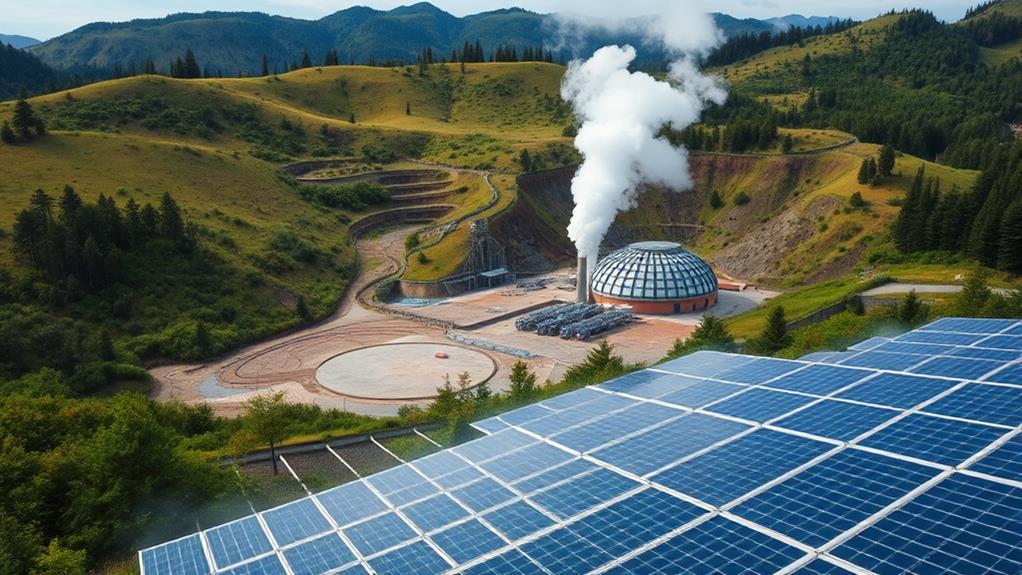
How can geothermal power generation contribute to our long-term economic stability? By focusing on its long-term economic viability, we can appreciate geothermal energy’s benefits. Historical LCOE figures near the lower end of IRENA’s $49–$85/MWh range make geothermal competitive with fossil fuels in favorable locations. Although capital costs are substantial, low ongoing operating costs improve cost-effectiveness over a plant’s operating life, which can span 30 years or more. Furthermore, geothermal projects foster stable job opportunities in local communities, promoting economic growth. For homeowners weighing financing routes for any renewable project, our energy financing options comparison covers strategies that often apply to geothermal projects as well.
| Aspect | Detail |
|---|---|
| Historical LCOE Range (per MWh) | $49 – $85 (IRENA, 2010–2020) |
| DOE 2035 LCOE Target | $45 |
| Utility-Scale Capital Costs (per kW) | $2,500 – $6,000 (DOE) |
| U.S. Capacity Factor | 64% – 76% (EIA, 2014–2026) |
Government Incentives and Funding

Government incentives and funding play an important role in accelerating geothermal energy development, though the residential incentive landscape has recently shifted. Consider the following key points:
- The 30% federal Residential Clean Energy Credit (IRS Section 25D) for geothermal heat pumps applied to systems placed in service through December 31, 2026, and is no longer available for systems installed after that date, per the IRS and ENERGY STAR.
- Business and utility-scale geothermal projects may still qualify for separate federal investment or production tax credits under different rules and timelines; project developers should confirm current eligibility directly with the IRS.
- The DOE’s Enhanced Geothermal Shot initiative continues to fund research and demonstration projects aimed at cutting geothermal costs 90% by 2035.
- State-level incentives, rebates, and utility programs vary widely and can still meaningfully offset costs even where the federal residential credit has expired—see our state-by-state energy incentives guide for details relevant to many renewable technologies.
Future Cost Trends and Projections

Over the next decade, industry watchers expect continued reductions in the cost of geothermal power generation, driven by technological advancements in drilling and enhanced geothermal systems (EGS). The U.S. Department of Energy’s Enhanced Geothermal Shot targets a 90% cost reduction, aiming to bring LCOE down to $45 per MWh by 2035—a meaningful decline from IRENA’s historical range of roughly $49 to $85 per MWh. This progress depends heavily on continued federal research funding and advances in drilling technology adapted from the oil and gas sector. On the residential side, with the federal 25D credit no longer available after 2026, homeowners considering ground-source heat pumps should weigh state and utility incentives more heavily, and compare total ownership costs against other renewable options, such as those outlined in our solar panel efficiency vs. cost analysis.
Frequently Asked Questions
Is It Expensive to Produce Geothermal Energy?
Utility-scale geothermal power requires substantial upfront capital—typically $2,500 to $6,000 per kW, per DOE figures—but low fuel and operating costs, combined with a high capacity factor, make it cost-competitive over a plant’s multi-decade life.
How Much Does a Residential Geothermal System Cost?
Residential ground-source heat pump systems typically range from roughly $8,000 to $40,000 installed, depending on loop configuration, home size, and local geology. Note that the 30% federal residential tax credit expired for systems placed in service after December 31, 2026, so current after-incentive costs may be higher than in prior years unless state or utility programs apply.
How Long Does It Take for a Geothermal System to Pay for Itself?
Payback periods vary based on system size, local energy prices, and available state or utility incentives, but geothermal heat pumps generally deliver energy savings for 20+ years of operation once installed, given their long equipment lifespan and low maintenance needs.
Is Geothermal Worth the Cost?
For many homeowners and utility-scale developers, geothermal remains worth the investment thanks to its high reliability, low operating costs, and long service life—even as the federal residential tax credit has expired, state and local incentives plus long-term energy savings can still make the economics favorable.
Did the Federal Tax Credit for Geothermal Heat Pumps Expire?
Yes. Per the IRS, the 30% Residential Clean Energy Credit for geothermal heat pumps was available for property placed in service through December 31, 2026, and is not available for systems installed after that date. Business and utility-scale projects may still have access to separate federal credits under different rules.


