
When you assess the costs of nuclear versus renewable power, several key factors emerge. Nuclear energy has an upfront capital requirement that can run into the billions of dollars per reactor, yet operates with a capacity factor around 91%, ensuring reliable energy production. In contrast, according to Lazard’s 2026 Levelized Cost of Energy+ report, unsubsidized utility-scale solar ranges from about $38-$217/MWh and onshore wind from about $37-$86/MWh, while nuclear’s unsubsidized range sits at roughly $141-$220/MWh — though this figure often neglects nuclear’s long-term operational efficiencies and multi-decade plant life. Notably, the federal residential solar tax credit (Section 25D) expired for systems installed after December 31, 2026, under the One Big Beautiful Bill Act, reshaping the subsidy picture for homeowners weighing solar against other options. Understanding these nuances in cost structure, land use, and public perception is essential to evaluating their economic viability, and further insights can enhance your comprehension of this complex landscape.
Key Takeaways
- Nuclear energy’s operational costs decrease over time thanks to reactor lifespans that often exceed 60 years, while renewables face lower upfront costs but intermittency-related expenses.
- According to Lazard’s 2026 LCOE+ report, unsubsidized nuclear ranges from about $141-$220/MWh, versus $38-$217/MWh for utility-scale solar and $37-$86/MWh for onshore wind.
- Nuclear plants in the U.S. achieved a median capacity factor of roughly 91% in 2022-2026, far above the intermittent output of wind and solar.
- The federal residential solar tax credit (Section 25D) expired for installations completed after December 31, 2026, per the One Big Beautiful Bill Act, changing the incentive landscape for homeowners.
- Land use for nuclear facilities is dramatically lower — NEI estimates nuclear needs roughly 31 times less land than solar and about 173 times less land than wind for the same output.
Economic Misconceptions of Nuclear Energy
You may be interested

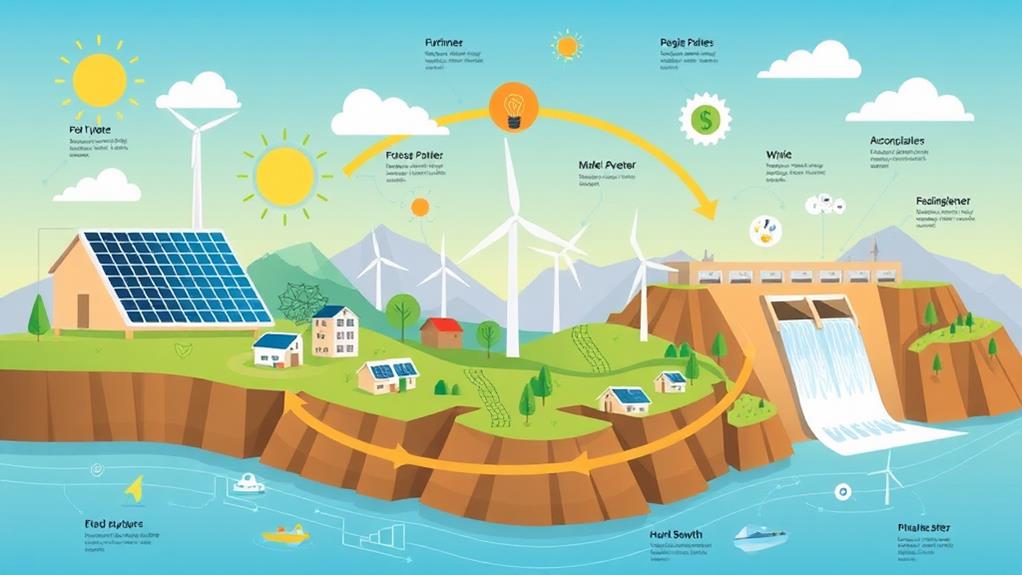

Economic misconceptions about nuclear energy often cloud public understanding and policy decisions. Critics highlight the cost of nuclear power, citing Lazard’s 2026 unsubsidized LCOE+ estimate of roughly $141-$220/MWh, while sometimes failing to account for nuclear’s decades-long operating life and near-continuous output. Renewable sources such as utility-scale solar ($38-$217/MWh) and onshore wind ($37-$86/MWh) can undercut nuclear on a pure per-MWh basis, particularly at the low end of their cost ranges, according to Lazard. Although nuclear energy incurs high initial capital costs that can run into the billions per reactor, it delivers operational costs that trend lower over time given a capacity factor around 91%, among the highest of any generation source. Subsidy structures also differ meaningfully between technologies, which further complicates apples-to-apples comparisons and shapes public perception of nuclear as an expensive option for baseload energy.
For readers comparing the economics of different renewable options for a home or business, our green energy vs. fossil fuel price comparison offers additional context on how these costs stack up in practice.
Recommended Products

EXTRA-LARGE 12-DIGIT DISPLAY – Clear, easy-to-read screen enhances visibility for fast, accurate data entry—ideal for finance, accounting, and office use....
Capital Investment Challenges

How can we effectively address the capital investment challenges of nuclear energy? The significant upfront capital investment required for a new reactor poses a major hurdle, and cost overruns on recent U.S. projects have underscored how difficult these builds are to finance and execute on schedule. To navigate these challenges, consider the following strategies:
- Streamline Licensing and Permitting: Reducing regulatory and construction delays through the Nuclear Regulatory Commission’s review process can help control costs and shorten build timelines.
- Optimize Engineering, Procurement, and Construction (EPC): Since EPC work makes up the bulk of overnight construction costs, improving efficiency and standardizing reactor designs can meaningfully lower overall project costs.
- Manage Financing Costs: Exploring innovative financing solutions, including federal loan guarantee programs from the U.S. Department of Energy, can help control escalating financing costs tied to long construction periods.
Addressing these challenges is essential for balancing capital costs and ensuring sustainable energy solutions. Readers weighing large capital outlays across energy technologies may also find our renewable energy project budget template useful for structuring cost comparisons.
Land Use and Environmental Impact
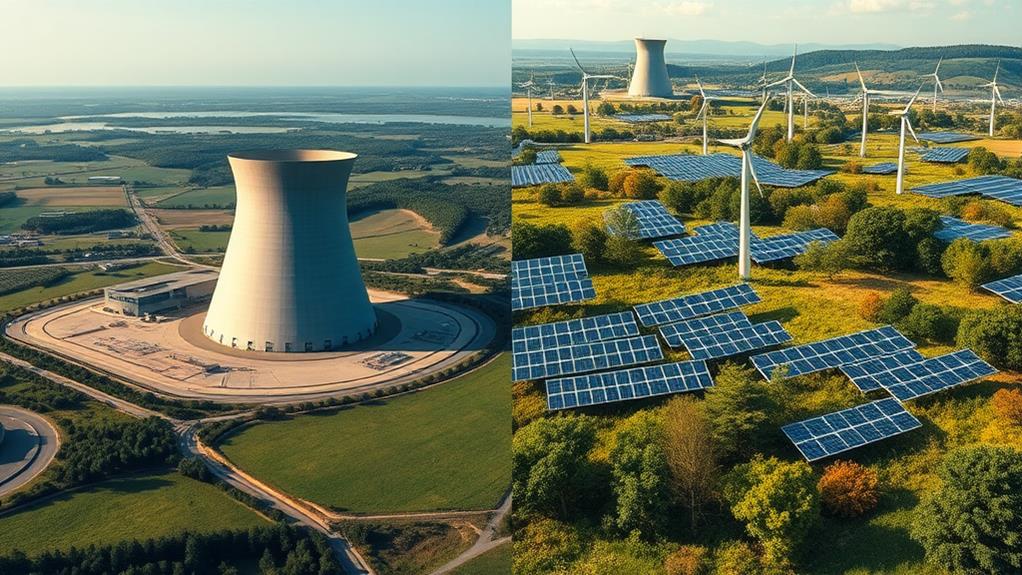
When it comes to land use and environmental impact, nuclear energy stands out due to its remarkably small footprint. According to the Nuclear Energy Institute (NEI), a nuclear facility needs roughly 31 times less land than a solar installation and about 173 times less land than a wind farm to generate the same amount of electricity — a 1,000 MW nuclear reactor’s output would require over 140,000 acres of wind turbines to match. This stark contrast highlights nuclear’s superior energy density, making it a highly efficient use of land for energy production. The minimal land use associated with nuclear power notably contributes to its sustainability profile, reducing overall environmental footprint. Additionally, the smaller footprint helps minimize habitat disruption and land use conflicts often seen with expansive renewable installations like wind and solar. For a deeper look at how wind and solar developers are addressing these land-use tradeoffs, see our coverage of floating solar farms and their environmental impact.
Recommended Products

Operational Efficiency and Waste Management
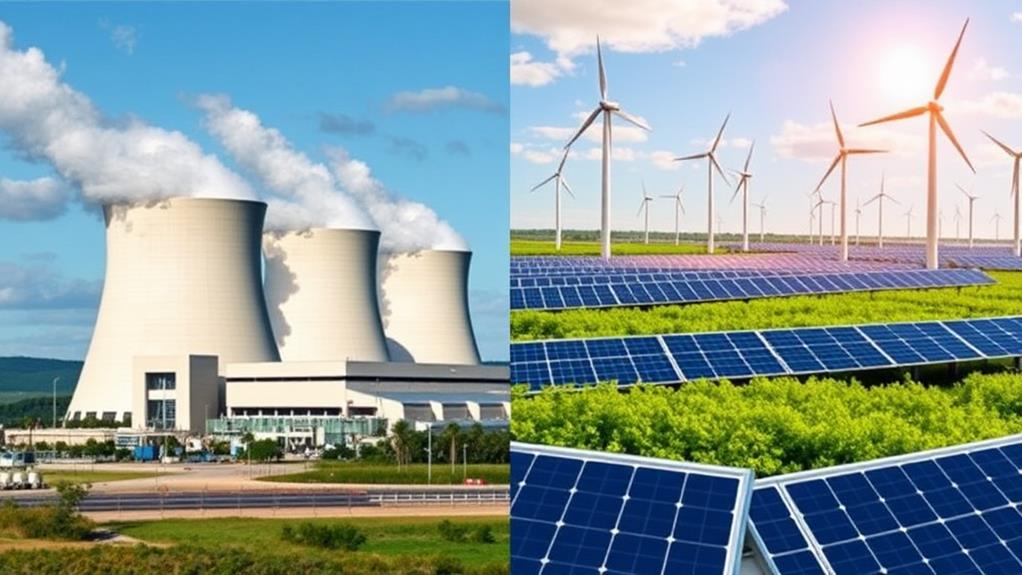
Nuclear energy showcases remarkable operational efficiency, often outperforming renewable sources in reliability and consistency of output. With a median capacity factor near 91% over 2022-2026, according to industry data compiled by the American Nuclear Society, nuclear plants provide a stable power generation source that mitigates the intermittency issues faced by wind and solar. Here are key aspects to take into account:
- Long-term Cost: Many nuclear reactors are licensed to operate for 60 years or more, resulting in lower long-term costs per megawatt compared to renewable components that require replacement on shorter cycles.
- Nuclear Waste Management: Effective strategies, like deep geological storage under development by the U.S. Department of Energy, are essential for long-term sustainability but involve substantial costs.
- Decommissioning Costs: Decommissioning a nuclear facility is a major, multi-year expense that requires meticulous financial planning and dedicated trust funds set aside over a plant’s operating life.
Advanced reactor designs promise enhanced operational efficiency, further solidifying nuclear energy’s role as a reliable baseload source amid evolving energy demands. Those comparing long-term maintenance planning across technologies may also find our solar panel maintenance guide a useful point of comparison.
Subsidy Disparities and Public Perception
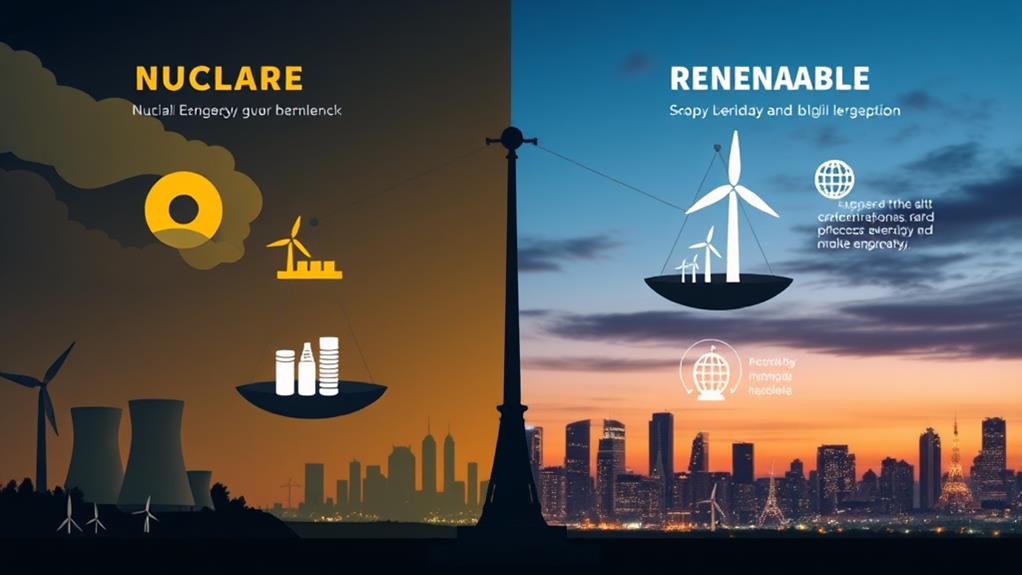
The disparity in subsidies between renewable energy sources and nuclear power continues to shape public perception and policy decisions, and the landscape is shifting quickly. Notably, the residential federal solar tax credit (Section 25D) — long a major driver of rooftop solar adoption — expired for systems installed after December 31, 2026, under the One Big Beautiful Bill Act, while commercial and utility-scale clean energy projects (including some nuclear) remain eligible for different technology-neutral credits under Section 48E with their own phase-down schedules. This shifting incentive structure means older comparisons citing a flat 30% or 26% residential solar credit are now outdated. Public fear stemming from historical nuclear accidents often overshadows the long-term operational efficiencies that nuclear energy offers, leading to skewed perceptions and policy decisions that can discourage investment. Homeowners should check current state-level programs, since incentive availability now varies significantly by location — our state-by-state solar incentives guide and the U.S. Department of Energy’s DSIRE database both track these changes. Improved public education on the safety, waste management, and true lifecycle costs of both nuclear and renewable power is essential to fostering a more balanced, informed energy landscape.
Cost Comparison at a Glance
| Metric | Nuclear | Utility-Scale Solar | Onshore Wind |
|---|---|---|---|
| Unsubsidized LCOE (2026, Lazard) | $141-$220/MWh | $38-$217/MWh | $37-$86/MWh |
| Typical capacity factor | ~91% (2022-2026 median) | Lower, weather-dependent | Lower, weather-dependent |
| Typical operating lifespan | 60+ years (licensed) | 25-30 years (panels) | 20-25 years (turbines) |
| Relative land footprint (NEI) | Baseline | ~31x more land than nuclear | ~173x more land than nuclear |
| Residential federal tax credit status | N/A (utility-scale only) | 25D expired after 12/31/2026 | N/A (utility-scale only) |
Frequently Asked Questions
Is Renewable Energy Cheaper Than Nuclear Power?
On a pure levelized-cost basis, Lazard’s 2026 data shows utility-scale solar and onshore wind can undercut nuclear at the low end of their cost ranges, especially for new-build projects. However, nuclear’s very high capacity factor and multi-decade operating life mean the full picture depends on how you weight reliability, grid integration, and long-term costs alongside sticker-price LCOE.
What Is the Most Cost-Effective Energy Source?
According to Lazard’s 2026 Levelized Cost of Energy+ report, utility-scale solar and onshore wind remain the most cost-effective new-build generation sources on an unsubsidized basis in the U.S. That said, cost-effectiveness also depends on capacity factor, grid location, and whether storage is needed to firm up intermittent output.
Is Nuclear Power the Cheapest Source of Energy?
Not typically on a pure per-MWh basis for new construction — nuclear’s Lazard-estimated unsubsidized LCOE of roughly $141-$220/MWh is generally higher than the low end of solar and wind ranges. Nuclear’s advantage lies instead in its consistently high capacity factor (~91%) and long operating life, which can offset higher upfront costs over decades of operation.
How Much Does Solar Energy Cost Compared to Nuclear Power?
Solar costs are driven mainly by panel and installation expenses, and Lazard’s 2026 figures put unsubsidized utility-scale solar as low as about $38/MWh in favorable conditions, well under nuclear’s typical range. Homeowners should also note that the federal residential solar tax credit expired for systems installed after December 31, 2026, which changes the net cost calculation compared to nuclear’s utility-scale-only incentive structure. For a residential cost breakdown, see our guide on what residential solar panel installation costs.


