
To maximize your business investment with a Solar ROI Calculator, start by inputting specific data such as installation costs, energy usage, and local incentives. For commercial projects, the federal Section 48E Investment Tax Credit can still deliver up to a 30% credit when prevailing-wage and apprenticeship requirements are met, though the base statutory rate is only 6% without them — and projects generally must begin construction by July 4, 2026 or be placed in service by December 31, 2027 to qualify under current law. Analyze costs more precisely by factoring in installation expenses, which commonly run $2.41 to $3.34 per watt depending on system size, region, and installer. Consider the geographic impact on solar exposure, influencing energy production and payback periods, which for unsubsidized systems commonly range from 9 to 16 years depending on system size. Evaluating these variables will help refine your investment strategy and achieve favorable returns. For a deeper look at what installation actually costs at the residential scale, see our residential solar installation cost guide.
Key Takeaways
- Utilize the Solar ROI Calculator to estimate energy savings and maximize business solar investment returns.
- Consider geographic factors to optimize solar panel placement for maximum sun exposure and energy production.
- Leverage the Section 48E commercial Investment Tax Credit — up to 30% with prevailing-wage and apprenticeship compliance — to significantly reduce installation costs, while noting the residential Section 25D credit expired for systems installed after December 31, 2026.
- Explore diverse financing options like loans, leases, and power purchase agreements to make solar investments more affordable.
- Investigate state and local incentives for additional financial benefits and reduced payback periods.
Understanding Solar ROI
You may be interested

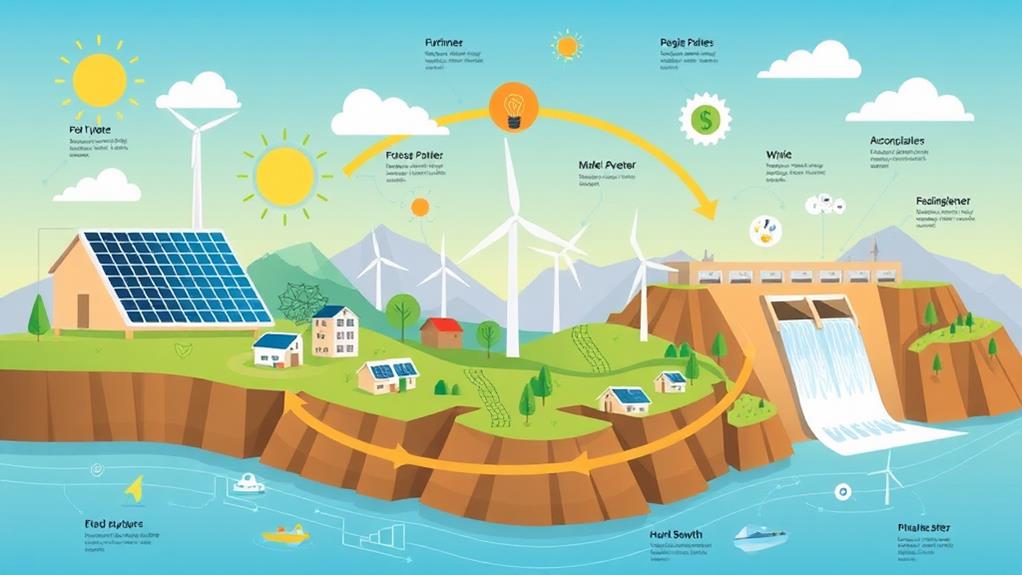

When considering solar energy, understanding Solar ROI (Return on Investment) is key to evaluating its financial benefits. By dividing the profit from energy savings by the total investment in a solar panel system, you get a clear picture of financial performance. Factors such as payback period, which commonly runs 9 to 16 years for unsubsidized systems, are influenced by installation costs, available tax credits, and geographic location. For commercial projects, the Section 48E credit can meaningfully lower initial costs when wage and apprenticeship standards are satisfied, enhancing ROI — note that the previous 30% residential credit under Section 25D ended for systems installed after December 31, 2026. If you maximize your energy savings, especially in sun-rich areas, you'll achieve quicker payback periods and higher financial returns. Understanding how efficiency and cost trade off is also worth reviewing in our solar panel efficiency vs. cost breakdown.
Installation Costs Analysis

Analyzing the installation costs of solar systems involves understanding a few key components that impact the overall expenditure. Current market pricing commonly falls between $2.41 and $3.34 per watt, with the spread reflecting real variation by geography, system size, and installer type. For a standard system, total installation cost scales with size and equipment choice, and typically includes both equipment and labor. Don't overlook additional expenses like inspection fees and permits, which can add meaningfully to the total. For businesses, the Section 48E Investment Tax Credit can offset a substantial share of installation cost when compliance requirements are met, reducing the upfront outlay considerably. With relatively low ongoing maintenance costs, solar systems represent a cost-effective and long-term investment for your business. For a detailed cost walkthrough, our solar installation cost guide breaks down the components further.
Recommended Products

[LARGE DISPLAY] - The huge LCD screen that clearly displays big numbers makes it easy to read from afar, and it’s aesthetically pleasing.

EASY-TO-USE DESIGN - With its large screen, this calculator is made for convenient and comfortable everyday use. Its tilted and angled display allows you to easily see your calculations without straining your eyes.

Pocket calculator, mini size is suitable for you bussiness travel use
Tax Incentives Overview

Tax incentives play an essential role in making solar energy systems more affordable and attractive for businesses. Under current federal law, the residential Section 25D tax credit was terminated for systems installed after December 31, 2026, following passage of the One Big Beautiful Bill Act. Business and commercial installations instead fall under Section 48E, which carries a base statutory credit of just 6% but can rise to 30% when prevailing-wage and registered-apprenticeship requirements are satisfied. Projects generally need to begin construction by July 4, 2026, or be placed in service by December 31, 2027, to remain eligible under the current rules, and new restrictions on materials tied to “foreign entities of concern” can also affect eligibility. States offer additional incentives like rebates and tax exemptions that enhance financial benefits and ROI, and local utility companies may provide further rebates that shorten payback periods. To fully leverage these opportunities, research your region's specific incentives thoroughly — our state-by-state solar incentives guide is a good starting point, and the DSIRE database tracks incentives at the state and utility level. For the authoritative federal rules, consult the IRS energy investment tax credit page.
| Incentive Type | Benefit Description |
|---|---|
| Section 48E Commercial Credit | 6% base rate, up to 30% with prevailing-wage/apprenticeship compliance; construction/placed-in-service deadlines apply |
| Residential Section 25D Credit | Expired for systems installed after December 31, 2026 |
| State Incentives | Vary by state; includes rebates and tax exemptions |
| Utility Rebates | Vary by utility; offset installation costs |
Understanding these benefits empowers you to maximize your solar investment.
Maintenance and Replacements

While tax incentives greatly enhance the financial appeal of installing solar energy systems, it's equally important to contemplate the long-term care and upkeep of your investment. Solar panel ROI is influenced by maintenance costs and replacements. Regular upkeep, including routine inspections and cleaning to maintain efficiency, guarantees your solar energy system remains a sound long-term investment. Consider these:
- Inverter Replacements: Typically needed every 10-15 years, affecting your up-front cost calculations.
- Warranty Benefits: Most panels come with a 25-year warranty, often guaranteeing meaningful output retention post-warranty.
- Budgeting for Routine Costs: Ongoing maintenance and permit fees should be built into your total cost of ownership.
For a practical maintenance checklist, see our solar panel maintenance tips, and for how long systems realistically last before major component replacement, review how long solar panels actually last.
Recommended Products

10AWG Wire Tinned Copper Tray Extension Cable to connect the charge controller to the battery, also can be used as solar wires with tools to cut and crimp with new connectors.Widely used for solar panels, marine, automotive, RVs, Lawn mower,camper and inverter wiring.

All-in-one Inverter Charger: Not only a power inverter with 3600 watt rated/7200 watt peak power, but with built-in 120A MPPT solar charge controller, and 100A AC battery charger. PV input voltage range 60V-500VDC, Max. PV input power 4200w, 16A

Premium Material: The inverter is made of aluminum alloy, which is durable, and not easy to rust. You can use it for a long time without frequent replacement, and your cost can be saved.
Utility Costs Breakdown

Understanding your utility costs is key when evaluating the benefits of solar energy. Per the U.S. Energy Information Administration, the average commercial electricity price in the U.S. was about 12.75 cents per kWh, with wide variation by state — North Dakota was among the lowest at roughly 7.19 cents per kWh, while Hawaii was the highest at roughly 38.18 cents per kWh. With utility billing structures often imposing higher rates during peak periods, your energy usage can greatly impact overall expenses. Solar panels save you money by reducing these utility costs, while net metering agreements (where available) allow you to sell excess power back to the grid, enhancing financial stability. The EIA has noted that U.S. retail electricity prices have risen faster than inflation since 2022, with the national average price forecast to climb roughly 13% between 2022 and 2026 — a trend that strengthens the case for locking in a portion of your energy costs with on-site solar. To calculate your payback period accurately, scrutinize local rates and your annual energy cost using a source like the EIA electricity data.
Sun Exposure Impact

Evaluating solar energy benefits doesn't stop at understanding utility costs; the impact of sun exposure on solar panel performance is equally significant. Your geographic location plays an essential role, with sunnier states like Arizona experiencing higher energy production compared to regions like Michigan. Ensuring ideal panel placement is critical, as shading from trees or buildings can meaningfully decrease solar system performance. For the best results, aim for panels facing south with unobstructed sun exposure. This orientation boosts energy production and minimizes degradation effects, enhancing your solar investment's value. In sunnier regions with strong incentives, businesses can see meaningfully shorter payback periods, while less sunny locations may extend the timeframe toward the higher end of the typical 9-16 year range. See our guide on solar tracking systems for ways to further optimize sun exposure.
- Sunnier states = higher energy production
- Ideal placement = reduced shading impact
- South-facing panels = maximum sun exposure
Using the ROI Calculator
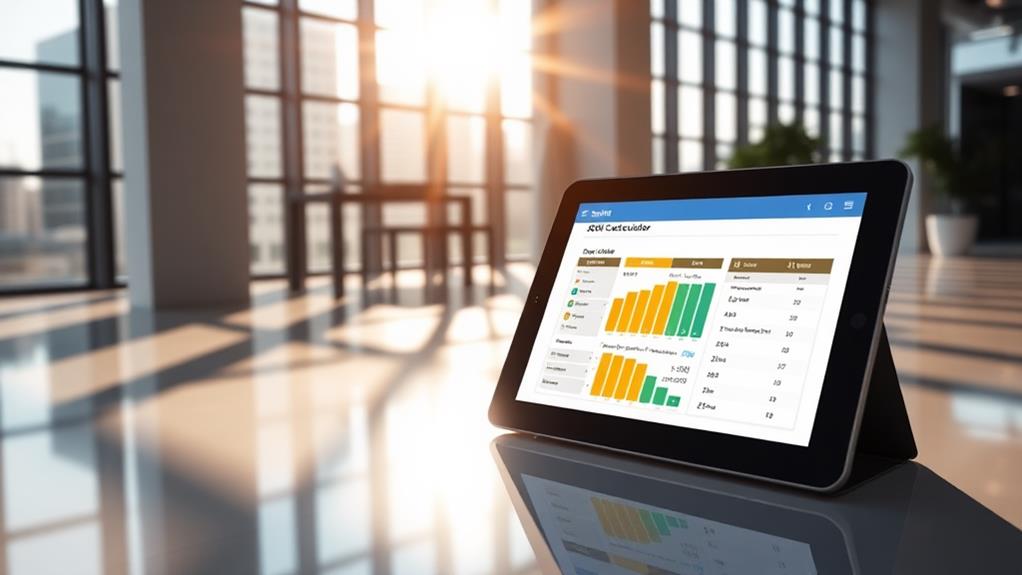
Plunge into the world of solar investments with the Solar ROI Calculator, a powerful tool designed to help you make informed financial decisions. By inputting specific data such as installation costs, energy usage, and local incentives, you'll get a tailored estimate of your investment (ROI) for solar, including potential savings and the payback period. Adjust key variables like system size and local electricity rates to visualize different financial scenarios. The calculator also factors in the current Section 48E commercial credit and any applicable state incentives, which can meaningfully reduce the initial investment when eligibility requirements are met. This tool allows you to see how energy consumption changes or utility rate increases impact long-term savings. Pairing your calculator estimate with a solar energy monitoring device after installation helps verify that real-world production matches your projected ROI. Ultimately, the Solar ROI Calculator promotes informed investment choices, offering an extensive understanding of solar's financial benefits.
Recommended Products

ADVANCED CONSTRUCTION MATH SOLUTIONS: Solve all your dimensional math quickly and accurately with the award-winning CM Pro construction calculator's powerful built-in solutions for completing layouts, plans, bids, estimates and more, directly in the building units you prefer

Country Of Origin: China

INSTANT ANSWERS FOR PIPE LAYOUT AND DESIGN: Get immediate solutions for all your pipe layout and design problems so you can get to building; when you use the Pipe Trades Pro together with measurements from blue prints you know the end result will be right; it calculates right angles, offsets, parallel pipe cutbacks, fitting angles, bends, weight or volume conversions, flow rates and more
Personalized Consultation Benefits

A personalized consultation offers tailored energy solutions by evaluating your unique energy consumption patterns and site specifications, ensuring an ideal system design that maximizes energy production and return on investment (ROI). Expert consultants conduct thorough surveys and analyses to pinpoint the best solar configurations, while also providing guidance on financing options, helping you navigate through available incentives and choose the most advantageous payment plans. This approach not only guarantees the system's alignment with your current needs but also allows for adjustments as your energy requirements evolve, maintaining efficiency and effectiveness over time.
Tailored Energy Solutions
Many businesses seeking to optimize their energy usage can greatly benefit from tailored solar energy solutions. Personalized consultations provide assessments that align with your specific energy needs, ensuring an ideal solar ROI. By understanding your unique consumption patterns, experts can help identify current federal and state incentives, maximizing financial benefits and reducing installation costs. Professional surveys pinpoint perfect locations for solar panel installation, considering shading and sunlight for enhanced efficiency. Personalized quotes offer precise calculations of potential savings and return on investment, enabling informed decisions. Additionally, ongoing support from solar experts keeps you updated on solar technology, financing options, and incentive programs, further enhancing your investment. If you're also weighing financing structures, our solar financing options comparison covers loans, leases, and PPAs side by side.
- Customized energy assessments for specific needs
- Identification of incentive programs and installation cost reduction
- Ongoing support and updates on solar technology
Optimal System Design
In today's competitive energy market, personalized consultations play a vital role in designing an ideal solar system tailored to your specific needs. These consultations guarantee your solar power system achieves maximum savings by determining the best solar system size, meticulously aligned with your energy needs and maximizing your return on investment (ROI). Experts assess panel placement to enhance sunlight exposure, essential for energy production, while addressing shading issues with solutions like power optimizers. Local utility rates and incentives are incorporated into the design, enhancing ROI. Attention to maintenance considerations, including inverter lifespan, secures long-term performance. Engaging with professionals assures that your system is not only efficient but also strategically designed to meet both current and future energy demands, securing financial and operational freedom.
Expert Financing Guidance
How do you guarantee your solar investment delivers the best return? Personalized consultations offer tailored assessments to match your specific business energy needs, guaranteeing ideal system configurations. Expert guidance can help you navigate diverse financing options, such as loans, leases, and PPAs, allowing you to select the best financial strategy for your solar investment. Additionally, professionals assist in identifying current federal and state incentives, including the Section 48E tax credit and utility rebates, which can meaningfully reduce installation costs and enhance potential savings when eligibility requirements are met.
- Explore financing options: Choose from loans, leases, and PPAs to suit your financial strategy.
- Maximize incentives: Leverage the Section 48E tax credit and utility rebates to lower installation costs.
- Tailored assessments: Guarantee system configurations meet your specific energy needs for maximum ROI.
Frequently Asked Questions
What Is a Good ROI for Solar?
Imagine solar energy as a golden goose. A good ROI, often in the range of roughly 6%-10% annually, offers financial benefits. Consider system costs, available tax credits, energy savings, installation process, financing options, performance monitoring, and environmental impact for long-term savings.
Is Solar Worth It for Business Owners?
Sure, solar energy's worth it for many business owners. You'll see cost savings, may qualify for the Section 48E commercial tax credit, can explore financing options, and gain more energy price stability. The installation process is well established, maintenance costs are relatively low, and state or utility rebates can offer additional commercial benefits.
How to Figure Out ROI on Solar?
Calculate your solar ROI by analyzing projected energy savings, system efficiency, total installed cost, and any tax credits or incentives you qualify for. Consider financing options, installation costs, ongoing maintenance costs, environmental impact, grid connection requirements, and available funding programs.
Is the Federal Solar Tax Credit Still Available in 2026?
The residential Section 25D credit expired for systems installed after December 31, 2026. Businesses can still pursue the Section 48E commercial credit, which offers up to 30% when prevailing-wage and apprenticeship requirements are met, provided the project begins construction by July 4, 2026 or is placed in service by December 31, 2027. Check the IRS energy investment tax credit page for the latest rules.
How Can I Expand My Solar Business?
To expand your solar business, focus on solar market trends, innovative customer acquisition strategies, diverse solar financing options, and energy storage solutions. Leverage current government incentives, strategic marketing, installation partnerships, competitive analysis, industry networking, and sustainability branding initiatives.


