
To calculate ROI on a green energy project, use the formula: ROI = (Total Energy Savings − Investment Cost) / Investment Cost x 100. First, estimate total energy savings by applying expected reductions from renewable generation or efficiency upgrades against your local utility rate — the U.S. average residential electricity price is about 16.5 cents per kWh, according to the U.S. Energy Information Administration (EIA), though rates vary widely by state and have continued climbing. Then calculate the payback period by dividing total investment by annual savings. Be sure to account for maintenance costs, which typically run 1-2% of the initial investment annually, and factor in available incentives — note that the federal residential solar tax credit (Section 25D) expired for systems installed after December 31, 2026, under the One Big Beautiful Bill Act, so incentive eligibility now depends heavily on how and when a system is financed. This thorough approach enables a precise, current evaluation of a project’s financial viability.
Key Takeaways
- Calculate ROI using the formula: ROI = (Total Energy Savings – Investment Cost) / Investment Cost x 100 to evaluate profitability.
- Determine the payback period by dividing total upfront costs by annual energy savings to understand when the investment will be recouped.
- Estimate electrical savings by analyzing annual energy usage and expected reductions from efficiency improvements or renewable generation.
- Include maintenance costs and rising utility rates in long-term financial projections to ensure accurate ROI assessments.
- Understand that the 30% federal residential solar tax credit (Section 25D) expired December 31, 2026 — check current state and utility incentives, and consider third-party ownership options where the business credit (Section 48E) still applies through 2027.
Key Definitions of ROI
You may be interested

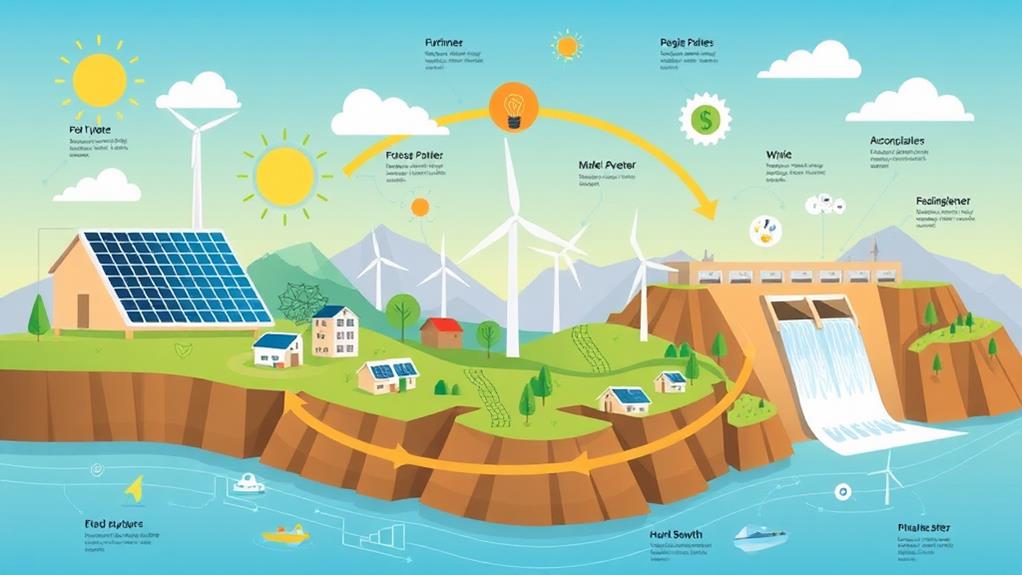

When you’re evaluating green energy projects, understanding the key definitions of ROI is essential. ROI, or Return on Investment, is a financial metric that evaluates the profitability of your investment as a percentage derived from net profit relative to the initial investment cost. To calculate ROI, use the formula: ROI = (Total Energy Savings – Investment Cost) / Investment Cost x 100. A positive ROI indicates that your energy savings surpass the initial investment, while a negative ROI signals financial unviability. Anticipated ROI can be estimated before a project is built, but actual ROI is only measurable after completion, when it can be compared against your original projections — a discipline that becomes even more important as incentive rules shift, as detailed in our guide to cost-benefit analysis of green energy projects.
Calculating Payback Period

When calculating the payback period for a green energy project, you’re determining how long it will take for your initial investment to be recouped through energy savings. This means dividing total upfront costs by annual energy savings, while accounting for maintenance costs and any available rebates, since these can meaningfully shift your timeline. Understanding these elements helps you evaluate project viability and make informed financial planning decisions — a process our renewable energy project budget template can help streamline.
Recommended Products

COMPACT & LIGHTWEIGHT- The fx-260 SOLAR II is Casio’s smallest scientific calculator—ideal for students who need a reliable, portable option for school or exams- yet still features a large 10-digit display capable of handling hundreds of math functions

Pocket calculator, mini size is suitable for you bussiness travel use

Easy to read: portable small calculator with large 8-digit LCD display, clear and high visibility, allowing you to see the numbers at a glance
Understanding Payback Period
Calculating the payback period for a green energy project is essential for understanding how quickly you’ll recoup your investment. To determine this, divide your initial investment by the estimated annual energy savings. Here’s how to approach it:
- Identify Total Costs: Include equipment, installation, financing fees, and expected maintenance in your calculations. For context, residential solar installations in 2026 commonly run in the range of roughly $2.50 to $3.50 per watt before any incentives, according to multiple industry cost trackers, though prices vary by region, system size, and equipment.
- Estimate Annual Energy Savings: Consider how much you’ll save annually, factoring in current and projected local electricity prices.
- Account for Financial Benefits: Confirm which incentives you actually qualify for. The federal residential solar tax credit (Section 25D) is no longer available for systems installed starting in 2026, so check your state and utility programs instead.
For example, a $10,000 system that saves $2,000 annually has a five-year payback period. A shorter payback period reduces financial risk and improves the investment’s attractiveness. Use a tool like our guide on residential solar panel installation costs to build a realistic baseline.
Factors Affecting Payback
Several elements influence the payback period of a green energy project, and understanding them is vital for an informed investment decision. Your initial investment, combined with estimated annual energy savings, determines the payback timeline. Local energy rates have a major impact, as do available incentives — which now vary significantly by state since the federal residential credit expired at the end of 2026. Maintenance costs must also be factored in, since they reduce net savings over time. For solar in particular, energy generation potential is essential: geographic location and sunlight exposure directly affect output, which in turn changes your payback period. A thorough review of these variables, including current state-level programs listed on DSIRE, will help you build a more accurate, and often more attractive, financial picture.
Calculating Payback Examples
Understanding your project’s payback period is essential for evaluating its financial viability. To calculate this, divide your initial investment by the estimated annual energy savings. Here are three steps to illustrate:
- Initial Investment: Determine the total cost, such as a solar panel installation, which might run around $10,000-$25,000 for a typical residential system depending on size and location.
- Annual Energy Savings: Estimate savings on electricity bills, say $1,500 annually.
- Calculate Payback Period: Divide the investment by savings: $10,000 / $1,500 = approximately 6.67 years.
Shorter payback periods, ideally under seven to ten years for most homeowners today, indicate more favorable investments. This calculation doesn’t account for rising energy costs, which have been trending upward according to EIA data and can shorten your effective payback period over time. Compare options using our breakdown of solar panel efficiency vs. cost before prioritizing a project.
Estimating Electrical Savings

Estimating electrical savings from green energy projects is essential for determining financial viability. Start by calculating your facility’s annual energy usage before any improvements, then identify the expected reduction from energy efficiency upgrades or renewable generation, such as a solar installation. For example, if your facility consumes 100,000 kWh annually and installs a solar system expected to generate 30,000 kWh, that’s roughly a 30% reduction. Multiply that annual savings by your local utility rate; at the U.S. average residential rate of about 16.5 cents per kWh (per EIA data), saving 30,000 kWh would translate to roughly $4,950 in financial savings — though your actual rate may be higher, since many regions have seen continued rate increases. Tracking these metrics before and after implementation lets you refine estimates and improve the accuracy of your ROI calculation. Pairing this with a solar energy monitoring device makes ongoing tracking far easier.
Recommended Products

⚡ EASY INSTALLATION: Installs in circuit panel of most homes with clamp-on sensors. Supports single-phase up to 240VAC line-neutral; single, split-phase 120/240VAC; and three-phase up to 415Y/240VAC (no Delta). The branch lines can automatically match different phases and have no restrictions in terms of quantity and voltage.Panels with access only to busbars will need flexible sensors available from SEM-Meter.
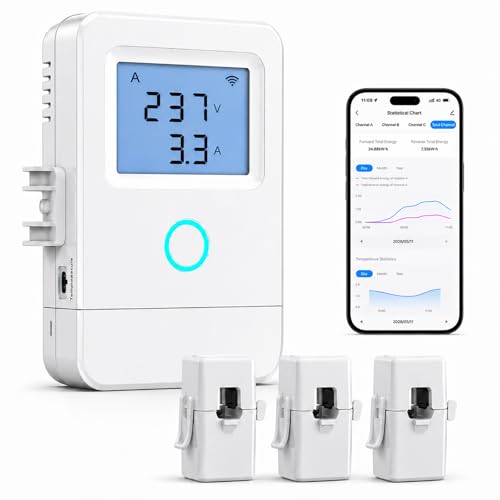
【Panel-Level Energy Monitoring】Designed for selected circuit monitoring in your electrical panel. Track high-power home circuits such as HVAC/AC, water heater, laundry, garage equipment, solar-related circuits, or other dedicated appliances. Supports AC 100–240V input voltage. Installation involves electrical wiring; Installation by a qualified electrician is recommended if you are not familiar with electrical panel wiring.

SAFE & RELIABLE: Meross smart energy consumption monitor is ETL‑certified and compliant with the UL 61010 testing standard, ensuring safe and reliable home energy monitoring. Works with most US homes: single-phase 2-wire systems, single-split phase 3-wire systems, and 3-phase 4-wire Wye systems with earthed (TN or TT) neutral (no Delta). Easy clamp‑on design installs in minutes. Invert CT readings in the app—no physical flipping. PROTECTED BY 2-YEAR WARRANTY for worry-free use.
Assessing Operational Benefits

When evaluating operational benefits from green energy projects, you’ll find that improved energy efficiency not only reduces consumption but also leads to long-term cost savings that can meaningfully impact your bottom line. Enhanced employee productivity is another factor, since a comfortable work environment supported by effective climate control fosters engagement. Strategically monitoring energy usage metrics lets your organization optimize performance and identify further savings opportunities, reinforcing the value of your green initiatives.
Improved Energy Efficiency
How can improved energy efficiency transform your business’s bottom line? Investing in solar and energy-efficient technologies can lead to substantial operational cost savings. Here are three key benefits to weigh:
- Long-Term Savings: Enhanced energy efficiency can meaningfully improve the ROI on solar investments, making them more financially attractive over their operating lifetime.
- Reduced Maintenance Costs: Newer systems typically require less upkeep, contributing to overall savings.
- Available Incentives: Depending on your situation, state rebates, utility programs, or business-side tax credits can further enhance financial returns and offset initial costs — see our solar energy incentives by state guide for what’s currently available near you.
Enhanced Employee Productivity
Investing in energy-efficient technologies not only cuts costs but also can support employee productivity. Enhanced climate control, achieved through energy-efficient upgrades, can improve comfort in a workspace. Better indoor air quality is also associated with reduced absenteeism in workplace studies, which affects operational efficiency. By implementing energy-efficient practices, organizations can foster a culture of sustainability, supporting employee engagement and job satisfaction alongside productivity gains. Ultimately, these upgrades not only optimize performance but also contribute to a healthier work environment that supports your team’s well-being.
Long-term Cost Savings
Calculating long-term cost savings from green energy projects reveals significant operational benefits for organizations. Adopting energy-efficient technologies can meaningfully reduce electricity bills over time. The following key areas illustrate these benefits:
- Operational and Maintenance Savings: Energy-efficient systems typically require less upkeep, helping you save on maintenance costs over their lifespan. See our DIY solar panel maintenance tips for ways to keep costs down further.
- Deferred Maintenance Savings: Funds previously allocated for repairs can support additional efficiency projects, enhancing your overall investment.
- Increased Property Value: Homes and buildings with solar installations and energy-efficient upgrades are frequently associated with higher resale values in real estate market research.
Improved climate control can also support employee productivity, contributing further to long-term cost savings and organizational success.
Importance of Maintenance Costs
When it comes to green energy projects, understanding the importance of maintenance costs is crucial for maximizing your return on investment. Maintenance costs, typically accounting for 1-2% of the initial investment annually, directly impact your ROI. For solar panels, regular upkeep not only extends equipment lifespan — most panels are now warrantied for 25 years or more, according to manufacturer and industry data — but also helps maintain energy production and long-term financial returns. Neglecting maintenance may lead to unexpected repairs and reduced efficiency, since soiling and debris buildup can measurably cut panel output. See how long solar panels actually last for more on lifespan expectations. By building these maintenance expenses into your ROI assessments, you gain a clearer picture of your project’s financial performance, helping ensure anticipated savings are realized throughout its lifespan.
Recommended Products

All-in-One TONYINGO Kit for Solar Panel Cleaning & Snow Removal:This versatile kit features a 5-24FT telescopic extendable extension pole with Dual Action Flip-lock & Screw Fixing Design, engineered for daily solar panel dirt cleaning and efficient light snow removal. It’s the ultimate outdoor cleaning tool for high-reach care of windows, RV exteriors, boats, decks, roofs, gutters, car windshields and house exterior walls, meeting all multi-scenario cleaning needs for outside surfaces

No.1 CLEANER FOR SOLAR PANELS: This ultra concentrated value formula is the best way to restore photovoltaic efficiency for solar panels.

SOLAR PANEL CLEANING BRUSH: Solar panel cleaning brush removes dirt and debris. Works as solar panel cleaner, solar panel brush and solar cleaning tool for efficient solar panel cleaning.
Exploring Incentives and Rebates

Unlocking the financial potential of a green energy project often hinges on understanding which incentives you actually still qualify for — the incentive landscape has changed significantly. Here’s the current picture:
- Federal Residential Credit (Section 25D): This 30% credit for homeowner-owned solar systems expired for systems installed after December 31, 2026, under the One Big Beautiful Bill Act. Systems placed in service on or before that date could still claim it; new installations generally cannot.
- Federal Business/Third-Party Credit (Section 48E): Businesses, including solar leasing and power-purchase-agreement (PPA) providers, can still claim a federal credit on qualifying projects, with current guidance pointing to a 2027 construction-start deadline for many projects — verify current requirements before assuming eligibility, as these rules are complex and evolving.
- State and Utility Incentives: With the federal residential credit gone, state rebate programs, performance-based incentives, and utility rebates matter more than ever. Check current, verified programs through the DSIRE database and our state-by-state incentive guide.
Recommended Products

LARGE EIGHT-DIGIT DISPLAY – Clear and easy-to-read 8-digit display, perfect for everyday calculations and ensuring accurate results in home or office settings.

[LARGE DISPLAY] - The huge LCD screen that clearly displays big numbers makes it easy to read from afar, and it’s aesthetically pleasing.

Long-Term Financial Projections

To maximize the benefits of your green energy project, it’s vital to look ahead and build long-term financial projections. These projections typically assess savings over a 20 to 25-year system lifespan, incorporating maintenance costs and expected increases in utility rates — U.S. residential electricity prices have been rising in recent years according to EIA tracking, which tends to improve the relative value of self-generated power over time. When calculating ROI, consider cumulative savings from avoided energy bills, since these can grow substantially as grid electricity costs rise. Because the residential federal tax credit has expired, projections built today should rely on realistic, currently available incentives rather than the historical 26-30% federal credit assumptions common in older analyses. Combining energy efficiency improvements with renewable generation can still meaningfully improve project economics over its lifespan, making regular updates to your financial projections essential. Our green energy vs. fossil fuel price comparison is a useful reference point for these projections.
Prioritizing Energy Efficiency Projects

Prioritizing energy efficiency projects is essential for maximizing returns and minimizing costs in any green energy initiative. To effectively prioritize, consider the following key factors:
- ROI: Calculate the Return on Investment using the formula: ROI = (Total Energy Savings – Investment Cost) / Investment Cost x 100. This helps identify the most financially beneficial projects.
- Payback Period: Favor projects with the shortest realistic payback period given current, non-federal incentive assumptions.
- Total Savings: Evaluate total savings from electrical reductions, maintenance cuts, and operational efficiencies to understand the full impact.
Table 1 below summarizes how the incentive and cost landscape has shifted for a typical residential solar project.
| Factor | Previous Assumption (Pre-2026) | Current Status (2026) |
|---|---|---|
| Federal residential solar credit (25D) | 26-30% of system cost | Expired for systems installed after Dec 31, 2026 |
| Business/third-party credit (48E) | Available alongside 25D | Still available for qualifying business-owned/leased systems through 2027 construction-start windows |
| Avg. U.S. residential electricity rate | ~12 cents/kWh (2022 baseline) | ~16.5 cents/kWh and rising (EIA) |
| Primary incentive source | Federal tax credit | State, utility, and DSIRE-listed local programs |
Additionally, checking current state rebate programs can meaningfully improve the financial viability of your prioritized projects, helping you maximize energy savings while managing overall investment costs.
Recommended Products

ULTRA-COMPACT DESIGN- Measuring just 4" x 2.25" x 0.3" and weighing in at only 1.23 oz, the HS-8VA is one of our smallest calculators, perfect for pockets, bags, desks and math on-the-go.

【12 Digit Display】Features easy-to-read 12 digits LCD display, the big screen clearly shows the numbers, suitable for all kinds of calculations and office scenes.

EASY-TO-USE DESIGN - With its large screen, this calculator is made for convenient and comfortable everyday use. Its tilted and angled display allows you to easily see your calculations without straining your eyes.
Frequently Asked Questions
What Is ROI in Renewable Energy?
ROI in renewable energy measures the return you get on your investment relative to what you spent, expressed as a percentage. It weighs long-term energy savings, technology performance, and any qualifying incentives against upfront investment risk, helping you judge whether a project makes financial sense.
How Do You Calculate ROI for a Project?
To calculate ROI for a project, assess total investment cost, expected energy savings, financing terms, and project lifespan. Factor in realistic, currently available incentives rather than outdated federal credit assumptions, and consider risk factors like changing utility rates when determining feasibility.
What Is the ROI Formula?
The ROI formula is: ROI = (Total Energy Savings – Investment Cost) / Investment Cost x 100. This financial metric helps with cost analysis, comparing project options, and evaluating long-term value for sustainability investments.
How to Calculate ROI for a Solar System?
To calculate ROI for a solar system, factor in installation costs, expected energy savings based on your local utility rate, ongoing maintenance expenses, and any incentives you currently and verifiably qualify for. Remember that the federal residential tax credit expired for systems installed after 2026, so check state programs and third-party ownership options, and review our guide on residential solar installation costs for a realistic cost baseline.


