Installing micro-hydropower in your home presents an efficient and sustainable energy solution, effectively generating electricity from a minimum flow rate of just 2 gallons per minute and producing between 75 to 350 kilowatt hours (kWh) monthly. This system not only greatly lowers long-term energy costs but also reduces reliance on fossil fuels, supporting eco-friendly living. Components like turbines and generators transform kinetic energy into usable electricity, ensuring a stable power supply. Additionally, with installation costs ranging from $1,000 to $20,000, careful site assessment is essential — and it’s worth noting that the federal residential tax credit that used to help offset these costs has changed for 2026. You’ll find that the economic and environmental benefits make micro-hydropower a compelling choice for your home. Exploring more will reveal additional important factors to evaluate.
Key Takeaways
- Micro-hydropower systems generate consistent electricity, producing 75 to 350 kWh monthly, ideal for reducing dependence on traditional energy sources.
- Installation costs range from $1,000 to $20,000, offering significant long-term savings on energy bills, though the federal Residential Clean Energy Credit no longer applies to systems installed after December 31, 2026.
- Hydropower supplied about 6% of total U.S. electricity generation in 2026 (roughly 245 billion kWh), according to the U.S. Energy Information Administration.
- Micro-hydropower can operate with as little as 2 gallons per minute of water flow, making it feasible for various locations.
- Regular maintenance and monitoring ensure optimal performance, contributing to a reliable and efficient energy source for your home.
Benefits of Micro-Hydropower
You may be interested



Micro-hydropower offers several compelling benefits for homeowners looking to harness renewable energy. According to the U.S. Department of Energy, a microhydropower system can generate electricity from just 2 gallons per minute of flow rate, making it feasible for even small streams. With a production capacity of 75 to 350 kilowatt hours (kWh) per month, this technology provides a reliable, consistent energy source, contrasting sharply with the intermittency of solar or wind power. At the national scale, hydropower remains a meaningful contributor to the grid — the U.S. Energy Information Administration reports that conventional hydropower generated about 245 billion kWh in 2026, roughly 6% of total U.S. utility-scale electricity generation, from about 79,892 MW of installed capacity. While installation costs for a home system range from $1,000 to $20,000, the long-term energy savings are significant, reducing operational costs and dependence on fossil fuels. Additionally, micro-hydropower systems boast low environmental impact, aligning perfectly with sustainable living principles, enhancing your self-sufficiency and energy independence. If you’re comparing this option against other renewable technologies for your property, see this cost-benefit analysis of green energy for a broader picture.
System Components Overview
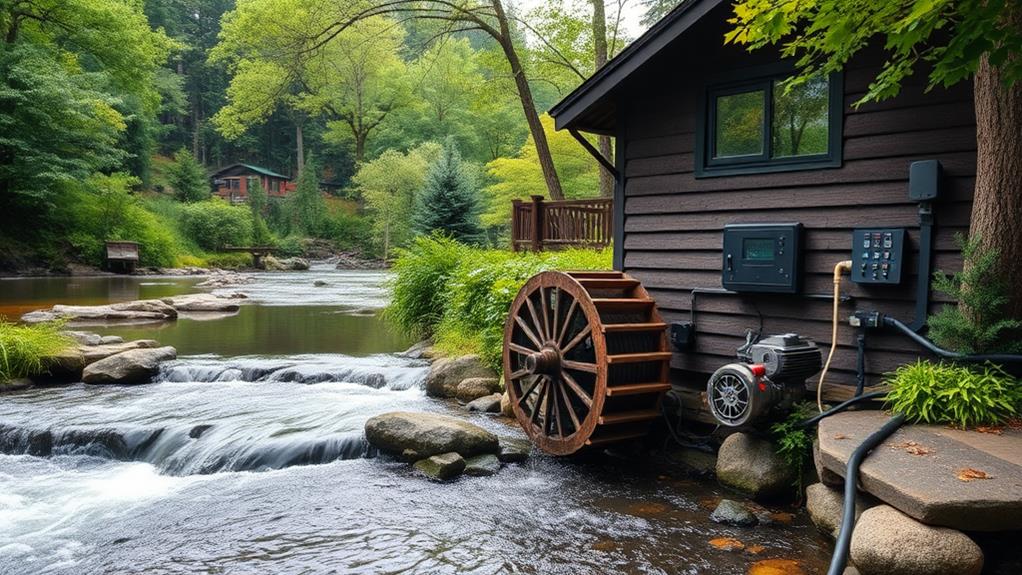
A well-designed micro-hydropower system consists of several key components that work together to harness and convert flowing water into usable electricity. First, the water conveyance system, often including channels or pipelines, directs water from the source to the turbine, directly influencing system efficiency. The turbine, commonly an impulse turbine like the Pelton wheel, converts the kinetic energy of water into rotational energy. This energy is then transformed into electricity by the generator. A regulator is essential for managing the generator’s output, ensuring stable electricity that meets your energy needs. Finally, appropriate wiring is critical for distributing this generated electricity throughout your home’s electrical system, thereby integrating micro-hydropower seamlessly into your existing energy framework. For homeowners tracking output alongside other renewables, a solar energy monitoring device can often be adapted to track combined generation.
Recommended Products

Made of high quality material, in use.

The output voltage :5V; The outlet opening maximum pressure 1.2Mpa

Micro hydro generator, the potential energy conversion of the water into electrical energy mechanical equipment
Types of Turbines
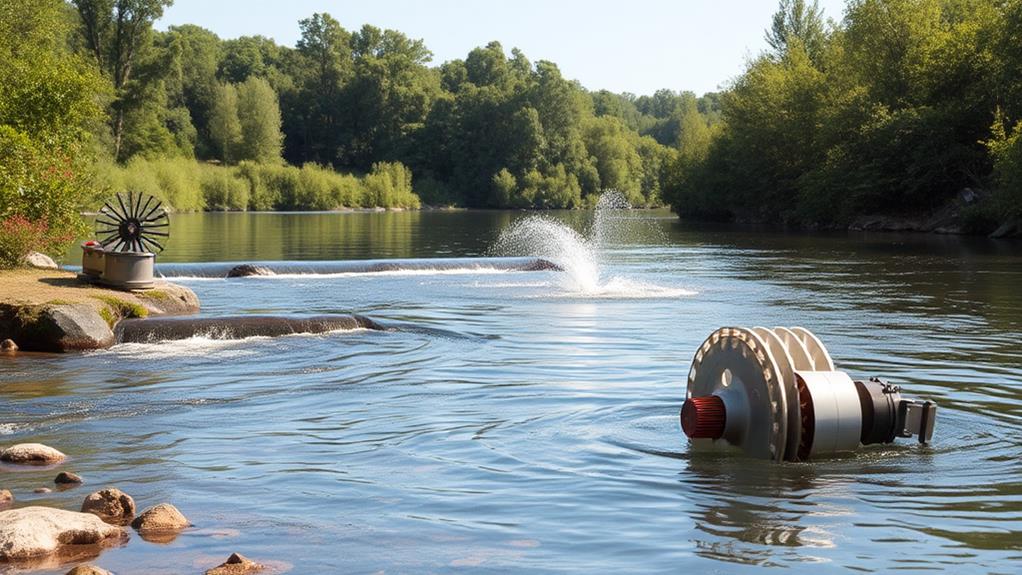
When considering micro-hydropower systems for your home, it is crucial to understand the different types of turbines available, as each offers unique advantages based on specific water conditions. Impulse turbines, like Pelton and Turgo wheels, excel in high-head scenarios, achieving efficiencies of 70-90% by transforming the kinetic energy of water jets into rotational power, while reaction turbines, including Kaplan and propeller types, are optimized for low-head applications, ensuring effective energy conversion through continuous water contact across blades. Additionally, alternative options like the Jack Rabbit turbine cater to low-water environments, functioning efficiently with minimal flow and producing up to 100 Watts, making them versatile choices for varied micro-hydropower setups.
Impulse Turbine Benefits
Impulse turbines offer numerous benefits that make them an attractive option for home micro-hydropower systems. They’re designed for efficiency, harnessing the energy of high-velocity water jets, and can perform exceptionally well in varying conditions.
- Operate efficiently at 70-90% efficiency
- Suitable for high-head conditions with minimal water flow
- Compact design and reduced gear requirements
- Ideal for low-flow applications with outputs up to 100 Watts
- Simpler maintenance compared to reaction turbines
Whether you’re in a remote area or seeking independence from the grid, impulse turbines provide reliable hydropower solutions. With options like the Pelton wheel, Turgo wheel, and Jack Rabbit turbine, you can find the perfect fit for your needs while enjoying the freedom of sustainable energy — a good complement to off-grid living with renewable energy strategies.
Reaction Turbine Efficiency
Understanding reaction turbine efficiency is essential for anyone considering micro-hydropower solutions. Reaction turbines, particularly Kaplan turbines, are known for their high efficiency, often achieving between 70% to 90% under ideal conditions. Their adaptability to varying flow rates and head makes them suitable for specific microhydropower sites. However, the efficiency can be greatly impacted by water flow and head levels, which requires meticulous site assessment to guarantee effective energy production. Below is a summary of key factors:
| Factor | Impact on Efficiency |
|---|---|
| Flow Rate | Higher rates enhance output |
| Head | Ideal range maximizes energy |
| Site Assessment | Critical for design accuracy |
While less common in microhydropower, reaction turbines can provide substantial mechanical energy in the right conditions.
Alternative Turbine Options
Exploring alternative turbine options can greatly enhance your micro-hydropower setup. By selecting the right turbine, you can maximize power generation and efficiency tailored to your specific conditions. Here are some compelling turbine options:
- Pelton wheel: Ideal for high-head, low-flow conditions, with efficiency ranging from 70-90%.
- Turgo wheels: Operate faster than Pelton wheels, suitable for various applications while maintaining high efficiency.
- Jack Rabbit turbines: Generate up to 100 Watts with only 13 inches of water flow, perfect for low-flow, high-head environments.
- Reaction turbines: Such as Kaplan and propeller types, depend on constant water pressure but are complex and less favored in microhydropower.
- Conventional pumps: While they can substitute turbines, they are less efficient and more susceptible to damage compared to specialized designs.
Choosing the right turbine option can greatly impact your renewable energy efforts.
Measuring Water Flow
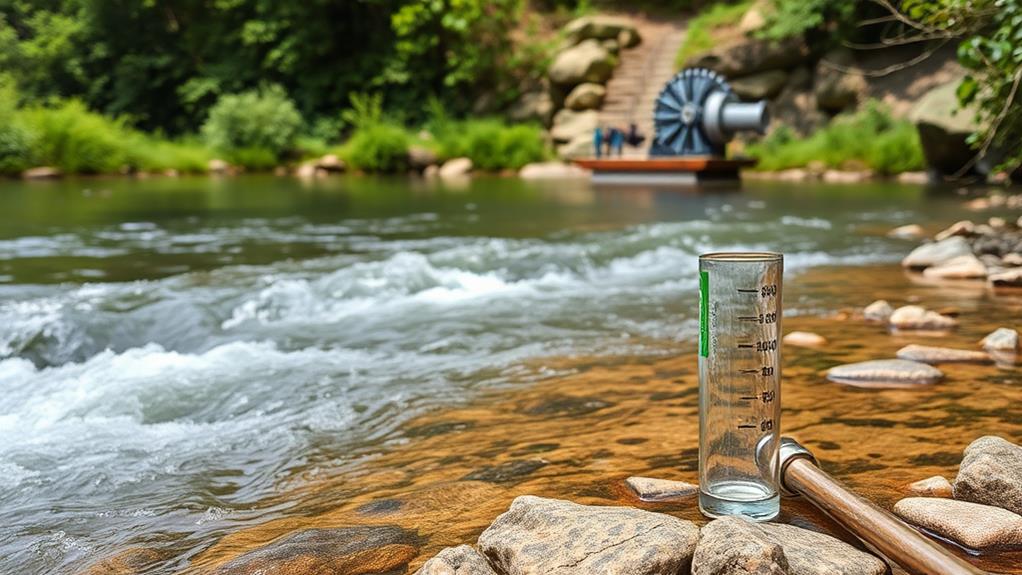
When measuring water flow for micro-hydropower systems, you’ll want to utilize reliable techniques like the Bucket Method or the Weighted-Float Method, as both provide accurate assessments of flow rates vital for energy generation. It’s important to keep in mind that seasonal variations can greatly impact these measurements, so regular monitoring throughout the year is essential for optimizing your system design. Understanding these measurement methods not only enhances your ability to calculate potential power output but also helps guarantee the efficiency and sustainability of your micro-hydropower setup.
Flow Measurement Techniques
Accurate flow measurement is vital for anyone looking to harness micro-hydropower effectively. To assess the potential energy output of your system, consider these techniques:
- Bucket Method: Directly measures flow rates in gallons per minute (gpm).
- Weighted-Float Method: Calculates flow by timing a float, while measuring the stream’s width and depth.
- Weir Method: Employs a rectangular weir to measure water depth over the notch, allowing for precise flow calculations based on head.
- Minimum Diversion of Water: Guarantees protection of aquatic ecosystems while generating necessary hydropower.
- Understanding Seasonal Variability: Use the lowest average flow rate throughout the year for reliable design.
These methods help guarantee accurate flow rate assessments, vital for optimizing your small hydropower system.
Seasonal Flow Variability
Understanding seasonal flow variability is vital for effectively managing your micro-hydropower system. Water flow rates can fluctuate dramatically throughout the year, affecting energy generation. To guarantee peak performance, it’s important to measure flow during the lowest average conditions of the year, as this helps assess water availability. The U.S. Geological Survey provides key data on local streamflow conditions, aiding in evaluating seasonal variations, and the EIA notes that regional hydropower output can swing by double digits year to year depending on snowpack and precipitation. Utilizing methods like the bucket method for flow rate measurement can enhance your understanding of water dynamics.
| Season | Average Flow Rate (cfs) | Energy Generation Potential (kW) |
|---|---|---|
| Spring | 10 | 5 |
| Summer | 4 | 2 |
| Winter | 1 | 0.5 |
DIY Measurement Methods
Measuring water flow effectively is key to optimizing your micro-hydropower system, especially given the seasonal flow variability discussed earlier. To guarantee you harness the maximum power for your water supply, you can employ several DIY measurement methods:
- Bucket Method: Divert water into a container, timing how long it takes to fill.
- Weighted-Float Method: Measure stream width and depth, then time a float’s travel.
- Weir Method: Build a rectangular weir and measure water depth over the notch.
- Seasonal Assessments: Conduct measurements during various seasons for accuracy.
- Average Results: Repeat each method multiple times to ascertain precision.
These techniques help you determine flow rates essential for designing effective microhydro systems, accounting for seasonal variations and optimizing turbine performance.
Economic Viability
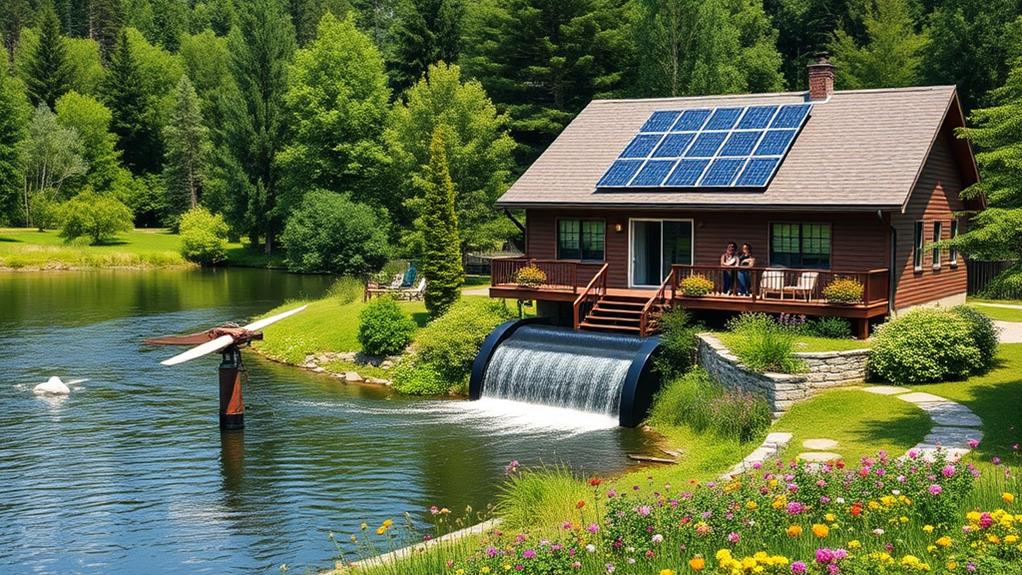
Micro-hydropower systems can often be a financially sound investment for homeowners looking to reduce energy costs. With initial investments ranging from $1,000 to $20,000, these systems can generate 75 to 350 kilowatt hours (kWh) monthly, leading to significant long-term savings on energy bills. Their economic viability is further enhanced by the ability to harness energy from as little as 2 gallons per minute of water flow, making them suitable even for small streams. One important update for 2026 planning: the federal Residential Clean Energy Credit under Section 25D — which historically applied to qualifying home renewable energy property including small wind and hydro — is no longer available for expenditures made after December 31, 2026, under the One Big Beautiful Bill Act, according to IRS guidance on the OBBB. That means homeowners should factor project payback purely on energy savings rather than a federal credit going forward. State- and utility-level incentives may still apply and vary widely, so check current, location-specific programs through the DSIRE database or this state-by-state incentives guide before budgeting your project. A well-sited system can still deliver a return on investment within roughly 5 to 15 years, depending on local energy costs, water flow reliability, and system efficiency; readers weighing hydropower against solar may also find this solar efficiency vs. cost comparison useful context.
Site Assessment Criteria

When considering a micro-hydropower system, careful site assessment is key to guaranteeing its success and efficiency. You’ll want to evaluate several important factors:
- Flow Rate: Guarantee a minimum of 2 gallons per minute for effective energy production.
- Vertical Drop: Aim for at least a 2-foot drop to maximize potential energy output.
- Seasonal Water Flow: Analyze variations to inform system design, particularly the lowest average flow.
- Maintenance Access: Proper turbine placement and intake positioning are essential for ongoing upkeep.
- Water Rights: Review local regulations regarding water rights and necessary permits, as these can influence feasibility.
Recommended Products

ENLARGED : The enlarged can greatly improve the power generation efficiency, while adding bearings to reduce wear.

[Transparent shell]:Our hydroelectric generator has a transparent shell, you can view the turbine and power generation in real time, and you can also enjoy your DIY handmade creations

Permits and Regulations

Before diving into your micro-hydropower project, it’s imperative to familiarize yourself with local permits and regulations that can greatly impact your plans. Understanding water rights is essential, as they vary by region and directly affect project feasibility. Contacting your county engineer is a necessary first step to gain guidance on specific permits and regulations. Keep in mind that different permitting processes exist for grid-connected versus stand-alone systems. Local and federal regulations, including those from the Federal Energy Regulatory Commission (FERC) and the U.S. Army Corps of Engineers, govern water diversion and energy generation activities. Knowing the allowable amount of water diversion is critical for maintaining ecological balance and adhering to legal requirements.
| Permit Type | Responsible Agency | Key Considerations |
|---|---|---|
| Water Rights | Local Water Authority | Check regional restrictions |
| Micro-Hydropower Permit | County Engineer | System type impacts process |
| Environmental Review | U.S. Army Corps of Engineers | Assess ecological impact |
| Energy Generation Permit | Federal Energy Regulatory Commission | Compliance with federal standards |
| Water Diversion Permit | Local Environmental Agency | Maintain ecological balance |
Maintenance and Sustainability

Although many homeowners may focus on the initial setup of their micro-hydropower systems, regular maintenance is essential for guaranteeing long-term efficiency and sustainability. Routine inspections, typically every 6 to 12 months, keep your system running at peak performance, greatly reducing operational costs and enhancing energy supply reliability. By utilizing renewable water resources, these systems not only lower energy bills but also minimize environmental impacts, supporting local ecosystems while generating clean energy. These upkeep habits mirror the routines used for other home renewable systems — see these DIY solar panel maintenance tips for a comparable maintenance mindset.
- Clean intake screens regularly
- Inspect turbine functionality
- Monitor water flow consistency
- Document maintenance activities
- Assess system wear and tear
Embracing this maintenance approach guarantees that your micro-hydropower system remains a cost-effective, sustainable, and dependable source of renewable energy for years to come.
Frequently Asked Questions
What Are the Benefits of Micro Hydropower?
Micro-hydropower offers energy independence through a renewable resource that’s low maintenance and eco-friendly. It provides off-grid solutions with long lifespans, enhances energy efficiency, delivers cost savings, and positively impacts the community while promoting climate resilience.
What Are the Disadvantages of Micro Hydro?
Micro-hydro’s got its challenges; think of it like taming a wild river! You’ll face hefty initial investments, tricky site assessments, maintenance demands, and regulatory hurdles—plus, it may not always play nice with the grid.
How Much Does a Micro Hydro Power Plant Cost?
Micro hydro costs vary considerably, generally falling between $1,000 and $20,000 depending on equipment pricing, site conditions, and installation expenses. Note that as of 2026 the federal Residential Clean Energy Credit no longer applies to systems installed after December 31, 2026, so check current state and utility incentives via DSIRE to see what financial assistance remains available in your area.
How Much Does a 10 Kilowatt Microhydropower System Cost?
A 10-kilowatt microhydropower system’s cost varies considerably, influenced by equipment types, site head and flow conditions, installation labor, and financing options. Since it sits well above the typical 75-350 kWh/month residential range described by the Department of Energy, a system at this scale usually requires more extensive site assessment, larger conveyance infrastructure, and ongoing maintenance planning to justify the investment.
Is Hydropower Still a Significant Source of U.S. Electricity?
Yes. The U.S. Energy Information Administration reports that conventional hydropower generated about 245 billion kWh in 2026 — roughly 6% of total U.S. utility-scale electricity generation — and projects generation to rise to about 259 billion kWh in 2026 as snowpack and streamflow conditions recover in parts of the country.